A Greenwood Business Legend
Susie Bell was born in Lee County, Arkansas, the daughter of Joseph Little. Her mother’s name remains elusive in the historical record, a silence that hints at the gaps often present in documenting the lives of African American women in the early twentieth century. Census records reveal that she had two older brothers and a younger brother named Preston Little. These familial bonds would play a crucial role in her life and career, particularly as Preston later joined her in Tulsa, Oklahoma. Susie Bell’s early life in Arkansas, though sparsely documented, was likely marked by the rhythms and responsibilities of rural Southern life, a life of close family ties, church gatherings, and a keen awareness of the opportunities and limitations of her time. Her family’s descendants, especially her great-niece Jennifer King, have devoted considerable effort to piecing together Bell’s extraordinary life, revealing a woman whose vision and determination would shape not only her own destiny but also the fabric of the Greenwood community.
By the time Preston Little moved to Tulsa between 1910 and 1913, Susie Bell had already established herself in Greenwood, the thriving African American district of Tulsa that would come to be known as Black Wall Street. She was operating the Bell Café at 101 North Greenwood Avenue, a location at the heart of a district brimming with Black-owned businesses, professional offices, and cultural institutions. The early 1910s were a period of remarkable growth for Greenwood, fueled in part by the oil boom that had brought wealth and opportunity to Tulsa’s Black residents. In this environment, Susie Bell’s café was more than a simple eating establishment; it was a place where community, entrepreneurship, and social life intersected. Advertising in the Tulsa Star began in 1913 and continued into 1914, signaling her active engagement in promoting her business and reaching a clientele eager for quality dining experiences within their own community.

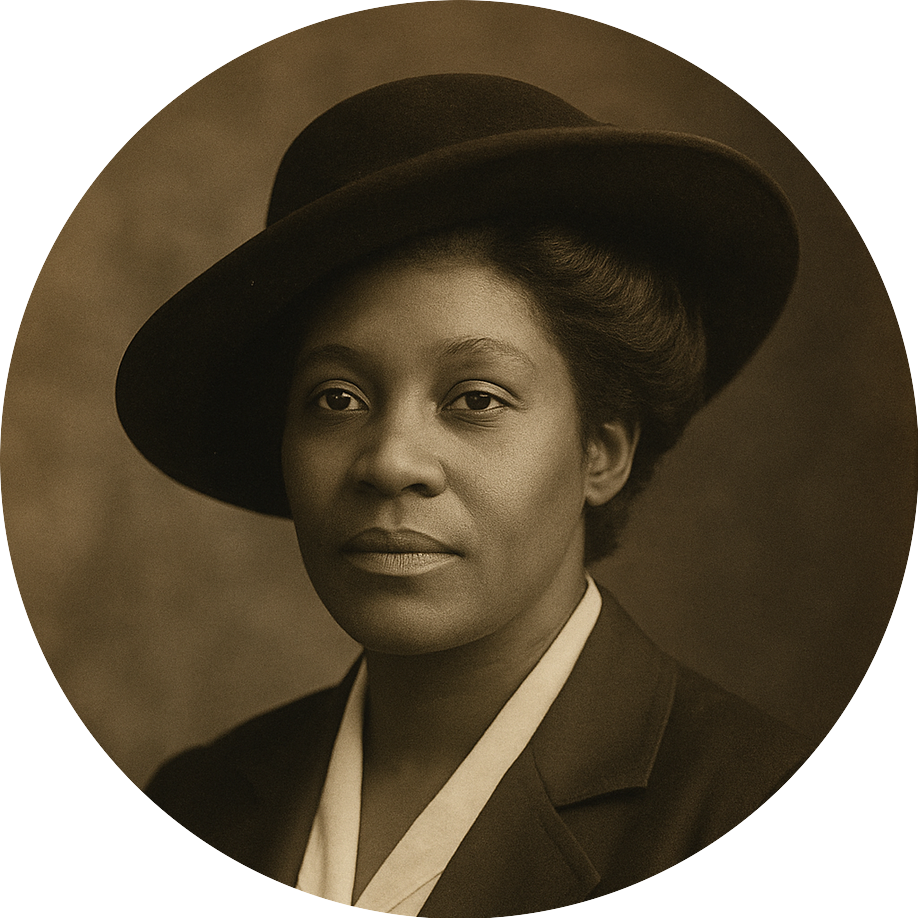
The Bell Café became known for its elegance and careful attention to detail, qualities that set it apart in a marketplace where many establishments were functional but not refined. Bell’s sense of style extended beyond the culinary; she maintained a personal presence of poise and sophistication that resonated with patrons and colleagues alike. She was known for never wearing flats, always heels, and dressing in all white on Sundays and navy blue on other days. Her hair was neatly arranged, a brooch pinned close to her collar, and she carried herself with the air of a woman determined to conquer the world. These habits were not mere affectations; they were statements of dignity and professionalism, establishing her as a figure whose presence commanded respect and whose business acumen matched her personal elegance.
In 1915, Susie Bell partnered with her brother Preston to create the Bell and Little Café, relocating the business to 106 North Greenwood. This partnership demonstrated both familial loyalty and a strategic approach to expanding her operations. The café’s relocation and rebranding allowed for growth in clientele and capacity, reflecting Bell’s adaptability and vision. By 1920, the café had moved again to 324 East Archer Street, another central corridor in Greenwood, indicating ongoing success and the desire to maintain a prominent position within the district. These moves were more than logistical; they were emblematic of Bell’s responsiveness to the dynamic commercial environment of Greenwood, where foot traffic, social hubs, and proximity to other businesses could make or break a venture.
Alongside the Bell and Little Café, Susie Bell launched the Busy Bee Café, housed in the brick building owned by the Gurleys, prominent figures in Greenwood’s development. This café employed seven people, a significant operation for the time, and earned a reputation for excellence, particularly for Bell’s famous smothered chicken. The Busy Bee first appeared in the Tulsa Star in 1918, and Bell sold it to Julius Parks the following year, reflecting her strategic approach to business management and her ability to capitalize on opportunities while maintaining her public profile. Bell’s restaurants were not only sites of commerce but also spaces of social gathering and cultural exchange, where patrons could experience fine dining and community engagement in a setting that celebrated Black success and sophistication.
Bell’s influence extended beyond her restaurants into the social and philanthropic life of Greenwood. She hosted parties and gatherings for prominent members of the community, including professors from Langston University, whom she served a six-course fine dining experience in 1920. She also participated in anniversary celebrations for local doctors, demonstrating her integration into the intellectual and professional circles of the district. Bell’s charitable work included organizing fundraisers for Mt. Zion Church, which her family believes was her home church, and she consistently supported family members financially and personally, providing significant assistance without hesitation. Her generosity and mentorship extended to raising nieces and nephews during holidays and summers, embodying a spirit of care and responsibility that paralleled her professional endeavors.
Despite her remarkable professional achievements, Bell’s personal life was less publicly documented. She was married to W. B. Johnson, owner of the Royal Cleaning and Taylor Shop in Tulsa, but the marriage was strained, ultimately ending in divorce in 1920. Reports suggest she remarried a couple of times, including once to a train porter in the late 1920s, but in the public record, she remained most prominently associated with her brother and business partner, Preston. Her name rarely appeared alongside a husband in newspaper accounts, underscoring the singularity of her professional identity in a world where women, particularly African American women, were often overshadowed in media narratives by men.
Tragically, the successes that Bell had built in Greenwood were devastated by the Tulsa Race Massacre of 1921. During this attack, white mobs destroyed much of the district, killing dozens and burning businesses and homes, including those of Susie Bell. According to family accounts, both she and Preston lost everything they had worked to establish. Preston was reduced to working as a day laborer and died with only a few dollars in his pocket. Bell attempted to rebuild by opening two more restaurants, but neither venture regained the prominence or prosperity of her pre-massacre businesses. The destruction of Greenwood not only obliterated physical structures but also disrupted a social and economic network that Bell had navigated with skill and determination, illustrating the precariousness of Black success in an era of systemic violence and oppression.
In her later years, Bell relocated to Arkansas and eventually to Los Angeles, taking up work as a housekeeper. Even in these more modest circumstances, her character and habits remained intact. Family members recall her sharing beauty and skincare tips with younger relatives, bringing home baskets of citrus fruit, and retaining the grace and elegance that had defined her earlier life in Greenwood. She contracted an illness after a cruise and passed away within the decade, leaving behind a legacy that is preserved not only through the historical record and newspaper accounts but also through the memories and efforts of her descendants, who continue to explore and celebrate her remarkable life.
Susie Bell’s story is one of ambition, skill, resilience, and generosity. She operated in a complex and dynamic environment, where opportunity and risk were ever-present, and where the stakes for Black entrepreneurs were high. Through her cafés, she created spaces of refinement and community, offering nourishment and social connection, mentoring and generosity, all while maintaining a personal presence of dignity and style. Her life, intersecting with both the prosperity and devastation of Greenwood, provides a window into the broader history of Black enterprise, resilience, and cultural leadership in early twentieth-century America. Though the physical remnants of her work were largely destroyed in 1921, her influence endures in the narratives preserved by her family, historians, and the cultural memory of Tulsa, ensuring that Susie Bell’s contributions to Black Wall Street are not forgotten.
Susie Bell’s life in Greenwood continued to unfold against the backdrop of a community that was both thriving and fragile, a district where Black enterprise, education, and culture converged in ways that defied the segregationist norms of the early twentieth century. Her cafés, beyond being centers of commerce, became symbols of aspiration and dignity, embodying the hopes of a community that sought not just survival but recognition and excellence. Every detail of her establishments reflected her understanding of the nuances of hospitality and the expectations of a discerning clientele. She paid close attention to the presentation of her food, the arrangement of tables, the service of her staff, and the aesthetic of her spaces, creating environments that were simultaneously welcoming and refined. Customers who entered her cafés would have encountered not just meals but a carefully curated experience in which elegance, warmth, and efficiency coexisted.
Bell’s culinary talents were frequently noted in contemporary accounts. Her smothered chicken, which became her signature dish, exemplified both her skill and her sensitivity to the tastes and traditions of her patrons. But her expertise extended beyond individual recipes; she understood how a restaurant could serve as a social hub, where conversations flourished and relationships deepened. Hosting parties, dinners, and gatherings for professionals, educators, and community leaders, Bell’s cafés became centers of social networking and cultural exchange. By arranging six-course meals for professors from Langston University or providing spaces for anniversary celebrations of local doctors, she positioned her enterprises as crucial nodes in Greenwood’s social fabric, demonstrating that food and hospitality could also serve as instruments of influence and community cohesion.
Her business acumen was matched by her generosity and mentorship. She used her resources to support family members and others in her community without hesitation, giving sums equivalent to tens of thousands of dollars in today’s currency to help relatives and neighbors. She took responsibility for raising nieces and nephews during holidays and summers, imparting life skills and guidance with a gentle authority. Her charitable work extended to churches, including Mt. Zion, which she supported through fundraisers, integrating her economic success with the spiritual and social well-being of her community. These acts of generosity were not merely transactional; they represented a philosophy of interconnectedness, a recognition that individual prosperity gained its meaning through shared benefit and the uplift of those around her.
Bell’s travels also contributed to her innovative approach to business. Accounts in the Tulsa Star describe trips she took to Colorado for recreation, from which she returned with new ideas and perspectives that informed her operations and enhanced the quality of her cafés. This willingness to explore, to learn, and to integrate external influences into her work reveals a forward-thinking mindset and a desire to remain at the forefront of culinary and hospitality trends, even in the early decades of the twentieth century.
Her personal style, carefully curated and consistently maintained, reinforced her public image as a woman of class and authority. She never wore flats, always opting for heels, and maintained a color-coded wardrobe, with all white on Sundays and navy blue on other days. Her hair was neatly styled, and she wore a brooch pinned close to her collar. These habits conveyed not only elegance but also discipline and self-respect, qualities that translated into the management of her businesses and the impression she made on clients and peers alike. In a society that often diminished the visibility and contributions of women, particularly African American women, Bell’s presence and conduct allowed her to command attention and respect, asserting her authority in both social and economic spheres.
Despite her prominence, Bell’s life was not untouched by personal challenges. Her marriage to W. B. Johnson, owner of the Royal Cleaning and Taylor Shop, ultimately ended in divorce, and she later remarried, including a union with a train porter in the late 1920s. Yet in public records and newspapers, she is most frequently associated with her brother Preston and her entrepreneurial endeavors, reflecting the enduring significance of her professional identity and the independence she cultivated throughout her life. Even as she navigated personal complexities, she remained focused on building, sustaining, and innovating within her businesses, a testament to her resilience and strategic thinking.
The Tulsa Race Massacre of 1921 brought devastating disruption to Bell’s life and the Greenwood community she had helped to shape. Her businesses, which had represented years of careful planning, investment, and personal effort, were destroyed, and the economic and social networks that supported Black prosperity in Tulsa were shattered. Preston Little, her brother and partner, was reduced to day labor, and both he and Bell faced the daunting task of rebuilding amidst widespread devastation and loss. Bell attempted to reestablish her presence in the culinary world through two additional restaurant ventures, yet these did not achieve the scale or success of her previous enterprises, highlighting the profound and long-lasting impact of the massacre on individual livelihoods and community structures. The destruction of Greenwood was not merely physical; it was a violent interruption of progress, a rupture that tested the resilience of those like Bell who had invested their energies, skills, and resources in the district’s flourishing.
Following the massacre and subsequent challenges, Bell relocated multiple times, first returning to Arkansas and later moving to Los Angeles, where she took work as a housekeeper. Even in these later years, she maintained her attention to detail, elegance, and care, sharing beauty tips with younger family members and preserving small traditions, such as bringing home baskets of citrus fruit. These acts reflect a continuity of character, a persistence of identity that transcended the shifts in geography, circumstance, and social standing that marked her later life. She continued to exert influence within her family, imparting knowledge, care, and wisdom, demonstrating that leadership and impact need not always be public to be profound.
The story of Susie Bell extends beyond her personal accomplishments to encompass the broader narrative of Black enterprise, cultural leadership, and resilience in early twentieth-century America. Her cafés were part of a larger ecosystem within Greenwood that included markets, boarding houses, professional offices, and social organizations, all contributing to a self-sustaining and vibrant community. The successes of these establishments offered more than economic returns; they affirmed dignity, fostered education and social cohesion, and created spaces where Black identity could be celebrated and cultivated. Bell’s contributions exemplify the capacity of individual vision and effort to shape community life and leave lasting cultural and social imprints.
Bell’s legacy has been preserved through the efforts of her descendants, historians, and cultural projects dedicated to documenting the women of Black Wall Street. These endeavors ensure that her story, along with those of other pioneering African American women in Greenwood, is not lost to history. They highlight the importance of remembering the social, economic, and cultural contributions of women whose work was often overlooked or underdocumented in contemporary accounts. Bell’s life stands as a testament to the power of determination, elegance, innovation, and generosity, offering lessons that resonate across generations about leadership, resilience, and the interconnection of personal and community success.
In reflecting on Susie Bell’s life, one observes a consistent thread of intentionality and grace. From her early days in Arkansas to her establishment of the Bell Café and subsequent enterprises in Tulsa, Bell demonstrated a keen understanding of business, social dynamics, and human connection. She cultivated spaces that balanced refinement with approachability, elegance with warmth, and professionalism with community engagement. Her personal style and conduct reinforced her public image, enabling her to navigate a male-dominated economic landscape with authority and poise. Her philanthropic efforts, mentorship, and familial support further underscore her commitment to community and the well-being of those around her.
Even as her fortunes fluctuated due to events outside her control, Bell’s resilience and adaptability were evident. She attempted to rebuild her businesses, migrated to new locales, and found ways to continue contributing to her family and community, demonstrating that the qualities that had defined her success were not limited to a single place or period. Her life, therefore, can be understood not only as a chronicle of individual achievement but also as a narrative of persistence, adaptability, and enduring influence in the face of systemic challenges and historical trauma.
The story of Susie Bell also sheds light on the broader historical and social context of Greenwood, Tulsa, and African American entrepreneurship in the early twentieth century. Greenwood’s rise as a center of Black prosperity was extraordinary, offering a model of community-based economic development and cultural vibrancy that stood in contrast to the pervasive segregation and discrimination of the era. Bell’s work, her cafés, and her social engagements were integral to the district’s character, illustrating how individual vision could amplify communal strength. Her ability to attract a diverse clientele, engage with educators, professionals, and church communities, and maintain high standards of hospitality exemplifies the multifaceted role of women entrepreneurs in shaping both commerce and culture.
Susie Bell’s life story, preserved through newspaper accounts, family histories, and the continued research of her descendants, provides invaluable insight into the ways in which Black women navigated economic, social, and cultural spheres in a segregated America. Her entrepreneurial success, social influence, and resilience in the face of adversity reflect a broader narrative of Black achievement, creativity, and perseverance, emphasizing the importance of acknowledging and celebrating contributions that might otherwise remain invisible in mainstream historical records.
Susie Bell’s story cannot be separated from the larger currents of migration, aspiration, and racial uplift that characterized the African American experience in the early twentieth century. The movement of Black families from the South to places like Tulsa reflected both the push of oppressive conditions and the pull of opportunity. For Bell, leaving Lee County, Arkansas, for Tulsa meant entering a city that was simultaneously full of promise and fraught with challenges. The very streets of Greenwood were lined with businesses, churches, and homes built on ambition and resourcefulness, yet they existed in a precarious position, always under the threat of racial violence and economic exclusion. It was in this delicate balance that Bell carved her life, asserting agency through her business ventures, her social influence, and her philanthropic work.
Her cafés were, in many ways, microcosms of Greenwood itself. They were bustling centers of commerce where the hum of conversation, the clatter of dishes, and the aroma of home-cooked meals intertwined to create a sense of community and identity. Patrons did not merely visit Bell’s establishments to eat; they came to witness a model of sophistication, to participate in gatherings that reinforced the social fabric, and to experience spaces where African American excellence was normalized rather than exceptionalized. Bell’s ability to maintain high standards of service and presentation while managing staff and operations speaks to her organizational skill, her attention to detail, and her capacity to balance multiple demands simultaneously.
The social dimension of her cafés also reflected her understanding of the importance of networks and relationships. Hosting professors, doctors, and other professionals was not solely about hospitality; it was a deliberate cultivation of community capital. These gatherings facilitated conversations, exchanges of ideas, and the reinforcement of social hierarchies that celebrated intellectual and professional achievement. Bell’s events provided opportunities for mentorship and recognition, signaling to Greenwood residents that success was attainable and that the community’s prosperity depended on mutual support, refinement, and engagement. Her role as host, facilitator, and observer placed her at the center of these dynamics, making her cafés indispensable nodes in Greenwood’s social and cultural map.
Beyond the walls of her restaurants, Bell’s generosity and commitment to family and community reinforced her leadership. The financial support she extended to relatives, the care she provided to nieces and nephews, and the guidance she offered to younger family members demonstrated a holistic approach to influence. She nurtured not just business and culinary skill but also character, etiquette, and resilience. This combination of material generosity and moral guidance reflected a philosophy that economic success was inseparable from ethical responsibility and communal uplift. Bell’s mentorship of her extended family, alongside her civic contributions, exemplified a vision of prosperity that encompassed more than personal gain—it was about cultivating opportunity, dignity, and capability within a wider social network.
Her travels, both recreational and professional, further illustrate her forward-thinking approach. A trip to Colorado, described in contemporary accounts as “a couple months of recreation,” allowed her to observe different social contexts, culinary styles, and business practices, all of which informed her operations upon return. Bell’s willingness to learn from experiences outside Greenwood indicates a cosmopolitan awareness and a commitment to continual improvement. She recognized that innovation was essential to maintaining relevance and that exposure to new ideas could enrich not only her businesses but also her community.
The elegance and intentionality that characterized Bell’s personal presentation also served as a form of social signaling. In an era where African American women were often invisible in public discourse, her meticulous dress, posture, and comportment allowed her to assert authority, garner respect, and model aspirational standards. Her consistent use of color, attention to hair and accessories, and insistence on heels over flats conveyed an image of disciplined sophistication. This visual identity reinforced the reputation of her cafés as places of excellence, demonstrating that leadership and credibility were communicated not only through actions but also through presence and presentation.
Even as she managed professional success and social influence, Bell’s personal life included complexities and challenges. Her estrangement and eventual divorce from W. B. Johnson, followed by remarriages including one to a train porter, reflect the intersection of personal agency and societal constraints. Yet in all these circumstances, her public narrative remained firmly tied to her entrepreneurial and communal work. Newspapers of the time, which often sidelined women, particularly African American women, highlighted her business achievements and her collaboration with her brother, underscoring her role as a self-directed actor within Greenwood’s social and economic landscape.
The catastrophic events of 1921 abruptly interrupted her trajectory. The Tulsa Race Massacre obliterated the physical and economic foundations that Bell had helped to construct, leaving her and many others without homes, businesses, or livelihoods. This violence was not only a loss of property but a disruption of social networks, cultural institutions, and communal morale. Bell’s efforts to rebuild, through two additional restaurants, were hindered by the scale of destruction and the broader systemic inequities that persisted even in the aftermath. Her resilience in attempting to reestablish her businesses, despite such overwhelming adversity, attests to her determination and her refusal to relinquish agency even in the face of profound loss.
Bell’s subsequent migration to Arkansas and later Los Angeles reflects both the mobility and adaptability that were characteristic of many African Americans during this period. In Los Angeles, she worked as a housekeeper, a role far removed from the entrepreneurial heights she had achieved in Tulsa, yet she continued to embody the principles of dignity, care, and mentorship that had defined her earlier life. She shared knowledge and guidance with younger family members, maintained personal rituals that reflected her self-respect and elegance, and preserved a sense of continuity in her identity despite changing circumstances. These aspects of her later life illustrate the persistence of character and the ability to exert influence and leadership within familial and social spheres even when public visibility and economic power were constrained.
Her legacy, though partially obscured by historical neglect and the erasure wrought by the massacre, has been revived through the dedication of her family and the work of historians and cultural institutions. Projects documenting the women of Black Wall Street have highlighted her contributions, preserving her story as an exemplar of entrepreneurial skill, social influence, and communal commitment. By examining her life in detail, researchers illuminate the ways in which African American women shaped economic and cultural life, often under conditions that were both challenging and precarious. Bell’s story serves as a reminder of the centrality of women’s leadership in Greenwood and the broader struggle for Black economic autonomy and cultural affirmation.
In addition to her business and social contributions, Bell’s life offers insights into the intersection of gender, race, and economic strategy in early twentieth-century America. Operating within a segregated society, she navigated systemic limitations while asserting authority in male-dominated spaces. Her cafés provided not only food and employment but also a model for how African American women could wield influence, build networks, and cultivate environments of respect and aspiration. Her attention to aesthetics, both personal and professional, her strategic partnerships, and her philanthropic activities collectively illustrate the multidimensional ways in which Black women exercised power and agency.
The trajectory of Bell’s life, from her early days in Arkansas through her peak entrepreneurial years in Greenwood and her later years in Los Angeles, reflects broader patterns of resilience, adaptation, and persistence among African Americans during the Great Migration and beyond. Her story exemplifies the ways in which individuals sought to create, preserve, and transmit cultural and economic capital, often against significant structural challenges. Her life’s narrative underscores the importance of documenting and honoring the contributions of African American women, whose work and influence have frequently been marginalized in mainstream historical accounts. Susie Bell’s cafés, her philanthropic initiatives, her mentorship of family and community members, and her cultivated personal presence collectively contributed to the social and economic life of Greenwood in ways that extended far beyond the immediate scope of her business operations. She provided spaces where dignity, refinement, and community could flourish, asserting the value of African American enterprise and leadership. Her story illustrates that economic success was inseparable from social responsibility and cultural engagement, and that the influence of women like Bell was foundational to the vibrancy and resilience of Black communities.
Even after the destruction of Greenwood and the disruption of her career, Bell’s influence persisted through her family, her community networks, and the historical record preserved through newspapers and archival research. Her life story offers a lens through which to examine the complexities of race, gender, and entrepreneurship, revealing both the possibilities and the vulnerabilities faced by African American women in the early twentieth century. Bell’s achievements and struggles serve as a testament to the courage, intelligence, and determination required to navigate these intersecting social landscapes.
Her continued recognition by descendants and historians underscores the enduring relevance of her contributions. The work to preserve and highlight the achievements of Black Wall Street women situates Bell within a broader historical narrative, one that acknowledges the centrality of women in the creation and maintenance of thriving Black communities. Bell’s story exemplifies the intersection of individual ambition and communal responsibility, illustrating how personal excellence can reinforce and uplift collective identity.
Susie Bell’s later life in Arkansas and Los Angeles was marked by the persistence of her character and her enduring commitment to family, community, and personal dignity, even as the circumstances of her life changed dramatically from the entrepreneurial heights she had reached in Greenwood. After the destruction wrought by the Tulsa Race Massacre, she returned to Arkansas, seeking familiar ground and familial support. There, she continued to exert influence within her family, imparting knowledge and guidance to younger generations, demonstrating that leadership and impact do not require wealth or public recognition to be meaningful. Stories passed down through her family recount her attentiveness to skincare and personal presentation, her insistence on maintaining routines and rituals of refinement, and her attention to small gestures that conveyed care and thoughtfulness. She shared these practices with nieces and younger relatives, fostering confidence, pride, and self-respect in ways that were both practical and deeply symbolic.
Her relocation to Los Angeles in the 1960s reflected broader migratory patterns of African Americans seeking opportunity, stability, and refuge from the systemic violence and economic limitations of the South and Midwest. In Los Angeles, Bell took work as a housekeeper, a position that required diligence, attention to detail, and service, all qualities that had been hallmarks of her work in Greenwood. Though her public entrepreneurial presence had diminished, her daily conduct remained consistent with the discipline, grace, and commitment that had defined her professional life. She continued to maintain her style and poise, embodying the personal standards she had long upheld. Her attention to presentation, her insistence on order and elegance, and her dedication to service reflected a continuity of identity, suggesting that the values which had propelled her success in Greenwood were intrinsic to her character rather than contingent upon circumstance.
Even in the later stages of her life, Bell’s generosity remained evident. She continued to support family members, ensuring that her knowledge, skills, and resources benefited those closest to her. Her attentiveness to family extended beyond financial or material contributions; she actively nurtured confidence, imparted practical skills, and shared lessons from a life characterized by achievement, resilience, and adaptability. Her ability to offer guidance without condescension or hierarchy demonstrated a profound understanding of mentorship and relational leadership, emphasizing empathy, respect, and empowerment as central to her interactions. These qualities reinforced her legacy not only as a businesswoman and entrepreneur but also as a cultural and familial leader whose influence extended across generations.
Bell’s story, when viewed in the broader context of Greenwood and Black Wall Street, illuminates the intricate interplay of opportunity, creativity, resilience, and vulnerability that defined the lives of African Americans in early twentieth-century urban centers. Greenwood itself was a district defined by ambition, resourcefulness, and a collective striving for economic autonomy and cultural affirmation. Within this milieu, Bell’s cafés were more than businesses; they were arenas where culture, social interaction, and economic activity intersected. Patrons experienced not only fine food but also the social reinforcement of community values, professional networks, and cultural pride. Bell’s careful curation of these spaces, from menu offerings to ambiance to service standards, demonstrated a sophisticated understanding of both commerce and social influence. Her establishments provided the framework for gatherings, celebrations, and exchanges that were essential to Greenwood’s identity as a self-sustaining, thriving African American community.
The social and cultural significance of Bell’s work extended beyond her cafés. Hosting parties for Langston University professors, local doctors, and community leaders, she facilitated opportunities for intellectual engagement, social networking, and cultural affirmation. These gatherings, which combined refinement with accessibility, allowed Bell to exercise influence in subtle but impactful ways, positioning her establishments as incubators of community cohesion and cultural capital. Her ability to navigate these networks while maintaining operational excellence reflects an entrepreneurial intelligence that integrated economic success with civic and cultural leadership.
Bell’s life also provides insight into the broader historical forces shaping African American women’s experiences in business and society. Operating within a segregated environment, she confronted structural barriers while asserting agency through her entrepreneurial ventures. She carved out spaces where Black excellence could flourish, challenging prevailing narratives that sought to marginalize African American contributions to commerce, culture, and public life. Her success, though ultimately disrupted by the violence of the Tulsa Race Massacre, exemplifies the possibilities and limits of Black enterprise in a society structured by racial inequality. Bell’s story underscores the resilience, adaptability, and ingenuity required to navigate these intersecting constraints while pursuing personal and communal advancement.
The destruction of Greenwood in 1921 not only obliterated physical structures but also interrupted the social, economic, and cultural ecosystems that Bell and others had carefully cultivated. Her attempts to rebuild through subsequent restaurant ventures, though not reaching the heights of her earlier success, demonstrate her persistence and refusal to surrender agency. The trauma of the massacre, the loss of property, and the disruption of networks highlight the fragility of Black prosperity in the face of racialized violence, emphasizing the courage and fortitude required to endure and adapt. Bell’s story thereby offers both a narrative of achievement and a cautionary account of the systemic vulnerabilities faced by African Americans in the early twentieth century.
Despite these hardships, Bell’s legacy persisted through her family, community connections, and the historical record preserved in newspapers, archival documents, and oral histories. Her life exemplifies the intersection of personal excellence, communal engagement, and social influence, illustrating how one individual’s vision and diligence can reverberate across time and space. By mentoring family members, maintaining standards of elegance and conduct, and sustaining a commitment to generosity and community uplift, Bell left an indelible imprint that extends beyond the temporal limits of her businesses. Her story is not merely one of commerce but also of character, leadership, and resilience, highlighting the profound ways in which African American women shaped the cultural, social, and economic life of their communities.
Bell’s narrative also offers critical insight into the interplay between gender, race, and entrepreneurship. Operating in a male-dominated public sphere, she asserted authority through competence, style, and strategic alliances, demonstrating that leadership is multifaceted and often expressed through both action and presence. Her cafés were sites of empowerment, providing employment, social engagement, and opportunities for patrons and staff alike to participate in a culture of refinement and accomplishment. In this sense, Bell’s work transcended conventional business metrics, embodying a broader vision of community advancement and cultural affirmation.
Moreover, her resilience and adaptability throughout life—from Arkansas to Tulsa, and later to Los Angeles—reflect the broader patterns of African American migration, mobility, and survival. Bell navigated changing circumstances with intelligence, determination, and grace, maintaining her personal standards and fostering connections even when economic and social conditions shifted. Her ability to impart knowledge, mentor younger family members, and sustain traditions of elegance and care demonstrates that influence is not confined to wealth or public recognition; it can endure through relationships, values, and example.
In sum, Susie Bell’s life is a testament to the power of vision, perseverance, and communal responsibility. Her cafés in Greenwood, her mentorship of family and community, her generosity, and her personal comportment collectively illustrate a life lived with purpose, intelligence, and grace. Even in the face of systemic violence, economic disruption, and personal challenges, Bell maintained a commitment to excellence and dignity that resonated across her community and continues to inspire her descendants and historians today. Her contributions to Black Wall Street were profound, shaping not only the culinary and social landscape of Greenwood but also modeling leadership, resilience, and cultural pride for generations to come.
Through the lens of her life, one can observe the complexities of African American enterprise, the social and cultural significance of Greenwood, and the enduring impact of women’s leadership in shaping both economic and community life. Bell’s story, preserved through newspapers, family histories, and ongoing research, ensures that her legacy remains vibrant, offering lessons about entrepreneurship, social responsibility, resilience, and the transformative power of one individual’s dedication to excellence and community. Her life, though disrupted by tragedy and displacement, stands as a beacon of determination, elegance, and influence, capturing the essence of Black Wall Street and the enduring spirit of those who built it.
Even now, nearly a century after her cafés first opened, the memory of Susie Bell continues to inspire reflection on the possibilities of African American entrepreneurship, the role of women in shaping communities, and the profound ways in which individual vision can intersect with collective progress. Her story bridges past and present, providing a narrative that honors both achievement and perseverance, and reminding contemporary audiences of the rich tapestry of lives, ambitions, and legacies that formed the foundation of Greenwood and Black Wall Street. Through this lens, Susie Bell emerges not only as a remarkable businesswoman but also as a symbol of enduring resilience, grace, and influence whose life story continues to illuminate the history and spirit of Black enterprise in America.