Loula Williams: The Educator
Loula Williams made a career change. Leaving her teaching job in Fisher, OK, located just west of Sand Springs, she opened a confectionary on the first floor of a three-story building that she and her husband built, at 102 N. Greenwood Ave., from the profits of the auto mechanic shop. The family lived on the second floor and rented the third floor spaces as offices for attorneys.
The Williams Confectionery was Loula’s great pride. The store sold candy, ice cream, and featured a fully-stocked soda fountain. Her shop quickly became the most popular hangout for teens and young couples of all races. Journalist Tim Madigan writes in his book The Burning: Massacre, Destruction, and the Tulsa Race Riot of 1921 that the word around Tulsa was that there were more proposals for marriage that happened at Williams Confectionery than any other place in the city.
By 1914, the Williams were indeed living life in the Promised Land that John, Loula's husband had described to his son. John's auto repair shop made a decent profit and the couple earned money from the confectionary as well as the commercial rental business. The family set their sights on a new entrepreneurial goal: opening a movie theatre. The Empress Theatre opened around June 1913, at 17 W. 3rd Street. At this time, the movie industry was in its infancy.
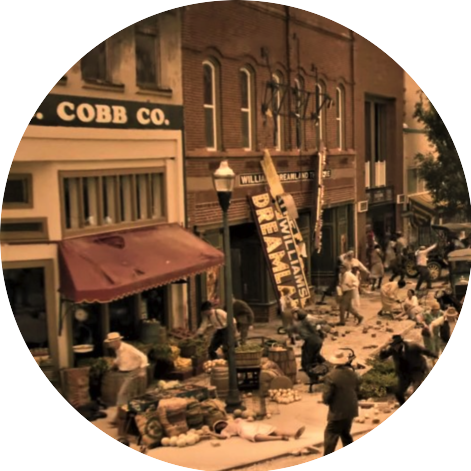
Hollywood, California was just beginning to produce its first films. With so few films to show, early movie theatres were built with performance stages and featured musical and vaudeville acts as well as films. Loula Williams opened Williams Dreamland Theatre in 1914, at 127 N. Greenwood.
The new theatre had a seating capacity of 750, with movie tickets costing 15 cents. That same year, Tate Brady opened the Convention Hall (later named the Tulsa Theatre) just a few blocks to the west.
Loula’s entrepreneurial spirit paid off. The Dreamland Theatre quickly became just as popular an attraction as the confectionary. The movie industry boomed as well. After Dreamland Theater's first year in business, film studios were forming all around the country. Not only was film becoming more established as an industry, but it was also becoming quite diverse. All-black film production companies were finding great success during these pioneering years.
Among these were the Lincoln Motion Picture Company based in Omaha, Nebraska, Chicago-based Micheaux Film Corporation, and Norman Studios in Jacksonville, Florida. Norman Studios' first film with an all-black cast was The Green-Eyed Monster, a 1919 action film in which two feuding railroad tycoons sought to settle a fight over their shared love interest by racing their trains. The man with the winning train would win the girl. Movie posters promised "5 SMASHING REELS OF THRILLS! ACTION! PUNCH!" and was wildly popular with black audiences for many years.
One can imagine that The Green-Eyed Monster might have been showing at Williams Dreamland Theatre on the evening of May 31st, 1921. Loula and her 16-year-old son William were working at the confectionary that evening. In a 1977 interview with Jan Jennings Sparks conducted for the Tulsa Historical Society, William describes that he was busy cleaning tables and helping close the shop for the night. By this time, crowds were beginning to gather at Mann’s Grocery Store and the The Tulsa Star newspaper offices, sharing news about Dick Rowland’s arrest. William wanted to see for himself what was going on, but his mother told him to stay in the building.
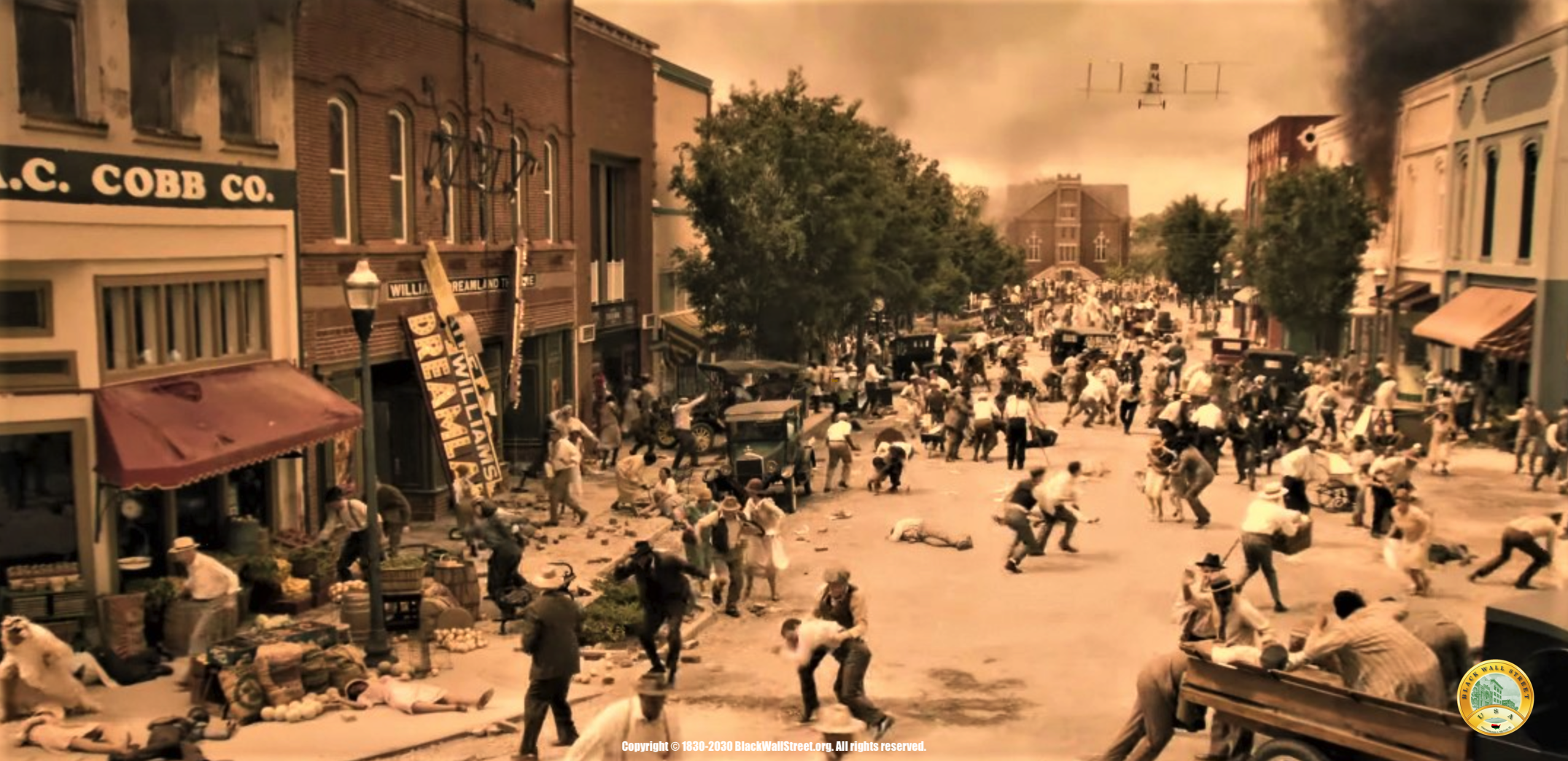
Meanwhile, O.B. Mann stormed into the Dreamland Theatre, interrupting the film, announcing, “Turn up these lights! The movie is over, ’cause I got news! The whites are getting ready to hang a Negro boy downtown… We’re going to go down and stop it, and if you want to join us, come on!” Henry Sowders, the theatre’s manager and a loyal white employee of Loula’s, evacuated and closed the theatre as A.J. Smitherman, O.B. Mann, John Williams, and others armed themselves and drove to the courthouse to confront the sheriff and demand Rowland’s release.
The first time they arrived at the courthouse, the group left peacefully after a talk between O.W. Gurley and Sheriff Willard M. McCullough. The second time, a larger group of Greenwood men arrived at the courthouse at about 10 pm, and a fight broke out when one of the men from the white mob—by this time about two thousand in number—tried to grab O.B. Mann’s gun. The gun went off accidentally, but that’s all that was needed to spark an all-out war.
Hundreds of shots were fired within seconds.