An Entreprenuer of Greenwood
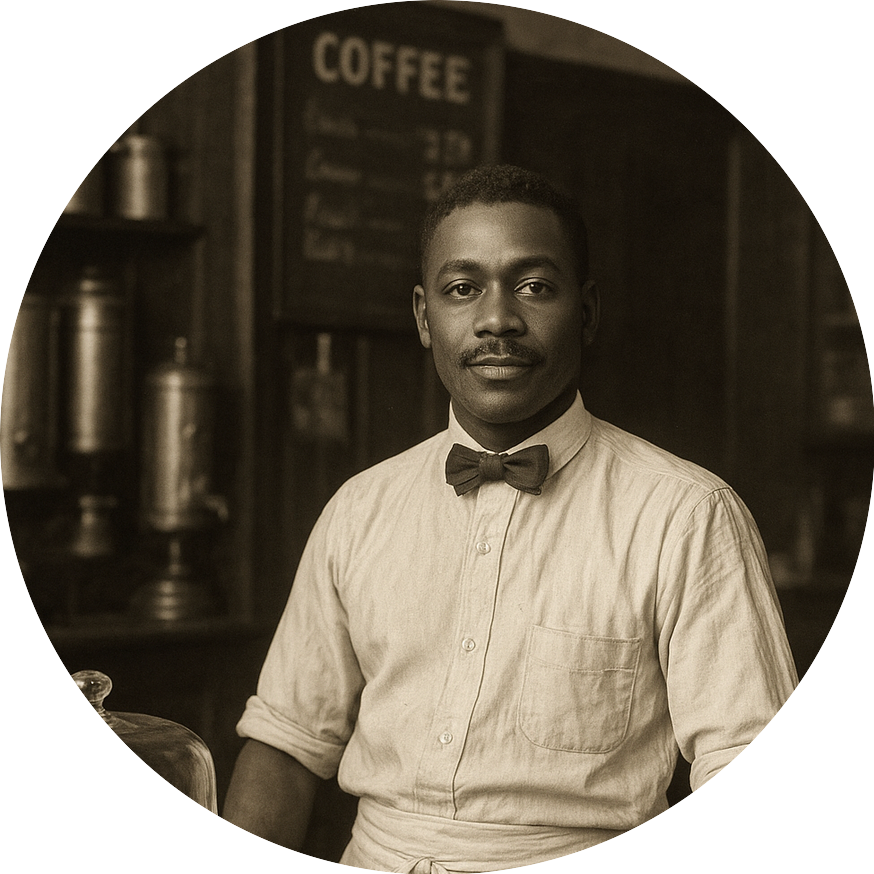
Harry Daniel Evans lived a kind of life that, although not lavish in the broad annals of history, wove itself tightly into the everyday tapestry of Greenwood, Tulsa — the place that would come to be known as Black Wall Street. Born in Texas, Evans journeyed into the heart of a rapidly flourishing African American business district, and with his wife Irene, built a modest but indispensable enterprise: Evans Café, first opened in March 1914 in the Martin Building at 126 North Greenwood Avenue. That café, and a later tailoring business, would leave footprints on Greenwood’s economic and social life, even if the records that remain are fragmentary.
Evans didn’t arrive in Tulsa as a headline name, nor as a real estate magnate: he came as a small businessman, someone who saw opportunity in serving his community’s daily needs, someone whose ambition was not necessarily to build a skyscraper or a bank, but to fill the simple but essential role of feeding people, connecting with visitors, hiring workers, and offering a service. In that sense, he represented a crucial layer of Greenwood’s economic fabric: the local entrepreneur whose café provided food, a gathering place, a stop for traveling athletes, and possibly a late-night anchor; whose tailoring shop gave people confidence through clothes, mended their garments, and likely caught work from Greenwood residents who treasured quality and convenience close by.
When Harry and Irene Evans opened Evans Café in the Martin Building, the Greenwood Avenue area was already emerging as a vibrant center of Black commerce in Tulsa. Greenwood Avenue was lined with shops, barbershops, funeral parlors, and restaurants; the Martin Building held street-level storefronts tightly packed. The café’s location at 126 North Greenwood put it where foot traffic flowed, where businesses depended on local residents, visitors, and those working in the district. By offering three meals a day and shorter orders any time, day or night, Evans Café established itself not as a luxury venue but as a practical, welcoming, accessible place. People could come in before or after work, or even late at night, and get a warm meal.
Evans Café was not just for local workers; it was a comfortable stop for visiting baseball teams. Memories hold that the Tulsa Oilers and the Bartlesville Blues, among other teams, patronized the café. For those teams, traveling in early twentieth-century Oklahoma, finding a Black-owned restaurant in Greenwood where they could rest, eat, and gather would have been a welcome relief. The café, according to recollections, employed at least two waitresses and a night cook. The presence of staff who worked late into the night suggests Evans Café catered to a broad swath of the community — not just daytime customers, but those passing through, those working odd hours, and those who needed a reliable spot at any time.
As the café flourished, or at least operated through the 1910s, Evans also developed another branch of business: tailoring. The Evans Tailoring Company, with H.D. Evans as proprietor, set up shop at 609 East Archer Street in Greenwood. Archer Street itself was a vital artery of Greenwood commerce, hosting service businesses that the community relied on. Tailoring in that era was not a trivial business. For many people, both work clothes and everyday wear required mending, adjusting, and crafting. Ready-made clothing was less ubiquitous than in later decades, and skilled tailors were in demand. Evans, by running such a shop, offered more than a repair service: he gave Greenwood a place to craft and preserve dignity, one stitch at a time.
In his relentless but unassuming way, Evans contributed to the circulation of capital within Greenwood. Every dollar spent at his café or in his tailoring shop likely stayed — at least in part — circulating within the Black Wall Street economy. His café brought in wages; his shop employed workers. Community members spent money on meals, on tailored garments, on mending clothes, and in turn his employees spent their income locally. In segregated Tulsa, where Black people often faced exclusion from white-owned establishments, such circulation was not just an economic matter but a deeply social one. It strengthened community bonds, reinforced local enterprise, and helped undergird Greenwood’s resilience.
Evans’s businesses also provided socio-cultural value. A café is more than a place to eat; it is a gathering space. In Greenwood, where public accommodations for Black people were limited elsewhere, Black-owned restaurants were vital sites of sociability. Patrons of Evans Café would have crossed paths with neighbors, with traveling athletes, with people doing business in Greenwood, with friends and family passing through. The café may have served as a kind of informal town square — a place to chat, to organize, to rest, to laugh, or to strategize. It was a node of social life, linking business with personal interaction and civic identity.
In operating a tailoring shop, Evans also nourished a deeper layer of personal dignity and care. Clothes matter: they carry social meaning, they shape self-perception, and they encode aspirations. By repairing garments, tailoring them to fit, and perhaps even crafting new ones, Evans gave clients something beyond fabric: he offered respect, a chance to present well, to feel properly dressed. For many Black Tulsans in the early twentieth century, having access to a skilled tailor in their own community was a marker of economic health and social pride.
Although the records are not generously thick, his presence is attested in local directories and telephone books: listings for H. D. Evans as proprietor, his business addresses, his phone numbers. These directory entries reveal that Evans was integrated into the formal economic network of Greenwood. He was not invisible: he participated in the rhythms of commerce, and his businesses had fixed, traceable locations. These listings may seem mundane, but they reflect a rootedness: his café in the Martin Building, his tailoring shop on Archer, his name printed in formal business directories alongside his fellow Greenwood entrepreneurs.
The idea of Evans and his café being a part of Greenwood’s hospitality to sports teams is particularly revealing. Baseball in the early twentieth century was still segregated, but Black teams traveled, played, and built their own circuits. Greenwood’s restaurants that welcomed those teams provided a vital service — a place where these athletes could eat, rest, and feel welcome. Through that hospitality, Evans Café became a bridge between Greenwood and a broader regional culture of athletics and competition. For the local community, the presence of teams in Greenwood and their patronage of local entrepreneurs like Evans reaffirmed Greenwood’s standing not only in commerce but in cultural networks.
Operating a café with three meals a day and an around-the-clock short-order menu suggests Evans was tapping a wide market: daily business, families, working men, night workers, travelers, and more. That range also implies a logistical complexity: food procurement, staffing, supply chain, cost control, and customer management. Running such a business would not have been easy, especially in a segregated society with limited access to credit, higher costs for Black entrepreneurs, and systemic obstacles. Yet Evans persisted, contributing to Greenwood’s commercial vitality.
Irene Evans, his partner, also played a role. While the records do not fully detail her life, local oral histories and memorial sites highlight her involvement in the café’s founding. The opening of Evans Café is often attributed to “Irene and her husband, Harry Daniel,” suggesting a true partnership, even if public documents more often name H.D. Evans. This collaboration would have been crucial: in many small businesses, especially family-run, wives manage operations, staffing, finances, and customer relationships in ways that are underdocumented. Irene’s contribution, though less recorded, was foundational.
Beyond everyday commerce, the twin businesses of Evans — café and tailoring — reflected a kind of entrepreneurial diversification that strengthened Greenwood’s economy. Rather than relying on a single income stream, Evans spread risk: if restaurant business wove through seasonal highs and lows, tailoring might offer steadier demand; if one enterprise struggled, the other could support the household. This diversification mirrored patterns seen in many Black business families, who often ran multiple lines of enterprise to maximize opportunity and stability in a precarious economic environment.
The early twentieth century was a challenging era for African Americans in the South and Midwest. Systemic racism, segregation laws, discriminatory banking practices, and limited access to capital made entrepreneurship difficult. Yet Greenwood became an extraordinary example of Black economic self-determination. It was a place where Black-owned banks lent to local proprietors, where wages from Black-owned businesses went back into Black-owned establishments, where the district formed a self-reinforcing economic web. Entrepreneurs like Evans played a part in that structure: by running a café, by employing locals, by offering services, by building trust in the community.
By working in Greenwood, Evans was part of a larger ecosystem of Black business owners, from funeral home directors to barbers, theater owners to real estate developers. His café complemented other services — people could stop in to eat, talk business, pick up tailored clothing, and then move on to other local enterprises. The density of Greenwood’s commerce was not accidental; it was built by many small entrepreneurs, each contributing incrementally to a thriving district.
When we think of Greenwood’s destruction in 1921 during the Tulsa Race Massacre, it is natural to wonder what happened to Evans’s café, his tailoring shop, his property, his life. The archival record does not clearly preserve a named claim for Evans in many of the public facing 1921 destruction documents, at least in the mainstream archival materials available online. This absence does not necessarily mean he was spared or unimpacted; rather, it underscores how many small proprietors’ stories were lost, marginalized, or simply not documented in the surviving claim and suit records. The chaos, the destruction, the displacement all combined to erase much of Greenwood’s oral and paper trail. But given his business location on Greenwood Avenue and his active presence in the district, it is likely that Evans felt the full weight of the massacre’s economic and emotional devastation. Regardless of whether his business survived physically or in legal claims, the fact that his name endures in community recollections, in history-web pages, in directory entries, and in oral history pins suggests that Evans made a mark. He did not vanish without trace. The memory of Evans Café serving teams, of the tailoring shop on Archer, of his role as proprietor continues in the stories that descendants and historians tell.
In reconstructing Evans’s life, we see more than a businessman; we see an essential participant in Greenwood’s social life. His café was not grand, but it was real — a place where people met, where meals were shared, where the hum of conversation mattered. Through that café, through his tailoring shop, through his daily efforts, he offered dignity, service, and a link in Greenwood’s chain of economic self-reliance. Evans’s significance is not that he built an empire, but that he epitomized Greenwood’s foundational layer: the small daily businesses that, together, constituted the beating heart of Black Wall Street. He was part of a generation that believed in local enterprise, that tethered their ambitions to community needs, and that built something resilient enough to sustain through prosperity, challenge, and even violent disruption.
When I imagine Evans, I see a man greeting early customers in the café, maybe guiding a cook late at night, or talking with a waitress between orders. I see him in his tailoring shop, measuring a customer, smoothing fabric, repairing a favorite jacket. I imagine his pride in building a business with his wife, Irene, in a district that refused to let Black ambition be hidden or small. I imagine him navigating the tight financial constraints of his time, the structural racism that threatened Black wealth, and yet carrying on — because Greenwood was not just a place for survival, but for opportunity, for identity, for building. His story invites reflection on how history often spotlights the towering figures — the bankers, the tycoons, the big property owners — but overlooks the small proprietors without whom the community would not have functioned. Greenwood did not become a jewel of Black entrepreneurship based solely on large institutions; it was built on cafes, tailors, barbers, grocers, funeral homes, theaters, and more. Evans was part of that mosaic.
To fully reclaim and honor his legacy, one must look beyond the grand narratives. We must piece together directories, oral histories, claim files, recollections. We must ask librarians, historians, descendants. Even in absence, his presence matters: in the times he opened his café doors, in the meals he offered, in the stitches he mended, in the employment he provided, and in the way his name still appears, generations later, in the memory of Greenwood. His business may no longer stand, his building may no longer bear his name, but the echoes remain: in the stories, in the neighborhood’s economic bones, and in the power of everyday entrepreneurship. In remembering Harry Daniel Evans, we remember all the small business owners whose courage built a community — not through grand gestures, but through grit, service, and the simple act of opening a café door.
Evans came to Tulsa from Texas as a quietly determined man, carrying in his mind a hope for opportunity, a belief in business, and a dedication to his community. He arrived in a city whose African American district, Greenwood, was rising not only in ambition but in pride: a place where Black enterprise could thrive even under the shadow of segregation, a place where Greenwood Avenue pulsed like an artery of commerce, conversation, and kinship. In that neighborhood, Evans and his wife Irene built something modest but deeply rooted, something that would leave a legacy far beyond its brick walls. Their café, opened in March 1914 in the Martin Building at 126 North Greenwood, became more than a restaurant—it was a gathering point, a waypoint for travelers, a job creator. Later, Evans would operate a tailoring business on Archer Street, stitching together more than fabric: he wove together community, trust, and dignity. His story may not loom large in the usual grand histories, but it is precisely in its everydayness that his contribution to Black Wall Street endures.
Evans’s journey began in Texas, though the specifics of his early life remain elusive. What can be surmised is that he carried with him the kind of entrepreneurial impulse that many African Americans of his generation did: a belief in self-determination, in building, in serving. Tulsa’s Greenwood district, in the 1910s, offered a fertile ground for that impulse. The neighborhood was growing, not just as a place of residence, but as a commercial hub. Black business owners—grocers, funeral directors, barbers, tailors, restaurant proprietors—were establishing shops on Greenwood Avenue, on Archer Street, on side blocks, knitting together a web of economic life that depended on Black spending and Black solidarity.
When Harry and Irene opened Evans Café in the Martin Building, Greenwood was transforming. Greenwood Avenue was no ordinary street: it was the lifeline of a community, the showcase of a people’s ambition. Buildings rose, storefronts opened, foot traffic swelled. The Martin Building itself provided street-level units for small businesses, and at 126 North Greenwood, the Evans Café nestled amidst that rising tapestry. In a city divided by race, Greenwood represented a world where Black people could transact freely with each other, where money could circulate without being siphoned off, where community and commerce merged.
Evans Café was not a place of luxury; it was a place of service. The decision to provide three meals a day and short orders around the clock suggests that Evans understood the rhythms of his community: men working long hours, families needing affordable meals, people passing through late at night. The café’s doors were open to many, and in its modest hustle one could see the heartbeat of Greenwood daily life. Patrons might come in before work, or after working long shifts, or just to sit and talk, or to find a warm meal on their way elsewhere. Irene and Harry likely oversaw operations together: Irene managing some of the day-to-day, Harry orchestrating supply, staffing, and finances — each relying on the other, each building something with care.
But the café was not merely local. Memories suggest that Evans Café welcomed teams visiting Tulsa—baseball teams like the Tulsa Oilers and the Bartlesville Blues reportedly came in, seeking a good meal between games. These teams, traveling in segregated America, found in Greenwood a hospitable haven, a spot where they could rest, eat, and connect. For Evans, serving athletes meant more than extra business; it meant forging connections beyond Greenwood, anchoring his café in a wider circuit of sport, leisure, and regional movement. That his business could host traveling teams is a testament to its reputation, its reliability, and its place in the local social fabric.
Evans employed staff: at least two waitresses and a night cook worked in the café, according to recollections. That staffing tells a story of trust, of opportunity, of community investment. These were not servants in a distant household; they were workers in a Black-owned business, making their livelihood within Greenwood. Their wages, their tips, their relationships with customers contributed to local circulation. For the waitresses, working at Evans Café was not only employment but a place of social engagement, of routine and connection. For the night cook, the café’s 24-hour openness meant steady work when others closed, and a chance to serve a diverse clientele.
As the café became part of Greenwood’s fabric, Evans did not rest on one line of business. He branched into tailoring, opening Evans Tailoring Company at 609 East Archer Street. Archer Street, in Greenwood, was another vital corridor, lined with service businesses, shops, and tailors. Tailoring was a valued craft: clothing required mending, fitting, altering; people needed their garments repaired, pressed, or crafted to suit their needs. In the early 20th century, ready-made clothing was less universal than today, and hand-tailored work carried both utility and dignity. Evans’s tailoring shop likely received business from Greenwood residents who cared deeply about their appearance, who wanted clothes that fit, who needed repairs done locally.
In that shop, Evans would have measured, cut, sewn, pressed, and tailored. He would have spoken with clients about style, durability, cost. He would have built relationships, some long-term. A tailor’s studio is a place of detail, of patience. It requires a steady hand, a keen eye, and a trustworthy reputation. By offering his services in that way, Evans contributed not only to the practical needs of Greenwood’s residents, but to their sense of self-respect: a well-fitting suit or a repaired coat is more than cloth—it is affirmation.
Operating both café and tailoring business demanded resilience. Evans carried risk, in supplying food, paying staff, buying materials, meeting rent. Yet by diversifying—by balancing food service and tailoring—he spread that risk. In slow times at the café, tailoring might pick up; in lull times for tailoring, restaurant business might cover. This diversification was a mark of savvy; Evans was not content to rely on a single venture, but saw multiple pathways to serve his community. In a segregated city, where systemic racism restricted capital access, where loans were harder to secure for Black entrepreneurs, and where discrimination could block access to suppliers, starting and maintaining these businesses was no small feat. Yet Evans pressed on. His café, his shop, his relationships—each stood as a testament to self-reliance, to the possibility that Black people could build, own, and sustain commerce even under oppressive circumstances.
His customers were diverse: locals, workers, families, travelers, athletes. In that mix he did more than feed people or tailor garments—he fostered trust. Guests at his café surely gathered to talk, to dream, to plan. In the early evening, men might debate politics, families might coordinate, athletes might rest. In his tailoring shop, individuals confided what they wanted, their budgets, their aspirations for a new suit or a repaired coat. Evans, in these interactions, was more than a boss; he was a community actor, a node in Greenwood’s social network. His partnership with Irene was central. Opening a café with his wife was not just a business move; it was a statement of joint purpose. Irene’s presence in Greenwood’s local history points to her involvement in daily operations, hospitality, and community. She may have overseen the café during the day, handled ordering, managed staff, greeted customers, and cared for details. Her role was integral to the success and warmth of the café. The Evanss together built something grounded in shared responsibility and mutual trust.
Over time, Evans’s businesses must have grown in reputation. The café, with its around-the-clock service, would have become part of Greenwood’s routine—a place people counted on. The tailoring shop, steady and skilled, would have built repeat clients. In their customer interactions, the Evanss would have gained insight into Greenwood’s aspirations: what people wanted to wear, how they arranged their expenses, which services they prized. Through his two enterprises, Evans saw Greenwood not just as a market but as a community of people with dreams, with needs, and with connections.
When stepping back to look at Greenwood during Evans’s years, one sees a remarkable ecosystem. Greenwood was not just a neighborhood but a self-contained economy. Money earned in Greenwood stayed in Greenwood: wages from businesses like Evans’s café were spent in other local shops, circulated across barbershops, theaters, funeral homes, grocers, and more. This circular economy underpinned Greenwood’s strength. Business owners reinvested in one another, in property, in community, and in institutions. Black Wall Street was not built solely by financiers or the wealthy—it was built by people who ran everyday businesses, who employed, who served, and who believed in local cooperation.
Part of what made Greenwood so vibrant was its density. On Greenwood Avenue, storefronts crowded side by side. The street was alive with foot traffic. People walked, shopped, dined, met. The Martin Building, where Evans Café stood, was one among many structures that housed commerce, community, and building. That density gave credibility to Greenwood as a destination—not only for its residents but for visitors. Those who came to Greenwood did so to trade, to conduct business, to eat, to socialize. And in that commerce lay empowerment. Evans’s café, though modest, likely contributed to Greenwood’s reputation for hospitality. For visiting athletes, for families, for traveling Black patrons, a café open day and night was a blessing. It signified safety, familiarity, welcome. It signified that Greenwood was not simply a place to do business, but a place to rest, to connect. The café’s staffing—waitresses, a night cook—indicated Evans understood the logistical and social demands of serving many clientele types, including those who traveled or worked late.
Yet, the life of Greenwood was not carefree. Racial tension, economic inequities, and the constant threat of violence were part of the background. The prosperity of Black Wall Street was, in many ways, a challenge to the status quo. White Tulsa’s power structures watched Greenwood with unease. The concentration of Black wealth, property, and enterprise was exceptional, and that had consequences in a segregated society fueled by resentment.
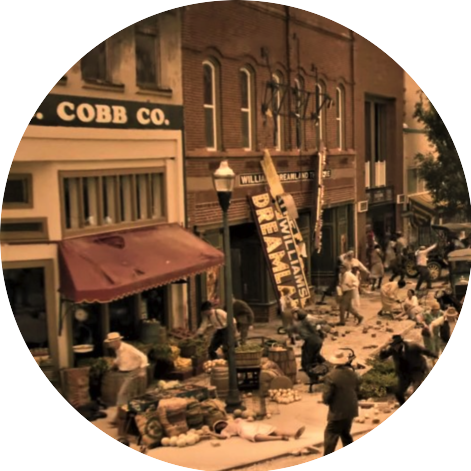
In 1921, that tension exploded. The Tulsa Race Massacre wrought catastrophic violence on Greenwood. Buildings burned, property was destroyed, lives were lost, and the community was left reeling. In the wake of that devastation, the fragile web of Greenwood’s businesses was shattered. For Harry Daniel Evans, like many proprietors, the massacre represented a profound disruption. His café and tailoring shop, deeply embedded in Greenwood, would very likely have been impacted: destroyed, damaged, looted, or forced to close. The very foundation of his work was undermined, as Greenwood’s commercial district was leveled in many places.
Records for some smaller business owners, like Evans, are sparse in the legal claims and suit filings that followed the massacre. The names of big property owners, large institutions, and major businesses are more frequently found in claims, but many modest proprietors did not leave the kind of documented trail that made it into the dominant legal record. The absence of a clear public claim for Evans does not necessarily mean he did not suffer losses—it may reflect the erasure that came with mass destruction, displacement, and the difficulty of rebuilding with limited resources.
In the immediate aftermath, the survivors of Greenwood faced endless challenges: rebuilding infrastructure, reestablishing businesses, reclaiming property, securing funds, and coping with trauma. For Evans, if he survived with his family and returned, the road would have been steep. Reopening a café requires capital, licensing, supplies, employees, and time; restarting a tailoring shop involves tools, fabric, relationships, and trust. The violence and loss of 1921 was not simply physical; it was economic, social, emotional. The community’s wealth, accumulated over years of careful forging, was largely wiped out overnight.
But Greenwood did not remain dead. In the following decades, the district’s spirit endured. Some businesses reopened; others began anew. The economic network, though disrupted, slowly reknit itself in parts. Churches, social groups, community organizations helped people rebuild their lives. Black entrepreneurs, survivors of the massacre, and new generations carried forward the dream of Greenwood’s economic self-determination. Even as Greenwood faced legal battles, property disputes, and systemic discrimination in the rebuilding process, its resilience was astonishing. Though many records of small proprietors disappeared, the memory of entrepreneurs like Evans persisted in oral traditions, in local histories, in the stories passed from generation to generation. Those stories became part of the broader tapestry of Black Wall Street’s legacy: not only in the big successes, but in the quiet diligence of daily business owners.
Evans’s legacy, then, is not one of grand monuments or corporate skyscrapers. It is a legacy of persistence. Of seeing a need—food, tailoring—and meeting it. Of believing that a Black-owned café could serve athletes and local patrons alike. Of believing that a tailoring shop could be a place of dignity, not just profit. Of working side by side with his wife, in a district that was built by many such partnerships. Of serving his community, even when the forces of hatred threatened to erase everything. In the decades after the massacre, Greenwood’s meaning evolved. It became a symbol of Black economic achievement, of tragedy, of rebirth. Historians and descendants began to piece together the stories of its people—the real, flesh-and-blood mothers, fathers, entrepreneurs, laborers, dreamers. In that process, the contributions of people like Evans gained more attention. In museums, in oral history projects, in books, in documentaries, his café and tailoring shop became part of the mosaic. Not as central figures perhaps, but as crucial threads in the weave.
Today, remembering Evans means more than recalling business addresses or storefront numbers. It means honoring the spirit of everyday entrepreneurship. It means understanding that Black Wall Street was built not only by the wealthy and prominent, but by people who served meals, mended clothes, worked nights, welcomed strangers, and believed in local economic autonomy. It means acknowledging that even if their names did not make front-page headlines, their labor and ambition powered Greenwood’s rise. Evans’s story also courageously illustrates the fragility of success in a racist society. He built in a place where prosperity could be snatched away by violence; his achievements were vulnerable. And yet, the memory of his café and his shop survived. That survival is part of Greenwood’s heritage: a narrative not of unbroken triumph, but of hope, loss, return, and remembrance.
In thinking of Evans, one is invited to imagine the café’s steady clatter of dishes, the conversations of waitresses, the hum of a night cook’s stove, the smell of coffee and biscuits, the tailoring shop’s measuring tape, its careful seams, the soft hum of thread through fabric. One envisions a man whose hands built menus and measured jackets, whose mind tracked expenses and ordered supplies, whose heart cared for his customers and his community. His life, in its quiet determination, teaches something vital: economic power is not just about capitalization and large-scale accumulation. It is about service, relationship, craftsmanship, and place. It is about building something meaningful in your community and sustaining it through relationships. It is about resilience in the face of disruption, and faith in rebuilding.
Greenwood’s rise, fall, and legacy carry many lessons. But within its great story lie the smaller stories—the lunchroom operators, the tailors, the seamstresses, the waitresses, the cooks, the pedestrians who walked Greenwood Avenue, the families who dined late, the athletes who rested between games. Evans belonged to that world. His café and tailoring shop were part of Greenwood’s heart. His life, though not recorded in every archive, is remembered in memory, in family stories, in local history projects.
As we look back today, we must hold on to those memories. We must elevate not only the titans of Black Wall Street, but the everyday builders. We must honor their work, their sacrifices, their hopes. In doing so, we restore a fuller, richer, more truthful picture of what Greenwood was—and what it continues to be: a place of commerce, community, craft, and courage. To remember Harry Daniel Evans is to remember the power of entrepreneurship rooted in service, respect, and community. It is to honor the many unsung business people whose small storefronts and humble shops made Greenwood more than just a district—it made it a home. And in remembering them, we reconnect with a legacy that continues to inspire: building from the ground, serving daily, dreaming long term, and believing in a community that could sustain its own, no matter how fierce the storm.
Harry Daniel Evans leaned into the future with a steady, unshakeable faith in his own hands, in the dignity of service, and in the promise of community. He believed, as many Black entrepreneurs of his day did, that a café was not simply a place to feed people, but a place to unify, to sustain, to anchor. In the crowded, hopeful streets of Greenwood, that belief carried weight. He and his wife Irene built Evans Café not because it was the flashiest opportunity, but because it mattered, every single day. They opened the café in March 1914 in the Martin Building, at 126 North Greenwood Avenue, placing themselves at the heart of Greenwood’s commercial corridor. From that spot, their work rippled far beyond their walls.
In those early days, Greenwood was a hive of energy. It was more than a Black neighborhood; it was a bold experiment in economic self-determination. The buildings along Greenwood Avenue held grocers, barbers, tailors, funeral homes, pool halls, hotel rooms, cafés—all crammed into blocks that hummed with possibility. This was Greenwood in transformation, where resourcefulness and ambition converged. Evans Café entered this world as a modest but necessary node: people needed meals, they needed a place to convene, and Evans saw that need clearly.
The decision to serve three meals a day, plus offer short orders around the clock, spoke to Evans’s understanding of his clientele. He recognized that Greenwood was not a simple neighborhood of nine-to-fivers; it was alive at all hours. Workers finishing shifts, travelers arriving late, families seeking a warm evening supper, even night-crawlers craving coffee and conversation—Evans Café catered to all. In doing so, it became more than a restaurant: it became a constant, reliable presence, a place where the community always had a seat and a plate waiting.
But reliability did not mean routine boredom. The café was woven into the social life of Greenwood. Locals would come in, greeting each other over familiar menus, the clang of dishes, and the hum of conversation. The waitresses, two of them at least, became familiar faces—people who knew their customers, their families, their stories. The night cook, working late, witnessed the shifting flows of Greenwood by lamp light: conversations about business deals, gossip about local politics, laughter after church, whispers from young couples. In all of that, Evans was quietly building something rich: not just business relationships, but human ones.
He also recognized that Greenwood’s influence extended far beyond its geographic boundaries. The café’s memory is tied to visiting baseball teams—the Tulsa Oilers, the Bartlesville Blues—and Evans welcomed them in. These athletes traveled for games, but when they arrived in Greenwood, they entered a community where they were not just customers, but guests in a place that proudly bore its Black identity. Evans treated them with care, with hospitality, with a kind of respect that said: here, you are welcome. Those visits were not accidental; they were part of Greenwood’s broader cultural and economic ecosystem. Evans Café was a waystation where sport, travel, rest, commerce, and community converged.
But Evans did not rest entirely on the café. He understood that serving Greenwood meant offering more than meals. He opened Evans Tailoring Company at 609 East Archer Street, placing himself in the heart of service enterprise. There, he measured, sewed, pressed, repaired, and tailored. He worked with cloth and thread, listening to clients’ needs, shaping fabric to fit bodies, repairing garments worn and worn again. In that shop, clients did not just drop off clothes; they entrusted Evans with part of their appearance, their dignity, their presentation in the world. To be well dressed was a social statement, and Evans offered that crafting.
Operating both a café and a tailoring shop was not simply ambitious—it was strategic. With two lines of business, Evans balanced risk. If food margins flattened, the steady demand for tailoring could steady his income. If tailoring slowed, the constant flow of customers through the café could pay the bills. This dual focus was not random; it was a plan shaped by awareness of his community’s habits and needs. The café met the hunger of the body, the tailoring shop met the needs of presentation and pride. Together, they formed a compact, resilient entrepreneurial model.
In doing this work, Evans was deeply embedded in Greenwood’s economy—a system of local circulation. The money his customers spent in the café, the payments they made for tailoring, the wages he paid his staff—all circulated within Greenwood. That circulation strengthened neighborhood ties, reinforced economic self-reliance, and built trust. When someone ate at Evans’s café, they were investing in their own community. When they brought their clothes to his shop, they were investing not just in fabric, but in a network of craftsmanship and respect. Every transaction was a vote for Greenwood’s viability, a commitment to the neighborhood’s future.
The relational aspect of Evans’s work cannot be overstated. A café is a place of stories: people meet, couples talk, friends gather, business is discussed, plans are hatched. In Evans Café, conversations whispered over coffees or meals likely ranged from the practical to the profound: news of business, talk of local development, questions about safety, reflections on race, dreams of expansion. Through it all, Evans and Irene sat at the center—not as aloof proprietors, but as hosts of possibility. Their café was a nexus of relationships, a place where Greenwood’s social capital could accumulate in quiet ways, one shared table at a time.
At the tailoring shop, the relationships were more intimate. Tailors meet clients not just in public but in personal proximity. There is measurement, fitting, trust. Evans would have listened to his customers talk about their work, their hopes, the event for which they needed a suit or a cleaned coat. He would have seen the subtle creases, the worn linings, the way fabric draped. He would have shaped garments that made people feel good, confident, ready to stand before the world. In that work, he contributed to personal dignity: he gave clients the gift of appearance, of self-respect.
Evans’s partnership with Irene was also central to his story. Though public documents often name him first, local memory remembers Irene as an equal force. She likely handled the day-to-day operations of the café, managed staff, oversaw orders, welcomed customers, balanced books. Their collaboration was deeply practical and deeply symbolic: two partners building a business rooted in service, rooted in community. Their marriage and business blended into one shared enterprise, and through that, they left a lasting mark.
The years leading up to 1921 were a high tide for Greenwood. The district was economically vibrant, teeming with Black-owned businesses, cultural institutions, churches, and homes. The success of entrepreneurs like Evans was one among many success stories — but collectively, these stories formed a powerful testimony of Black economic self-determination. Greenwood was not just surviving, it was thriving. Money circulated, investments multiplied, and property values rose. The community was building its own infrastructure, believing in its own capacity to sustain itself.
In that rising prosperity, however, lay a threat. White Tulsa’s power structures observed Greenwood’s success with suspicion, even resentment. The accumulation of Black wealth, property, and entrepreneurship challenged the social order. Tensions grew, and whispers turned to animosity. For all Greenwood’s determined self-reliance, it existed in a fragile context, one where hostility and segregation were always lurking. The economic flourishing of Greenwood was, in many ways, an act of courage.
Then came 1921. The massacre descended with ferocity. Greenwood’s streets, once alive with commerce and laughter, became fields of smoke and ruin. Buildings burned, lives were shattered, and the very foundation of Black Wall Street was scorched. Evans Café, located on Greenwood Avenue in the Martin Building, was almost certainly imperiled. The Martin Building, the street-level storefronts, the rhythm of storefront life—they all faced the full weight of terror and violence. Evans Tailoring on Archer Street would have been equally vulnerable, his tools, fabric, property, and personal investment all standing in harm’s way.
In the massacre’s aftermath, many Greenwood property owners filed claims, tried to rebuild, tried to reclaim what was lost. But for smaller business people like Evans, the road was steep. Rebuilding required capital, resources, time, and energy. Even if the physical structures survived in part, the human toll was devastating: trauma, displacement, loss of community networks, loss of staff, and loss of customers. Ef forts to restore businesses were hampered by systemic racism, by lack of insurance, by the challenge of reestablishing trust. For a man like Evans, the post-massacre period may have demanded every bit of his resilience.
Yet Greenwood did not simply vanish. Despite its destruction, the spirit endured. Survivors returned. Churches reopened. Community groups reformed. Entrepreneurs tried again. Small businesses reknit, often under different names or with different ownership, but the will to rebuild was powerful. For some, the rebuilding was partial; for others, profound. In the decades that followed, Greenwood’s identity shifted: from a thriving commercial district to a symbol of loss, to a site of rebirth, memory, and heritage. Through it all, the contributions of people like Evans — the waitresses, the cooks, the tailors, the owners — resurfaced in oral histories, recollections, local memory, and community storytelling.
His name, though not always on the front page of history books, survived in these quieter records. Through local history projects, community archives, memory sites, and family stories, Evans’s café and tailoring shop endured in the collective memory. The stories told by those who remembered Evans Café — of baseball teams resting there, of waitresses greeting late-night customers, of night cooks lighting lamps and pressing coffee cups — carried his legacy forward. The tailor’s shop, too, survived in memory: clients visited him, spoke of his precision, recalled how he measured and stitched, remembered the way he handled their clothing with care.
His story, when we piece it together, teaches us something vital about Greenwood’s economy. It reminds us that greatness did not lie only in the banks, the theaters, or the grand hotels. Greenwood’s true strength came from its small businesses: the cafés, the tailors, the seamstresses, the grocers, the barbers. These were the arteries that kept the community alive, circulating money, folks, culture, and purpose. Without those ordinary, yet extraordinary, enterprises, Greenwood would not have been the potent symbol of Black self-determination that it became. Evans’s legacy also highlights the fragility of Black success in a hostile world. His vision, his labor, his investment — all were vulnerable to forces outside his control. The massacre made that painfully clear. Yet the choice to build again, to remember, to sustain that legacy in memory and in community, was equally powerful. Rebuilding Greenwood was not simply about bricks and mortar, but about restoring hope, restoring dignity, restoring a way of life that had been violently challenged.
In the decades after 1921, as Greenwood changed, as the city of Tulsa evolved, as racial dynamics shifted but never fully resolved, the memory of Evans and other small business owners remained. Community organizations, historians, descendants, and local institutions committed themselves to telling those stories — partly so that their sacrifice and struggle would not be forgotten, and partly so that future generations could draw strength from them. The narrative of Greenwood grew richer as people dug into city directories, property records, oral histories, newspapers, and family archives, reconstructing a tapestry of lives that had once seemed lost.
In restoring Evans’s story, we do more than remember a café or a tailor shop. We restore a piece of Greenwood’s soul. We affirm that the district’s power came not only from its financial institutions or its big real estate owners, but from its everyday entrepreneurs — people who invested in their community, who served, who built not for fame but for presence. We recognize the dignity in doing essential work: feeding people, mending clothes, hiring workers, welcoming strangers, and quietly believing that business could be an act of community.
When we think of Black Wall Street today — in memory, in scholarship, in cultural legacy — we must hold room for people like Harry Daniel Evans. He may not have owned skyscrapers or been tapped for high-profile leadership, but his hands shaped Greenwood in vital ways. He served meals, measured fabric, hired staff, invested in his community, and dreamed with his wife. In his café and his tailoring shop, he built a microcosm of resilience. In his everyday work, he embodied the spirit of Greenwood. Today, as Greenwood’s historical legacy is reclaimed and celebrated, people walk those same streets, gaze at the site of the Martin Building, imagine where the café once stood, and feel the resonance of stories. They remember not only the losses but the lives, the laughter, the steady clatter of dishes, the hum of sewing machines. They understand that history is not only made in grand institutions, but in humble storefronts, in gentler acts of care, in the quiet persistence of people who simply wanted to serve, to build, and to belong.
Evans’s story invites us to reflect on the meaning of entrepreneurship, of community, of memory. It calls on us to consider how small businesses shape neighborhoods, how they knit us together, how they carry not just commerce but connection. It challenges us to remember that the foundations of Black Wall Street were laid not only by millionaires, but by ordinary business owners who believed in something bigger than themselves. It reminds us that dignity is not found only in abundance, but in craft, in service, in daily labor. In honoring his legacy, we reclaim a piece of Greenwood that might otherwise remain hidden. We re-center the story of Black Wall Street on its true beating heart: the small enterprises, the dedicated people, the entrepreneurs who quietly nurtured community. We acknowledge that success is not only what is built, but how it is built — with care, with purpose, with connection. We affirm that the memory of Greenwood’s strength must include the names of people like Harry Daniel Evans, whose café fed bodies, whose tailoring shop clothed souls, and whose life anchored a community.
His life offers a lesson: that building a lasting legacy does not always mean grand scale; it can mean serving faithfully, investing humbly, dreaming steadily. It can mean opening a café, hiring people, stitching fabric, welcoming others. It can mean believing in a neighborhood, even when forces threaten to erase it, and carrying that belief forward, through memory, through rebuilding, through storytelling. When we picture Greenwood today, and when we tell its story, let us include the café tables and the sewing machines, the waitresses and the tailors, the customers and the neighbors. Let us speak of Harry Daniel Evans and Irene, not just as footnotes, but as central players in a community that built, lost, and rebuilt. Let us carry forward their courage, their care, their commitment. Let us remember that Black Wall Street was not just a place of grandeur, but a place of ordinary brilliance, of people who believed in business as an act of faith in their community.
Thus, in the quiet echo of history, in the clink of a cup, in the hum of a needle, in the memory of Greenwood Avenue, the spirit of Evans endures. His café doors may no longer swing open, his tailoring shop may no longer hum with thread, but his legacy lives in the stories we tell, the streets we walk, the dreams we carry. And in remembering him, we remember the heart of Black Wall Street — the people, the service, the steadfast belief that community is the greatest capital of all.