Coach of All Coaches
Greenwood began as an argument against inevitability. At the turn of the twentieth century, Black people arriving in what would become Tulsa were not naïve to violence, exclusion, or betrayal by law. Many had already survived slavery, Reconstruction’s collapse, the rise of Jim Crow, and the steady narrowing of political rights across the South. What distinguished Greenwood’s founders was not optimism but resolve. They did not believe freedom would be granted; they believed it had to be structured. Greenwood was therefore designed as an integrated Black world in which commerce, education, faith, and social order reinforced one another. Every business, every school, every church functioned as both a practical necessity and a symbolic declaration that Black life could be self-authoring.
The district grew rapidly because it met real needs. Black professionals treated Black patients who were barred from white hospitals. Black lawyers represented Black clients who could not expect fairness elsewhere. Black teachers instructed children whose intellect was systematically underestimated by the dominant society. Greenwood’s prosperity was not ornamental; it was functional. Money circulated internally, strengthening households and institutions simultaneously. Children absorbed authority by proximity. They saw Black adults exercising power competently and routinely. This visibility mattered. It trained expectation.
Before 1921, Greenwood’s success unsettled Tulsa’s white leadership precisely because it contradicted the racial hierarchy upon which the city’s broader economy depended. Greenwood did not exist on the margins. It existed adjacent to downtown, visible, audible, and unapologetic. Its hotels, theaters, newspapers, and businesses announced permanence. That permanence was intolerable to a society invested in Black disposability. The massacre that followed was therefore not merely mob violence but civic failure, abetted by law enforcement, legitimized by silence, and followed by deliberate historical erasure.
Yet the logic of Greenwood did not burn completely. What could not be reconstructed economically began to migrate institutionally. Black communities across the United States have long understood that when capital is stolen, culture becomes currency. After 1921, Greenwood’s values were preserved through discipline, ritual, and memory rather than land deeds and bank charters. Schools became the new vaults. Churches became the new civic halls. Athletic programs became unlikely but powerful training grounds for leadership and collective identity.
Booker T. Washington High School emerged within this context not simply as an educational facility but as a symbolic successor to Greenwood’s original mission. It bore the name of a figure often misunderstood in isolation but relevant in context: an advocate of institution-building under constraint. The school absorbed Greenwood’s displaced aspirations and redirected them into pedagogy. Its classrooms were sites of intellectual continuity. Its extracurricular spaces became laboratories for character formation.
Within this framework, the role of a coach assumed significance far beyond sport. Coaching in Black institutions has historically carried moral weight because it sits at the intersection of youth, authority, discipline, and public representation. A coach is seen, heard, and remembered. The coach’s standards become normalized. His expectations teach young people how the world works, or how it ought to work, even when the broader society sends contradictory signals.
Seymour Williams entered this lineage not as a celebrity figure but as a stabilizing force. His authority derived not from spectacle but from consistency. He understood that excellence is not episodic; it is habitual. Greenwood’s pioneers had operated on the same principle. They did not build prosperity through sudden fortune but through relentless repetition of sound practice. Williams carried this logic onto the athletic field, where preparation, accountability, and restraint were not negotiable traits but baseline requirements.
In the years following the massacre, Black youth were burdened with a paradox. They inherited a legacy of greatness that was rarely acknowledged publicly and a social reality that aggressively limited their horizons. Mentors like Williams mediated this tension. He neither romanticized the past nor surrendered to the present. Instead, he embedded Greenwood’s ethic into daily routines. Practice was not just physical exertion; it was rehearsal for life in a society that demanded excellence while denying equity.
The influence of Greenwood’s pre-1921 pioneers remained palpable in this approach. O.W. Gurley’s insistence on ownership echoed in Williams’ insistence on personal responsibility. J.B. Stradford’s architectural ambition found its parallel in Coach Williams’ demand for structural integrity within teams. A.J. Smitherman’s editorial discipline reappeared in Williams’ insistence on clarity, communication, and self-control. These were not abstract inheritances. They were behavioral continuities.
Williams’ athletes learned that individual talent without discipline was insufficient, just as Greenwood’s entrepreneurs had learned that ambition without organization would fail. Team success mirrored community success. Each player’s preparation affected the whole. This lesson was neither accidental nor trivial. It reproduced Greenwood’s original economic logic in human form. Where dollars once circulated within Black businesses, now values circulated among young people.
After the massacre, Greenwood rebuilt physically in fragments, but its moral reconstruction depended heavily on figures who worked without public acclaim. Teachers, principals, coaches, and counselors became the custodians of memory and expectation. They bore the burden of continuity in a society eager to forget. Coach Williams’ contribution must be measured against this backdrop. He operated in an environment shaped by underfunding, segregation’s residue, and historical amnesia. Yet his standards did not adjust downward. That refusal itself was political.
Athletics offered a visible platform for challenging stereotypes, but Williams’ deeper intervention was internal. He shaped how young Black men understood themselves in relation to authority, time, and effort. Greenwood before 1921 had been governed by Black authority. After 1921, that authority had to be reasserted in spaces where it could survive. The athletic program at Booker T. Washington High School became one such space. Under Williams, it was clear that Black leadership could be firm, fair, and effective.
The generational impact of this work cannot be overstated. Many of Williams’ athletes would never become professional athletes, but all would become adults shaped by the discipline they internalized. They carried Greenwood forward into professions, families, and communities far beyond Tulsa. In this way, Williams extended Greenwood’s geographic reach. The district’s values traveled in bodies rather than buildings.
Greenwood’s story has often been framed as a tragedy interrupted by heroism. This framing is incomplete. Greenwood was not merely heroic before 1921, nor merely tragic after. It was adaptive. Its logic evolved. Coach Williams exemplifies this evolution. He did not recreate Greenwood as it was; he reinterpreted Greenwood as it needed to be. His coaching translated a commercial ethic into a moral one, suitable for a new generation facing different constraints but similar stakes.
The persistence of Greenwood’s influence through figures like Williams challenges linear historical narratives. It suggests that destruction does not necessarily terminate systems of meaning. Instead, those systems can reconstitute themselves in new forms. Athletics, often dismissed as peripheral to intellectual history, emerges here as a critical site of cultural preservation. The field became a classroom. The locker room became a forum. The coach became a historian, whether he named himself as such or not.
Williams’ historical significance lies not in novelty but in fidelity. He remained faithful to a standard forged before he was born, a standard rooted in collective uplift and disciplined excellence. In a society that often rewarded spectacle over substance, he prioritized process. In doing so, he aligned himself with Greenwood’s founders, who understood that visibility without structure invites attack, but structure without visibility endures.
Greenwood before the massacre was loud with commerce and conversation. Greenwood after the massacre learned to speak more quietly, but no less clearly. Coach Williams’ career belongs to this quieter phase of Greenwood’s life, where survival depended on embedding values so deeply that they could not be easily extracted. His work ensured that Greenwood remained not only a historical site but a living influence.
As long as young people continued to learn discipline, responsibility, and collective identity under Black leadership, Greenwood persisted. Its borders were no longer defined by streets but by standards. Coach Williams helped draw those boundaries anew, one practice, one season, one cohort at a time. In doing so, he affirmed that Greenwood’s greatest asset was never land or money alone, but the capacity to reproduce itself through people.
Greenwood’s endurance through people rather than property altered the meaning of legacy itself. Where earlier generations measured success in storefronts, acreage, and balance sheets, later generations learned to measure it in comportment, resilience, and intellectual seriousness. This shift was not a retreat but an adaptation forced by violence and sustained by intention. Coach Williams operated with an intuitive understanding of this transformation. He recognized that the young people under his supervision were inheritors of something both powerful and fragile, something that could not be handed to them whole but had to be cultivated within them deliberately.
In the decades following the massacre, the dominant culture worked actively to sever Black youth from historical continuity. Silence became policy. Textbooks omitted Greenwood. Public memory reduced the district to rubble and rumor. This absence created a dangerous vacuum, one easily filled by narratives of deficiency and inevitability. Figures like Williams countered this vacuum not through lectures on history alone but through daily practice that made history functional. He taught young people how to occupy space with confidence, how to respond to pressure without collapse, and how to subordinate ego to collective purpose. These were the same skills Greenwood’s early entrepreneurs needed when negotiating contracts, defending property, and building institutions under threat.
Booker T. Washington High School thus functioned as more than a secondary school. It became a node in a longer historical arc, one that began with post–Civil War migration and extended through Jim Crow, the massacre, desegregation, and beyond. Within that arc, Williams’ tenure represented continuity rather than rupture. He was not inventing a new philosophy so much as preserving an old one in a new environment. His authority rested on moral clarity rather than coercion. Expectations were explicit. Consequences were predictable. This predictability mattered profoundly in a world that often treated Black youth arbitrarily.
Greenwood’s pre-1921 leaders had insisted on order as a prerequisite for freedom. Their institutions were meticulously run because they understood that disorder would be weaponized against them. Williams’ insistence on discipline echoed this logic. Sloppiness was not merely a personal failing; it was a liability for the collective. Preparation was framed not as perfectionism but as respect—for teammates, for community, for ancestors whose sacrifices made opportunity possible.
The massacre attempted to erase Greenwood’s proof that Black people could govern themselves successfully. In its aftermath, the task of refutation shifted from economics to embodiment. Every young person who demonstrated competence under Black mentorship challenged the lie that Greenwood had been an aberration rather than an achievement. Williams’ athletes became living counterarguments. Their discipline contradicted caricature. Their cohesion contradicted fragmentation. Their success, whether visible or quiet, accumulated into a form of historical testimony.
It is important to understand that this work unfolded without applause. Unlike Greenwood’s original business leaders, whose success was visible and quantifiable, Williams’ contributions accrued slowly and indirectly. They appeared years later in the choices former athletes made, in how they carried themselves in hostile environments, in how they raised their own children. This diffusion of impact makes such leadership harder to document but no less significant. Indeed, it may be more enduring precisely because it resists commodification.
Greenwood’s women had long understood this kind of influence. Educators, church mothers, and organizers shaped community life through consistency rather than spectacle. Williams’ work aligns with this tradition as well. Though often discussed within masculine frameworks of coaching and competition, his deeper legacy reflects a communal ethic that transcends gendered roles. It is about care structured as expectation and love expressed through standards.
As national attention eventually returned to Greenwood decades later, often framed around trauma and loss, the quieter labor of preservation risked being overshadowed. Memorials and commissions acknowledged what happened in 1921, but they rarely examined how Greenwood survived afterward. Coach Williams’ career offers an answer. Survival did not mean stasis. It meant translation. Greenwood translated itself into classrooms, athletic programs, and mentorship networks that carried its DNA forward.
This translation also involved confronting contradiction. Black excellence in sports has often been exploited without corresponding investment in Black institutions. Williams navigated this terrain carefully. He understood the power of athletics to open doors, but he refused to reduce young people to bodies alone. Intellectual seriousness and personal accountability were non-negotiable. This insistence reflected Greenwood’s original holistic vision, in which business success was inseparable from civic responsibility and moral grounding.
Over time, the accumulation of such leadership produced a ripple effect. Booker T. Washington High School graduates influenced other institutions, other cities, other families. Greenwood’s reach expanded not through territorial reclamation but through human dispersion. This diaspora of values complicates the notion of place-based history. Greenwood remained rooted in Tulsa, but its influence traveled wherever its descendants carried its ethic.
Coach Williams thus occupies a crucial position in Greenwood’s long narrative. He stands between the era of visible prosperity and the era of contested memory, ensuring that neither collapse nor commemoration would hollow out the district’s meaning. His work affirmed that Greenwood was not simply something that happened, nor something that was destroyed, but something that continued—quietly, persistently, and deliberately—through those willing to uphold its standards.
In this sense, Greenwood’s greatest defense against erasure was not documentation alone but reproduction. Each generation that internalized its values made total erasure impossible. Williams contributed directly to this process. He helped ensure that Greenwood’s story remained active rather than archival, embodied rather than abstract. His legacy is therefore inseparable from Greenwood’s ongoing life, a life that refuses to be confined to a single moment of violence or a single narrative of loss.
The story of Greenwood, when told fully, must include these continuities. It must account not only for what was taken but for what was preserved and transformed. Coach Williams represents this preservation in action. Through his contributions, Greenwood remained a living argument—against inevitability, against inferiority, and against forgetting.
Greenwood’s insistence on continuity through people rather than property ultimately reshaped how legacy itself was defined within the community. Legacy was no longer something one visited; it was something one practiced. It lived in how elders corrected youth, how mentors framed responsibility, how excellence was normalized rather than exceptionalized. Coach Williams understood this intuitively. He did not posture as a savior of history, nor did he present Greenwood as a frozen ideal. Instead, he treated it as a living standard—one that demanded upkeep, vigilance, and renewal.
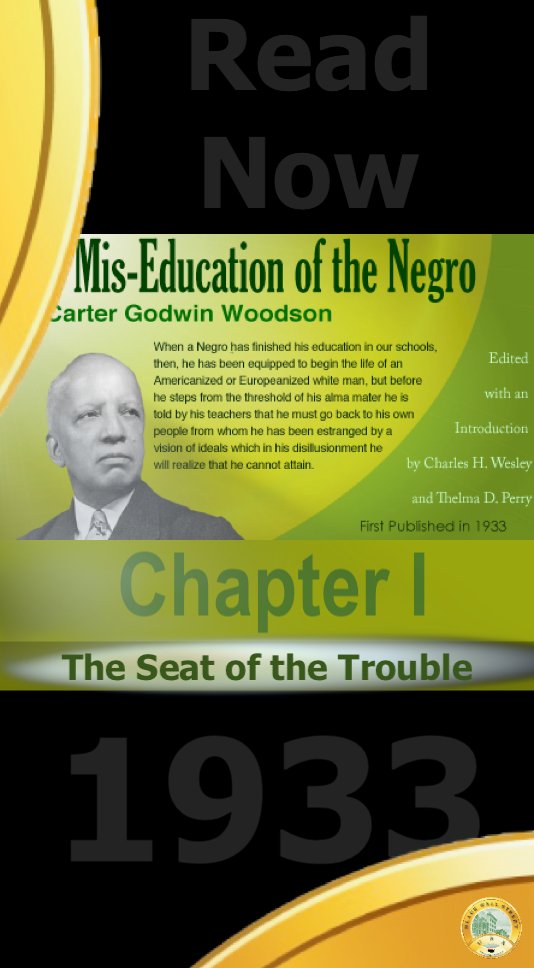
As time moved further away from 1921, the danger was no longer only violent destruction but gradual dilution. Assimilation, miseducation, and commodification threatened to strip Greenwood of its depth, turning it into a symbol without substance. Williams’ contribution resisted this flattening. By maintaining high expectations within a Black-controlled institutional space, he reinforced Greenwood’s original claim: that Black communities are capable of defining and enforcing their own standards of excellence.
This mattered because standards shape self-concept. Greenwood before the massacre produced Black people who expected competence from themselves and authority from their institutions. After the massacre, sustaining that expectation required intentional leadership. Williams provided that leadership by refusing to lower the bar in response to external pressures. He did not coach as though his athletes were exceptions to a rule of mediocrity; he coached as though excellence was their inheritance.
In doing so, he participated in a broader tradition of post-massacre Greenwood leaders who understood that the greatest theft was not land but narrative. If Greenwood could be reduced to a story of destruction alone, its deeper lesson would be lost. That lesson was not simply that Black prosperity can be destroyed, but that Black capacity to build, organize, and regenerate persists despite that destruction. Williams’ work affirmed this second truth daily, without needing to announce it.
The athletes who passed through his program became carriers of that affirmation. Some achieved public success; others lived quiet, steady lives rooted in responsibility and service. Both outcomes mattered. Greenwood was never about spectacle alone. It was about sustainability. Williams’ emphasis on preparation over performance aligned precisely with that ethos. Performance fades. Preparation reproduces.
When Greenwood’s pioneers built their district, they were not attempting to prove themselves to white Tulsa. They were building for themselves and their children. Similarly, Williams did not coach to satisfy external validation. His audience was internal and generational. He was accountable to those who came before and those who would come after, whether or not they knew his name.
This is why his historical significance cannot be measured solely by accolades or records. It must be measured by continuity. Greenwood’s survival into the present is not accidental. It is the result of countless individuals who refused to let its values dissolve. Coach Williams is one of those individuals. His contributions ensured that Greenwood remained not only remembered, but enacted.
In the end, Greenwood’s story is not finished, and neither is the work of those who carry it forward. It continues wherever discipline is taught as dignity, wherever excellence is framed as responsibility, and wherever young people are reminded—implicitly or explicitly—that they come from builders. Coach Williams’ life and work belong to that ongoing story. Through him, Greenwood did not merely survive history. It continued to make it.
The influence of Coach Williams extends far beyond the confines of any single athletic season or championship. It resides in the subtle, often invisible ways that lives are shaped—through the insistence on punctuality, the insistence on accountability, the modeling of respect for oneself and others, and the understanding that one’s actions ripple outward into the community. Greenwood, before and after the massacre, had always depended on such ripples. Its founders understood that each disciplined choice, each ethical business practice, each investment in education, created layers of stability and possibility that no single act of violence could erase. Williams, by embedding these principles into his coaching, recreated that same cumulative effect in a modern context. He transformed the athletic field into a crucible of culture, morality, and history, making every practice, every drill, every team meeting an act of historical stewardship.
In this sense, Williams’ contributions were both practical and symbolic. He demonstrated to his athletes that leadership is inseparable from responsibility and that personal achievement cannot be divorced from collective well-being. These lessons mirrored Greenwood’s original logic: wealth, influence, and accomplishment exist not for individual glorification but for community uplift and intergenerational transmission. Every student who internalized these lessons became a living testament to Greenwood’s enduring principles, and in doing so, became a bridge between past and future, before and after, destruction and regeneration.
Williams’ influence also intersected with broader movements in Black education and civic life. He participated in a continuum that traced back to the teachers, preachers, and community organizers who had sustained Greenwood’s moral and social infrastructure long before the massacre. These figures understood that institutional survival requires both vision and vigilance. Buildings could be burned, businesses could be looted, and newspapers could be destroyed, but the cultivation of capable, conscientious human beings could never be fully eradicated. Williams exemplified this principle. In every interaction, he conveyed the same truth that Greenwood’s founders had conveyed to their children: excellence is not given; it is cultivated, enforced, and transmitted through deliberate action.
As the decades passed, the city of Tulsa and the nation at large began to recognize the massacre and its consequences, yet too often in ways that emphasized trauma over continuity, destruction over resilience. Williams’ work challenges that reductive narrative. His career embodies the idea that Greenwood did not end in 1921. It continued through the sustained efforts of leaders who preserved its ethos, refined its methods, and transmitted its values. The district’s historical significance lies not only in what it achieved materially but in the frameworks it produced for survival, adaptation, and regeneration under systemic oppression. Williams’ coaching was a living example of this framework in action, ensuring that the legacy of Greenwood was neither static nor symbolic alone but kinetic, operative, and transformative in the lives of those who passed through his guidance.
Moreover, Coach Williams’ commitment to holistic development underscored a critical dimension of Greenwood’s original philosophy: the inseparability of intellectual, moral, and social formation. Greenwood’s pre-massacre entrepreneurs, journalists, and educators had recognized that thriving communities require disciplined thought, ethical conduct, and social cohesion. Williams’ coaching extended this recognition into modern youth development, showing that athletic training could reinforce the same virtues of strategy, self-regulation, teamwork, and foresight. In doing so, he ensured that each young person leaving his program carried with them not just skill or knowledge but the structural habits that had underwritten Greenwood’s original successes.
Perhaps most importantly, Williams instilled in his athletes a sense of historical consciousness, even if implicit. He cultivated awareness that they were part of a lineage, participants in a story larger than themselves, responsible for sustaining and extending it. This consciousness was crucial in a world that often sought to erase or misrepresent Black achievement. Greenwood’s legacy, Williams demonstrated, is preserved through action, discipline, and fidelity to shared principles, not merely through documents or memorials. His coaching was, therefore, an active form of historiography: a practice of history through behavior, expectation, and cultivation.
The results of Williams’ efforts radiated outward over time. Students who internalized his guidance went on to shape communities, influence institutions, and mentor subsequent generations, creating a cascading impact that reinforced Greenwood’s enduring relevance. The patterns he established—rigor in preparation, fidelity to principle, prioritization of collective success over individual aggrandizement—replicated Greenwood’s own patterns of economic, social, and cultural organization. In this way, Williams’ contributions were both immediate, in the lives of his athletes, and generational, in the continued vitality of the values he transmitted.
By examining Coach Williams’ work in the context of Greenwood’s history, it becomes clear that the district’s significance is inseparable from the people who preserved it in action. While historical accounts often focus on destruction, restitution, or commemoration, the true measure of Greenwood lies in its sustained cultural and ethical inheritance. Williams’ coaching represents a living conduit for that inheritance. He demonstrates that survival is not simply the avoidance of catastrophe but the active cultivation of continuity, resilience, and moral coherence across generations. Through his work, Greenwood’s ethos moved forward, adaptive to changing circumstances, yet faithful to its original principles.
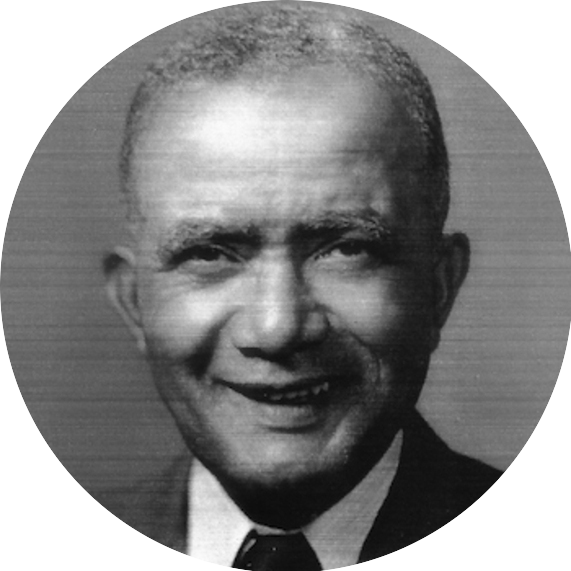
Coach Seymour Williams exemplifies the post-massacre evolution of Greenwood’s legacy. His life and career underscore the capacity for Black leadership to sustain culture, transmit values, and produce enduring excellence even when external circumstances are hostile. Greenwood’s historical significance extends beyond the 1921 massacre, beyond property and economic metrics, into the lived experiences of generations shaped by its moral and intellectual architecture. Williams’ contributions illustrate that this architecture is not static; it is enacted, embodied, and renewed through mentorship, discipline, and ethical expectation. In this, Greenwood survives not merely as memory but as ongoing practice, and Seymour Williams stands as a central figure in ensuring that its principles remain alive, operative, and transformative for the generations that follow.
Coach Williams’ life and career cannot be separated from the broader context of Tulsa’s African American community, where the echoes of Greenwood’s original pioneers reverberated through every neighborhood, school, and civic institution. From the moment he assumed his role at Booker T. Washington High School, Williams understood that he was not merely instructing athletes but stewarding a legacy. His daily decisions—from insisting on disciplined practice schedules to modeling respect in interactions with colleagues and students—were imbued with historical significance. Every drill, every team meeting, every counsel session was a subtle act of resistance against the erasure of Greenwood’s history and a conscious act of preservation of its ethical architecture. Williams, like the pioneers before him, understood that creating durable systems of excellence required consistent attention, moral clarity, and the willingness to engage in slow, patient work over decades.
Athletics, in Coach Williams’ framework, were never an end in themselves. He recognized that sports provided a unique environment in which young Black men could experience leadership, accountability, and communal interdependence firsthand. The field became a microcosm of Greenwood itself: a space in which preparation, strategy, and disciplined execution directly shaped outcomes. The same values that had enabled O.W. Gurley to acquire land and build a commercial district, or J.B. Stradford to operate a thriving hotel, were mirrored in the habits and routines Williams instilled in his athletes. By linking physical discipline to moral and intellectual development, he created a holistic system in which students learned to navigate both their immediate challenges and the broader societal pressures they would face as adults.
Coach Williams’ impact extended well beyond the athletes themselves. Families, community members, and local institutions all felt the reverberations of his work. Parents saw in his programs a structured, accountable environment that reinforced the values they sought to cultivate at home. Younger students observed role models demonstrating patience, focus, and ethical decision-making. The broader community recognized that the successes of Williams’ athletes reflected not only individual talent but also the nurturing of collective potential. In this way, his coaching served as a stabilizing and transformative force, reinforcing Greenwood’s principle that community advancement depends on the cultivation of capable, disciplined, and morally grounded individuals.
Over time, Coach Williams’ philosophy of coaching became increasingly sophisticated, informed by both historical consciousness and practical experience. He encouraged his athletes to study Greenwood’s history, to understand the significance of their community’s achievements before the massacre, and to internalize the resilience demonstrated by survivors and rebuilders. He framed the challenges his students faced not as isolated hardships but as part of a larger continuum of struggle and accomplishment. In doing so, he fostered a sense of temporal awareness and ethical responsibility, teaching that every action contributes to the cumulative story of one’s community and, by extension, one’s ancestors. This approach was deeply in line with the ethos that had guided Greenwood from its inception: a commitment to disciplined, purposeful living as a form of collective empowerment.
Coach Williams’ contributions can also be measured in the trajectories of his students. Many went on to achieve professional success in fields ranging from law, medicine, and education to entrepreneurship, civic leadership, and the arts. In each instance, the foundational habits instilled under Williams’ guidance—discipline, strategic thinking, teamwork, resilience, and moral clarity—proved critical to navigating environments that remained structurally hostile to Black advancement. These individuals carried Greenwood forward into spheres beyond Tulsa, extending the district’s influence geographically and generationally. In effect, Williams’ coaching created a multiplier effect: the values and skills he transmitted did not remain confined to his immediate sphere but radiated outward, shaping countless lives and institutions in subtle yet enduring ways.
Coach Williams’ work also highlights the interplay between memory and practice in sustaining Black institutional life. Greenwood’s physical destruction in 1921 could not erase the knowledge, values, and habits that its pioneers had cultivated. Yet without deliberate intervention, these elements risked dissipating across generations. Williams’ coaching exemplified the active transmission of history through embodied practice. By embedding Greenwood’s principles into the routines, expectations, and culture of his athletic programs, he ensured that history was lived and internalized rather than merely recited or commemorated. His work demonstrates that continuity is not passive but must be actively cultivated through mentorship, modeling, and disciplined expectation.
In reflecting on Greenwood’s legacy through the lens of Williams’ career, it becomes evident that the district’s significance lies not only in what was destroyed but also in what was preserved, adapted, and transmitted. The pioneers’ commitment to economic, educational, and social self-determination provided a framework that Williams and other leaders after the massacre translated into new forms. Where brick and mortar were burned, human capital became the medium of preservation. Where newspapers and banks were looted, mentorship and moral instruction became the channels of continuity. Williams’ athletic programs were thus a vital component of Greenwood’s post-massacre survival, demonstrating that the district’s enduring influence depends as much on relational and cultural structures as on physical artifacts or economic assets.
Furthermore, Williams’ career underscores the importance of localized leadership in sustaining broader historical legacies. National recognition of Greenwood has often been intermittent, filtered through episodic attention to the massacre or periodic commemorative projects. Yet the district’s ongoing relevance has been secured primarily through sustained, everyday work at the community level. By operating within Booker T. Washington High School, Williams exemplified this principle. His leadership was embedded in the rhythms of daily life, in repeated interactions, and in the cultivation of consistent habits among students. This approach ensured that Greenwood’s values were not merely abstract ideals but practical, operational norms guiding behavior across generations.
The cumulative effect of Williams’ work is difficult to quantify in conventional terms. Championships, accolades, and public recognition provide only a partial measure of his impact. The deeper measure lies in the formation of character, the internalization of discipline, the replication of ethical standards, and the perpetuation of Greenwood’s ethos across time. Each student who absorbed these lessons became, in effect, a living repository of Greenwood’s principles, carrying them into adult life and transmitting them to others. Through this mechanism, the district’s legacy expanded beyond geography and chronology, living in the practices and decisions of countless individuals whose lives were shaped by Williams’ mentorship.
Coach Williams also understood the importance of framing success in terms of collective achievement rather than individual glory. This principle resonates directly with Greenwood’s pre-massacre philosophy. Economic success in the district depended on circulation within the community, mutual support among entrepreneurs, and a shared commitment to uplift. Williams translated this logic into his coaching philosophy. Team cohesion, mutual accountability, and support for peers were emphasized as essential components of individual achievement. In this way, athletes learned that personal success is inseparable from the welfare and progress of the collective, reinforcing a core tenet of Greenwood’s historical framework.
Coach Williams’ emphasis on ethical leadership, moral accountability, and disciplined excellence also functioned as a corrective to the social forces arrayed against Black youth. Segregation, economic marginalization, and systemic inequities continually challenged the community’s capacity to sustain achievement. Williams’ programs provided a protective and generative space in which young people could develop the skills and habits necessary to navigate these challenges successfully. The values imparted were both practical and aspirational, equipping students to confront external obstacles while maintaining internal coherence and integrity. In this sense, Williams’ coaching extended the pioneer logic of Greenwood into the realm of personal development, ensuring that the district’s legacy could survive in the actions, decisions, and self-conceptions of subsequent generations.
By embedding Greenwood’s principles into daily practice, Williams contributed to a form of historical resilience that transcends conventional narratives of victimhood or loss. His work demonstrates that survival and continuity are not passive states but active processes requiring deliberate cultivation, mentorship, and leadership. The district’s ongoing significance emerges from this process, illustrating that culture, values, and ethical frameworks are as crucial to legacy as economic or physical assets. Williams’ career exemplifies how disciplined intervention at the human level can sustain a community’s historical and moral architecture even in the absence of restitution or public recognition.
Coach Williams’ journey to leadership at Booker T. Washington High School began long before he assumed his role as head coach. Born into a generation for whom the shadows of the 1921 Greenwood Massacre were an ever-present reality, Williams absorbed both the weight of history and the imperative of perseverance from an early age. His family, like many in Tulsa’s African American community, had roots in the district’s pre-massacre prosperity. Stories of Gurley, Stradford, and Smitherman were not abstract lessons in textbooks; they were living narratives told at kitchen tables, church gatherings, and community meetings. These narratives conveyed not just triumphs but moral imperatives: to exercise responsibility, to cultivate discipline, to contribute to the collective good. In this environment, Williams’ own character formation was deeply intertwined with Greenwood’s broader legacy. He learned that personal excellence carried communal consequences and that individual choices were inseparable from the welfare of the community.
Coach Williams’ early education reflected these lessons. At schools within Tulsa, he encountered teachers who emphasized both rigor and accountability, nurturing a sense of possibility grounded in historical consciousness. He became acutely aware of how education functioned as a protective and generative space, much like Greenwood itself had functioned prior to 1921. Academic diligence was framed not merely as preparation for employment or higher education but as preparation for life within a community constantly navigating external hostility. In these formative years, Williams internalized a philosophy that would later define his coaching: excellence is cultivated deliberately, sustained through repetition, and transmitted through mentorship and example.
When Coach Williams entered the realm of athletics, he brought this philosophy into a new arena. Sports offered a visible and practical space for reinforcing the values he had absorbed: discipline, teamwork, moral accountability, and strategic thinking. He recognized that young athletes were not only developing physical skills but also forming habits of mind and character that would shape their entire lives. Williams approached coaching as a form of moral and historical stewardship, understanding that each practice, each drill, each lesson reinforced broader lessons about resilience, responsibility, and community cohesion. In this sense, his work was an extension of Greenwood’s pre-massacre logic: training and preparation, carefully structured and consistently applied, produce enduring outcomes that extend beyond immediate performance.
Over the years, Coach Williams cultivated a reputation not merely for winning games but for producing young people capable of thriving in complex and challenging environments. He emphasized preparation over talent, character over charisma, and consistency over fleeting success. In doing so, he instilled in his athletes a sense of historical consciousness, linking their personal development to the broader narrative of Greenwood. They learned that their actions were meaningful not only in the immediate context of a game but also as contributions to a lineage of Black excellence that had been tested, threatened, and sustained over decades. Through this lens, sports became a medium for historical transmission, and Williams functioned as both coach and cultural custodian.
Coach Williams’ impact extended well beyond his athletes. Families, educators, and community members observed the standards he set and integrated elements of his approach into their own interactions and expectations. Parents found in his programs a reinforcement of the values they sought to impart at home, while younger students witnessed models of disciplined leadership and ethical accountability. These ripple effects magnified the reach of his influence, ensuring that Greenwood’s legacy continued to operate across multiple layers of community life. In this way, Williams exemplified a critical principle of Greenwood’s original ethos: that community resilience and continuity depend on the deliberate cultivation of capable, conscientious individuals.
Among the many athletes Coach Williams mentored, countless stories emerged that illustrate his enduring influence. One former player, for example, went on to become a teacher and community organizer, attributing his approach to problem-solving and leadership directly to the habits Williams instilled during high school practices. Another pursued a career in medicine, emphasizing strategic planning, persistence, and ethical responsibility—all lessons learned under Williams’ guidance. These individual trajectories, multiplied across decades and cohorts, constitute a living archive of Greenwood’s values in action. Through the lives of his students, Williams ensured that the ethical and intellectual architecture of Greenwood extended far beyond the original streets of the district, traveling into new contexts and generations.
Coach Williams’ career also demonstrates the adaptability of Greenwood’s principles in changing social contexts. Whereas the original pioneers relied on physical property, commerce, and media to exercise authority and sustain community life, Williams and his contemporaries relied increasingly on mentorship, education, and cultural formation. This shift did not diminish Greenwood’s values; it translated them into new operational frameworks. Discipline, strategic planning, ethical leadership, and collective responsibility—all foundational to Greenwood’s original ethos—were now transmitted through daily interactions, structured programs, and institutional culture rather than through bank ownership or commercial success. In doing so, Williams exemplified the continuity and resilience of Greenwood’s legacy in the face of systemic disruption.
In addition to his work with athletes, Coach Williams contributed to broader educational and civic initiatives in Tulsa. He collaborated with teachers, administrators, and community organizations to create support structures that reinforced student development both inside and outside the classroom. His leadership extended to curriculum design, after-school programs, and mentorship networks, all of which emphasized the integration of historical consciousness, ethical responsibility, and practical skill-building. These efforts strengthened the capacity of Booker T. Washington High School to serve as a conduit for Greenwood’s values, ensuring that the district’s legacy remained active in shaping new generations of leaders.
Coach Williams’ philosophy also emphasized the inseparability of personal success and collective well-being. Greenwood’s founders understood that prosperity and influence carried communal obligations, and Williams applied the same principle in his coaching. He required athletes to support one another, to uphold team standards, and to recognize the consequences of individual actions on the group. Through this approach, students learned that their achievements were not merely personal milestones but contributions to a broader social and historical project. This framing reinforced the ethical dimensions of Greenwood’s legacy, demonstrating that leadership, discipline, and excellence are inherently relational rather than purely individual.
Over time, the cumulative effect of Coach Williams’ work became evident in the broader community. Former athletes assumed positions of leadership in education, business, civic organizations, and public service, replicating the values and habits instilled under his guidance. The impact of his mentorship, multiplied across cohorts, created an enduring infrastructure of ethical and practical competence that paralleled the structural networks established by Greenwood’s pre-massacre pioneers. In this way, Williams’ influence extended well beyond the confines of the school or the athletic field, shaping the social and moral fabric of Tulsa’s African American community for generations.
Coach Williams’ contributions also highlight the importance of embedding historical consciousness into everyday practice. By linking contemporary challenges to the legacy of Greenwood, he provided students with a framework for understanding adversity as part of a longer narrative of resilience and achievement. This perspective fostered both confidence and responsibility, enabling young people to navigate societal obstacles with a sense of purpose rooted in communal history. In doing so, Williams ensured that Greenwood’s principles were not abstract ideals but actionable standards guiding daily behavior and decision-making.
Through his decades of service, Coach Williams exemplified the notion that history is preserved not only in archives or monuments but in practice. Each drill, each lesson, each act of mentorship constituted a living transmission of Greenwood’s ethos. By cultivating discipline, ethical accountability, and collective responsibility, he ensured that the district’s foundational values continued to shape the lives of new generations. In this sense, his work represents a vital link in the chain of Greenwood’s continuity, bridging the pre-massacre pioneers with contemporary leaders and ensuring that the district’s influence remains dynamic and operative rather than static or symbolic.
Coach Williams’ career underscores the broader lesson that sustaining cultural, moral, and intellectual legacies requires active stewardship. Greenwood’s survival through adversity depended not only on material resources but on the deliberate cultivation of capable, conscientious individuals who could internalize and reproduce its principles. Williams’ coaching, mentorship, and educational leadership exemplify this principle. By translating historical values into embodied practices, he preserved the district’s legacy in a manner that was both resilient and generative, extending its reach far beyond the original streets, businesses, and institutions of pre-massacre Greenwood.
The ongoing significance of Coach Williams’ contributions lies in the generational transmission of values, skills, and ethical frameworks. His athletes, in turn, influenced younger peers, siblings, and students, creating a network of influence that reinforced Greenwood’s principles across time. This multiplier effect ensured that the district’s ethos did not merely survive as memory but flourished in practice, shaping leadership, civic engagement, and professional achievement across multiple generations. In this way, Williams’ work serves as both a continuation and an evolution of Greenwood’s founding vision: disciplined, ethical, and strategic action as the foundation for communal advancement.
Through the lens of Coach Williams’ life and work, Greenwood’s historical trajectory can be understood as an ongoing project of adaptation, resilience, and moral continuity. The massacre of 1921 represents a rupture, but it is not the conclusion. The district’s legacy is preserved and extended through the consistent, intentional efforts of leaders who translate foundational values into contemporary practice. Williams’ coaching embodies this process, demonstrating that historical preservation is inseparable from active mentorship, ethical modeling, and the cultivation of capable individuals who can carry principles forward into new contexts.
In this light, Greenwood’s significance is as much about the quality of human cultivation as it is about material or economic achievement. Coach Williams’ contributions exemplify how education, mentorship, and disciplined practice function as vehicles for sustaining culture, transmitting ethics, and perpetuating historical consciousness. His work demonstrates that legacy is not simply inherited; it is enacted daily through deliberate, structured effort, guided by both historical awareness and moral clarity. By preserving and adapting Greenwood’s principles in the lives of his students, Williams ensured that the district’s influence would continue to resonate far beyond its original physical and temporal boundaries.
Seymour Williams’ life and work stand as a testament to Greenwood’s enduring spirit, demonstrating that true legacy is not confined to buildings, businesses, or historical markers, but lives in the habits, values, and disciplined action of successive generations. Through his unwavering commitment to mentorship, ethical leadership, and holistic development, he translated the principles of Greenwood’s pre-massacre pioneers into living practice, ensuring that the district’s ethos of excellence, resilience, and communal responsibility continued to shape the lives of young people long after the physical landscape had been devastated. In doing so, Williams became both a bridge and a custodian—linking the courage, vision, and achievement of the past with the promise, capacity, and moral agency of the future—proving that Greenwood survives not merely as memory, but as a dynamic, enduring force carried forward in the character and accomplishments of those who inherit its lessons.