Otis G. Clark: The World’s Oldest Evangelist
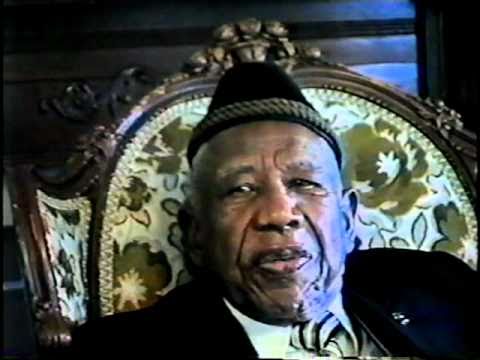
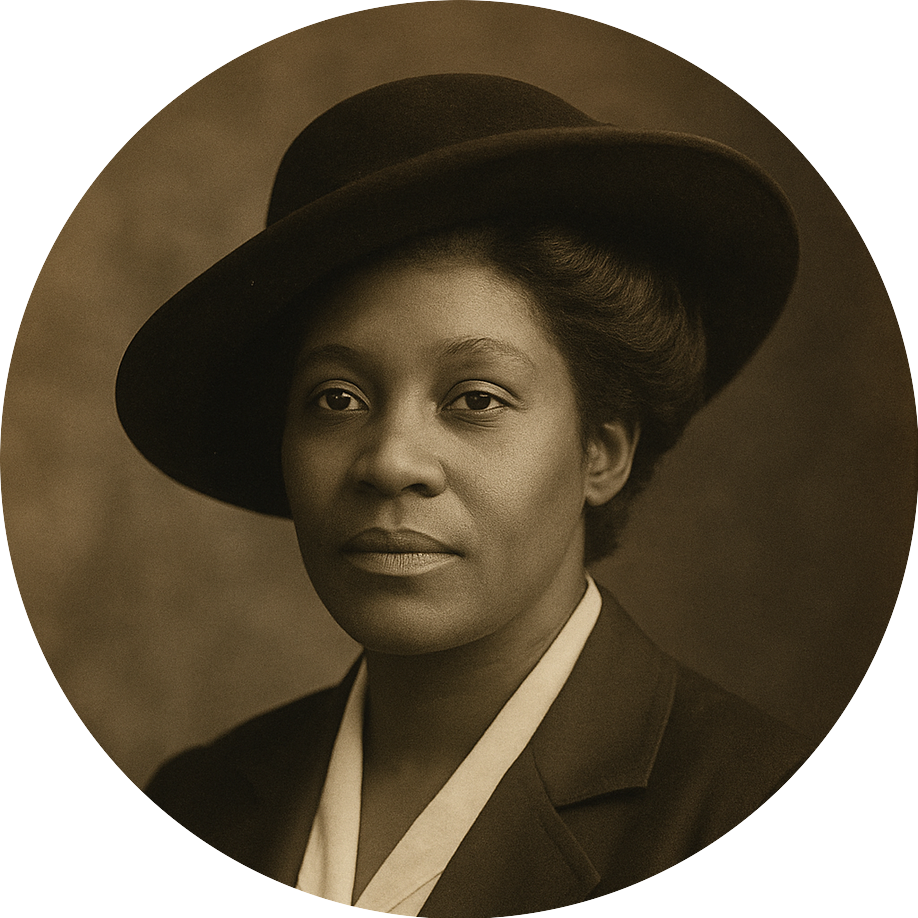
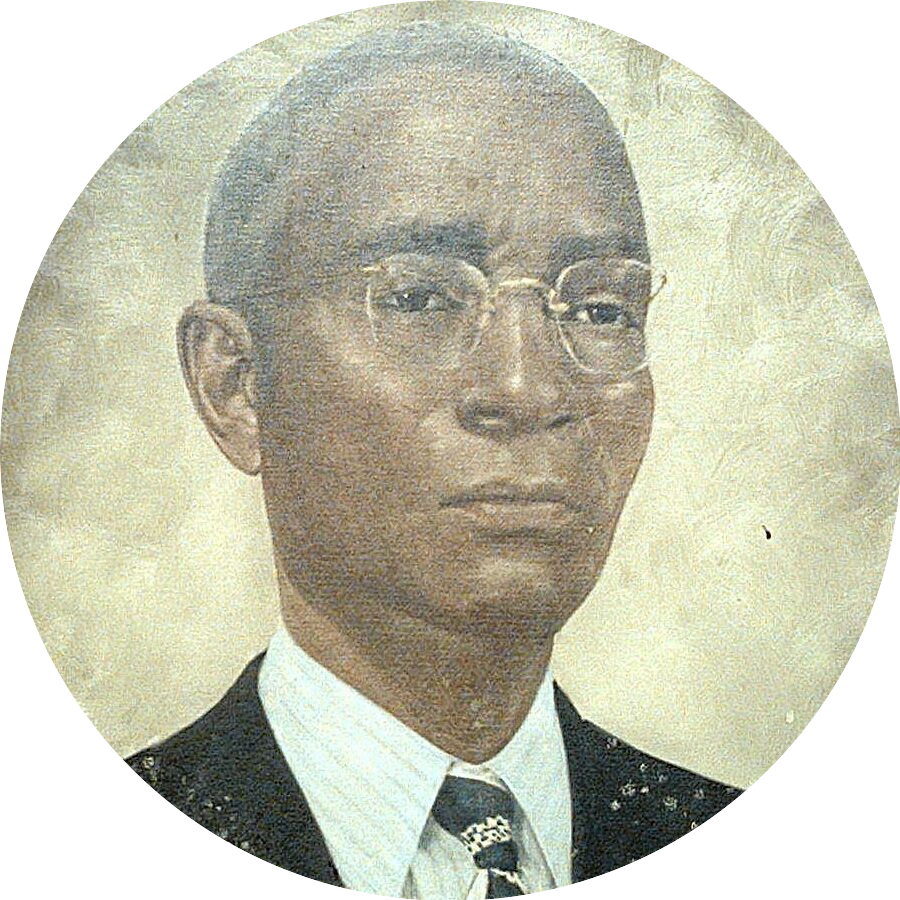
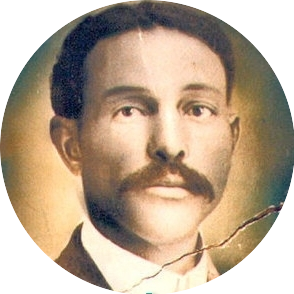
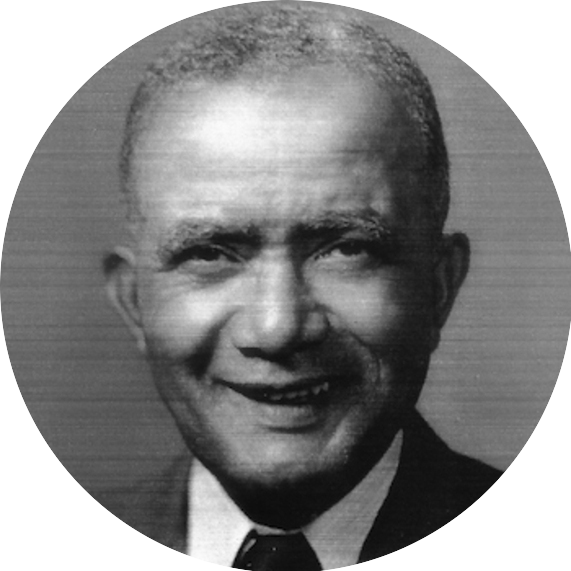
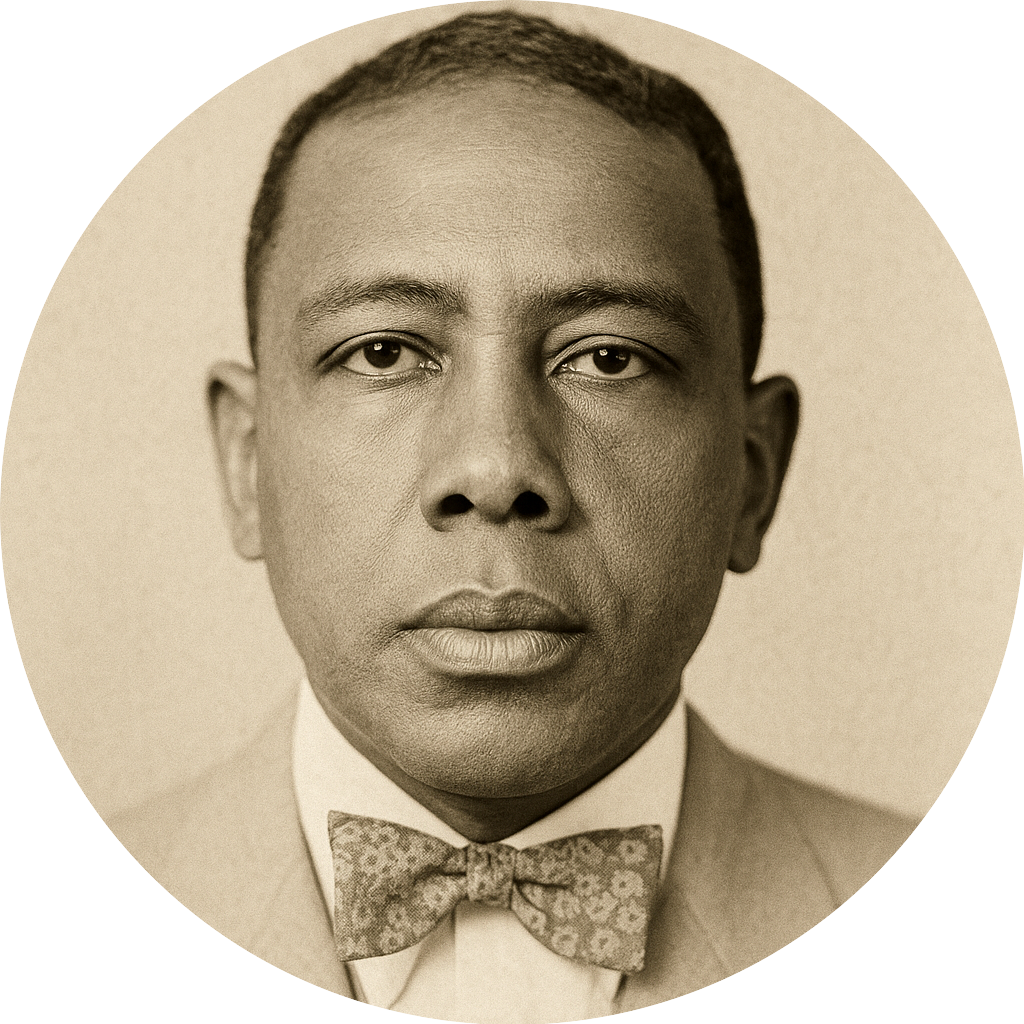
Otis Granville Clark was born on February 13, 1903, in Meridian, Oklahoma, just four years before Oklahoma achieved statehood. The son of a railroad worker, young Otis grew up in a world of change, transition, and growing racial tension. His early years were marked by both the optimism of a thriving African American community and the looming threats of a segregated and hostile nation. Clark’s family would soon move to Tulsa, where he came of age in the Greenwood District, a vibrant hub of Black culture, business, and pride.
Greenwood, often referred to as the "Black Wall Street," was a shining example of African American success and resilience. It was home to 15,000 Black residents and boasted more than 600 businesses, including grocery stores, barbershops, hotels, cafes, movie theaters, newspapers, and even a 65-room hotel. Otis Clark remembered Greenwood with pride. "Oh, child, we had what you might say a little city, like New York or Chicago," he told author Tim Madigan for the book "The Burning: Massacre, Destruction, and the Tulsa Race Riot of 1921."
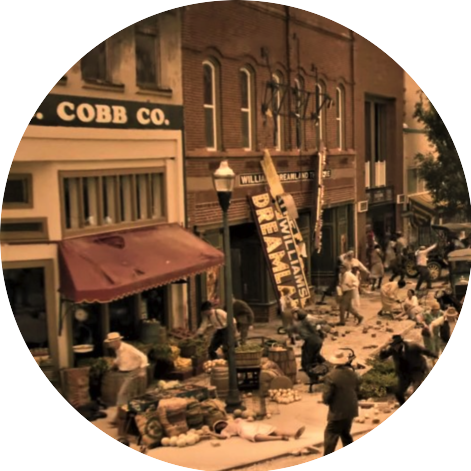
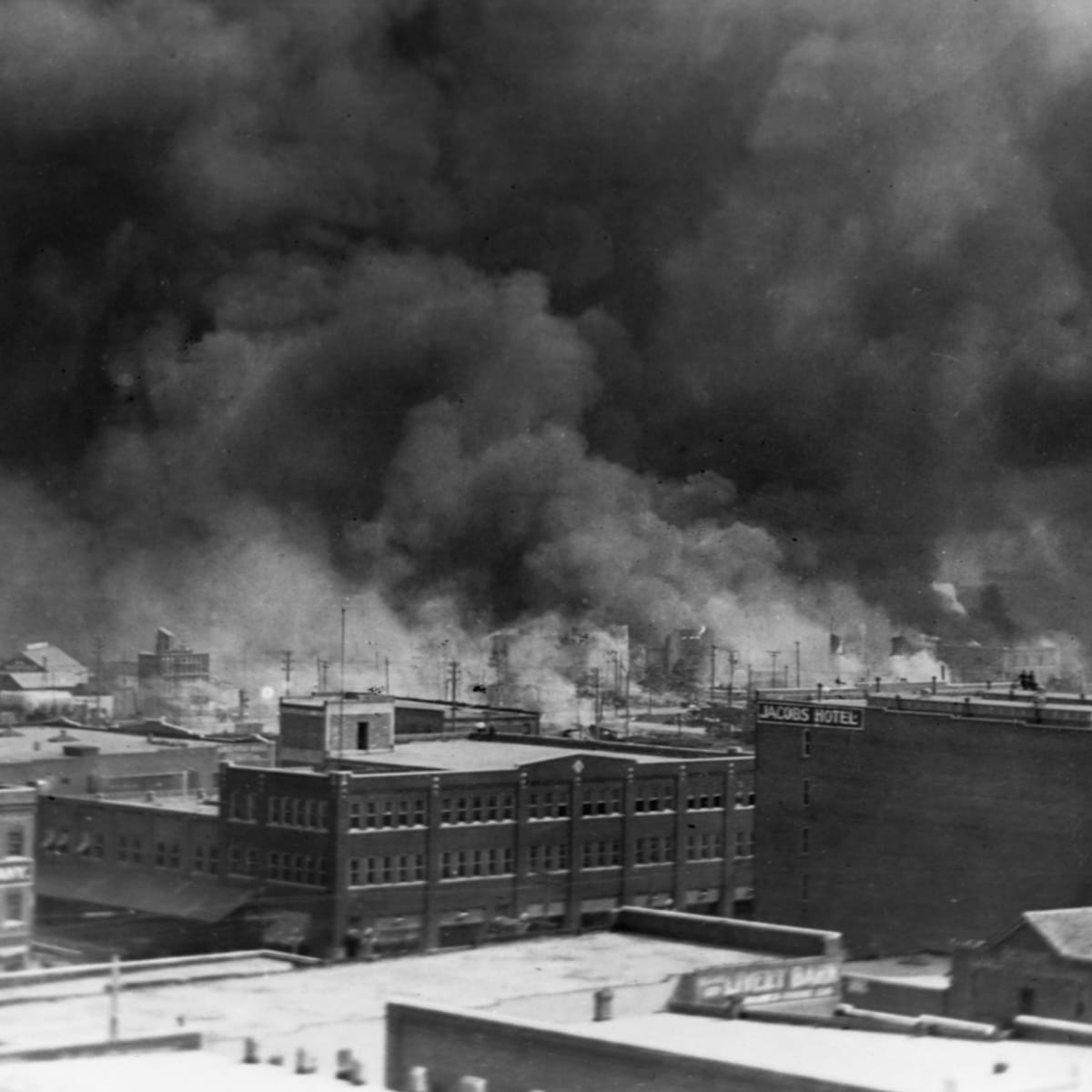
But that thriving world was destroyed on the night of May 31, 1921. Rumors spread that a young Black man, Dick Rowland, had assaulted a white elevator operator named Sarah Page. Though there was no evidence and Page later declined to press charges, white mobs gathered outside the courthouse, demanding Rowland’s lynching. Black residents, including World War I veterans, arrived to defend him. Tensions escalated, and by nightfall, all-out violence erupted. White rioters, many deputized by local law enforcement, stormed into Greenwood.
Otis Clark, just 18 years old, was caught in the chaos. He recalled the horror of that night vividly, decades later. Gunfire echoed through the streets, flames leapt into the sky, and families scrambled to flee. Clark’s family home was among the thousands of buildings set ablaze. “Gunfire and the blaze from the fire was getting closer,” he said in an interview with the Tulsa World in 2000, “and all we had on our minds was getting out of the house before the war got there.”
Desperate to help, Clark went to a nearby mortuary where a man was attempting to retrieve an ambulance to rescue the injured. Just as the man reached for the garage door, a bullet shattered his hand. Blood sprayed across the pavement. Clark ran, dodging bullets and ducking through alleyways. He eventually encountered a cousin with a car. They drove only two blocks before turning a corner and running directly into a crowd of white men carrying guns. Clark leapt from the vehicle and ran for his life.
He found refuge by the railroad tracks, where he jumped aboard a freight train. He didn’t stop running until he reached Milwaukee. Behind him, Greenwood lay in ruins. Thirty-five square blocks had been decimated. More than 1,200 homes and numerous churches, schools, and businesses were destroyed. Though official counts initially reported 35 deaths, survivors like Clark remembered hundreds of bodies. Later investigations estimated that as many as 300 people, 90 percent of them Black, were killed.
Clark lost everything. His bulldog, Bob, was shot and killed. His stepfather disappeared and was never found. The family never held a funeral. Clark’s grandmother’s land was taken without compensation. “Family and friends, missing,” he said. “Jobs gone. The city took my grandmother's land and didn’t give us nothing in return.” The trauma was not only personal—it was communal. For years, the destruction of Greenwood was shrouded in silence, covered by fear, intimidation, and systemic suppression.
Otis Clark rebuilt his life far from the ashes of Tulsa. He eventually settled in Los Angeles, where he found work as a limousine driver. His path brought him into contact with some of the most famous names in Hollywood. He became a butler in the home of the legendary actress Joan Crawford, while his wife worked as the family’s cook. He encountered stars like Clark Gable and Charlie Chaplin and became close friends with Lincoln Perry, better known by his stage name, Stepin Fetchit. “Step picked me to buddy with him,” Clark said, recalling their adventures. “We was on the wild side.”
Though he lived amid glamour, Clark’s life took another dramatic turn during the Prohibition era. Caught selling bootleg liquor, he was sentenced to time in jail. It was there that he experienced a religious awakening. Upon release, he began preaching the gospel and committed himself to a life of evangelism. By the 1930s, Clark had launched a ministry that would eventually carry him across the globe.
He became known as the “world’s oldest evangelist,” a title he wore with pride. He preached across the United States and internationally. At the age of 103, he took his first mission trip to Africa. The next year, he returned. In 2010, at 107 years old, he led a ministry trip to Jamaica. His message was one of resilience, faith, and redemption. Despite witnessing the worst of humanity in 1921, Clark believed in the transformative power of love and forgiveness.
He was married four times and fathered a daughter who predeceased him. In his later years, he ran a ministry in Seattle with a goddaughter. Despite his age, Clark remained vibrant and active. He took no medications, used no cane, and walked unaided. His longevity was matched only by his determination to bear witness to the events of Greenwood.
The massacre was never far from his thoughts. “It looked like a war had hit the area,” he once said. “Not a single house or building stood untouched. Greenwood was a huge wall of fire, the heat so strong I felt it down the block.” For decades, survivors like Clark were discouraged from speaking. Even into the 1970s, efforts to uncover the truth were met with threats. Ed Wheeler, a radio host and National Guard officer, faced harassment when he tried to report on the massacre. Someone scrawled a warning on his windshield: “Best look under your hood from now on.”
But Clark refused to be silenced. He shared his story with journalists, historians, and documentary filmmakers. He contributed to oral history projects and remained a vocal advocate for justice. He was a living embodiment of the Greenwood spirit—a man who had survived horror, built a new life, and then turned his pain into purpose.
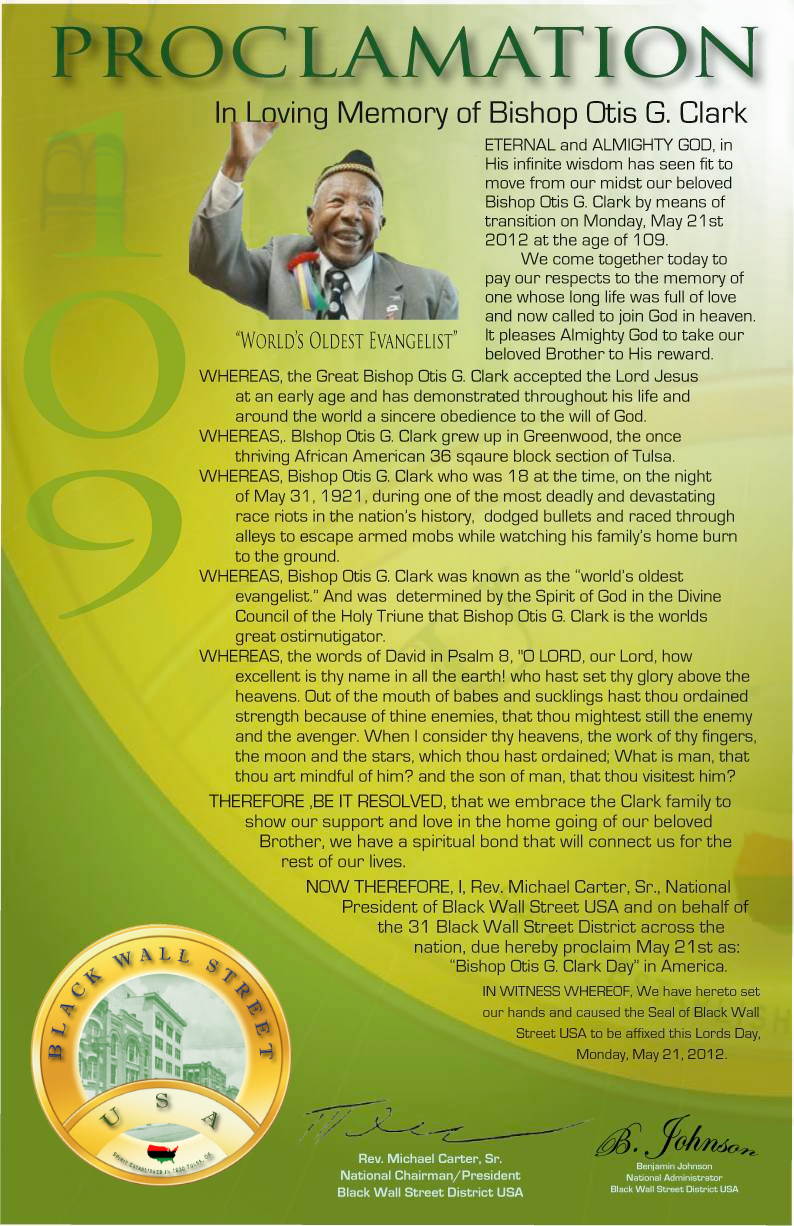
When he died on May 21, 2012, at the age of 109, the world lost not only a remarkable man but also one of the last living eyewitnesses to the Tulsa Race Massacre. His passing was mourned by family, friends, and civil rights leaders. Rev. Michael Carter, Sr., National President of Black Wall Street USA, reflected on the loss. “This is a great loss to those of us in the movement to restore economic and self-sustaining methods going forward. Bishop Clark, however, leaves us with the blueprint and proven spirit of Tulsa. We now have no excuse but to build as Bishop Clark taught us.”
Carter continued, “The world has lost a universal man of spiritual fortitude and a paragon of rich virtues. The Bishop will be missed.”
Yet, Otis Clark’s legacy is far from lost. His story continues to inspire new generations fighting for truth, justice, and economic empowerment. He embodied the intersection of history and hope. A survivor who never let the flames of hatred extinguish his faith. A preacher who walked with the powerful but never forgot the powerless. A man whose life serves as a testament to endurance, forgiveness, and the relentless pursuit of dignity.
Today, as Greenwood begins to rise anew, the spirit of Otis G. Clark lives on in every brick laid, every business opened, and every child taught the true story of what happened in 1921. His life reminds us that the past cannot be buried, that justice demands memory, and that healing begins with truth. Bishop Otis Clark bore the burden of memory so that we might all share in the responsibility of never forgetting.