A Man of Unglamorous but Dangerous Conviction
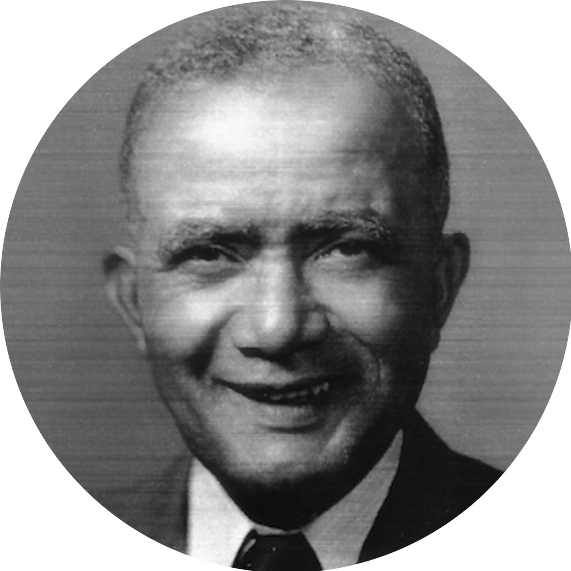
Andrew Jackson Smitherman did not arrive in Tulsa seeking legend or martyrdom. He arrived as a disciplined observer of American contradiction, a man sharpened by law, print, and lived Black experience, carrying with him the unglamorous but dangerous conviction that truth, when organized, could move people to action. He came understanding that words were never neutral in a country built on their selective enforcement, and that language, once disciplined, could become a form of collective defense. Smitherman believed that silence was not peace, that patience was not protection, and that clarity was not extremism. These beliefs would place him at the center of Greenwood’s rise and at the edge of its destruction.
“Black Wall Street was not an anomaly. It was a blueprint. A living, breathing testimony to what Black people can build when we are free to dream, own, and thrive.” — Dr. Michael Carter, Sr., on the historic significance of Greenwood and its enduring example.
He was born into a Black America still bleeding from the collapse of Reconstruction, where the promises of citizenship were etched into law while terror was enforced through custom. His formative years unfolded beneath the steady tightening of Jim Crow, a system that did not merely segregate bodies but constrained imagination. From early on, Smitherman learned that literacy was not simply a skill but a weapon, and that education carried risk precisely because it enabled comparison between American ideals and American practice. He read deeply and deliberately, absorbing constitutional language alongside Black political thought, understanding that power in America often hid behind legality, and that to confront it effectively one had to speak its grammar fluently.
Smitherman’s legal training did not make him reverent toward the law; it made him exacting. He did not mistake legality for justice, nor procedure for fairness. Instead, he approached the law as terrain to be navigated, contested, and exposed. He understood that American democracy was aspirational in theory and conditional in practice, particularly for Black citizens. This awareness shaped his political philosophy: rights unasserted were rights denied, and protection unorganized was protection absent.
When Smitherman arrived in Oklahoma, he encountered a landscape heavy with paradox. Tulsa was expanding rapidly, enriched by oil wealth and ambition, while simultaneously hardening its racial boundaries. Greenwood emerged north of the tracks as a Black-built ecosystem of commerce, culture, and governance, created by migrants who believed concentration could become leverage and independence could become insulation. Greenwood was not an accident of segregation; it was a deliberate project of survival and dignity. Smitherman recognized this immediately. He saw Greenwood not as retreat from America but as critique of it, a living argument against white supremacy’s claims of Black incapacity.
In 1913, Smitherman founded the Tulsa Star, and with it, he gave Greenwood a voice that refused deference. From its earliest issues, the paper rejected the safety of neutrality. It named injustices plainly, criticized police abuse openly, condemned lynching without euphemism, and urged Black Tulsans to see themselves as citizens entitled to defense, participation, and power. Smitherman’s editorials were neither reckless nor inflammatory; they were methodical, legally grounded, and morally uncompromising. He wrote with the precision of a lawyer and the urgency of a man who knew delay cost lives.
The Tulsa Star quickly became Greenwood’s intellectual backbone. It circulated beyond Tulsa, passed between hands, read aloud in communal spaces, debated in lodges and churches. Smitherman was not simply reporting events; he was shaping political consciousness. He insisted that economic success without political organization was vulnerable, that respectability without leverage was illusion, and that peace purchased through submission was temporary at best. Greenwood listened because Smitherman spoke to realities people already felt but had not yet articulated collectively.
This clarity unsettled Tulsa’s white power structure. Police officials bristled at criticism, politicians resented scrutiny, and vigilantes took note of Smitherman’s refusal to condemn Black self-defense while white violence went unchecked. He received threats and was monitored, but he did not retreat. Smitherman understood that intimidation functioned as policy, and that yielding to it would normalize repression. His persistence was not bravado; it was calculation rooted in historical awareness.
Beyond journalism, Smitherman was a political organizer who believed voting, when coordinated, could disrupt complacency even within hostile systems. He encouraged registration, bloc voting, and civic participation not as faith in fairness but as strategy. He understood numbers, understood leverage, and understood that disengagement ceded terrain to those already empowered. At the same time, his alignment with Marcus Garvey’s Universal Negro Improvement Association reflected his expanding vision. Smitherman recognized Greenwood as part of a global Black condition, linked by shared exploitation and shared possibility. This internationalism further alarmed white authorities who conflated Black organization with rebellion.
Within Greenwood, Smitherman was respected, debated, and sometimes feared. Some leaders worried his clarity invited retaliation. Smitherman did not dismiss these concerns, but he rejected the premise that silence provided safety. History, he argued, offered no evidence that submission spared Black communities from destruction. Preparedness, he believed, was not provocation but prudence. This belief would prove central in 1921.
The events leading to Greenwood’s destruction were not sudden. They were the result of sustained hostility, racial resentment, and institutional complicity. When a baseless accusation against Dick Rowland ignited calls for lynching, Greenwood recognized the pattern immediately. Smitherman’s response was consistent with his philosophy: vigilance, collective discipline, and refusal to surrender Black life to mob justice. When armed Black citizens went to the courthouse to prevent a lynching, they did so within a framework Smitherman had long articulated—the state had failed its duty, and communities must prepare accordingly.
What followed was not chaos but convergence. White mobs mobilized, police deputized civilians, weapons were distributed, and Greenwood was assaulted systematically. Homes were burned, businesses looted, families displaced, lives taken. The massacre was not an eruption; it was an operation. Greenwood was destroyed not because it failed but because it succeeded.
In the aftermath, accountability was inverted. Rather than confront institutional violence, authorities criminalized Black leadership. Smitherman became a target, falsely accused of incitement, facing imminent danger of lynching or imprisonment. He fled Tulsa not in guilt but in survival. His exile was not retreat; it was enforced removal.
Smitherman’s displacement marked a turning point. Greenwood lost one of its sharpest strategists at its most vulnerable moment. Without his voice, narratives hardened, blame shifted, and erasure accelerated. Official histories minimized violence, insurance claims were denied, and justice deferred became justice denied. Smitherman’s exile symbolized the cost of Black truth-telling in America: clarity punished, organization dismantled, coherence removed. Yet exile did not erase him.
Smitherman’s removal from Tulsa was swift and deliberate, executed under the familiar American logic that justice could be avoided by banishment. There was no trial that weighed evidence honestly, no hearing that acknowledged the context of lynching threats or state failure. Instead, accusation became verdict, and survival required disappearance. In fleeing Tulsa, Smitherman did not abandon Greenwood; he was severed from it. The distinction matters. His exile was not chosen. It was imposed by a system that understood precisely how dangerous an intact Black intellectual infrastructure could be if left undisturbed.
The loss of Smitherman was not merely symbolic. It was operational. Greenwood had been attacked physically, but it was also being dismantled intellectually. Smitherman had provided coherence during crisis, framing events not as isolated acts of hatred but as predictable outcomes of racial power unchallenged. Without him, the community faced not only grief but disorientation. Trauma overwhelmed strategy. Survival replaced organization. The long work of narrating the massacre was seized by those least harmed by it.
Tulsa’s white leadership moved quickly to redefine the meaning of what had occurred. Language was softened. Responsibility blurred. The massacre became a riot, the destruction became mutual violence, and Greenwood’s armed defense was recast as provocation rather than response. Smitherman’s absence made this reframing easier. He would have contested it relentlessly, marshaling law, logic, and record against euphemism. In his absence, silence was interpreted as concession.
“Our members demonstrate daily that they are grateful for the Tulsa ancestry that they never met, who yet paved the way for all of us. This Movement further displays that we are willing to perform the same ground paving efforts for generations that we will never meet.” said Dr. Carter., affirming the responsibility of today’s activists to carry forward the work of Greenwood’s pioneers.
Smitherman, meanwhile, carried Greenwood with him as unresolved obligation. Exile sharpened his understanding of America’s political reflexes. He saw how quickly truth could be neutralized by distance, how easily injustice could be buried beneath time and paperwork. He continued to write and organize, but the wound of displacement never closed. He had lost not only a home but a platform precisely calibrated to his voice. Greenwood had been the place where his ideas met collective readiness. Elsewhere, the resonance was diminished, though the clarity remained.
His experience reflected a broader pattern within Black American history. When Black leadership becomes too precise, too grounded, too capable of producing collective leverage, it is rarely tolerated. Some are imprisoned. Some are assassinated. Others, like Smitherman, are forced into geographic and historical exile. The tactic is consistent: remove the thinker, fragment the movement, rewrite the story. Yet ideas do not obey borders.
Smitherman’s philosophy endured because it was never dependent on charisma alone. He believed institutions mattered more than personalities, and education more than applause. He had taught Greenwood how to interpret threats, how to read power, how to organize defensively without surrendering moral clarity. Those lessons survived in fragments—passed down imperfectly, sometimes quietly, but persistently. His insistence that prosperity required protection would resurface again and again in later Black political movements. As decades passed, Greenwood’s destruction faded from public consciousness, even as its physical absence remained obvious. Survivors aged. Witnesses died. Official records vanished or were obscured. Smitherman’s name appeared rarely, if at all, in mainstream accounts. This absence was not neutral. It was functional. Forgetting served stability. Remembering demanded reckoning.
When Greenwood finally reentered national conversation generations later, it did so largely as symbol—evidence of Black excellence, proof of what had once been built. But symbols are safer than strategies. Smitherman resists symbolic containment. His life demands harder questions. Why was Greenwood targeted? Why was its defense criminalized? Why were its leaders exiled rather than protected? Why did the law side with destruction rather than restoration? Smitherman’s answers were never comforting. He believed Greenwood was destroyed because it represented autonomous Black power. He believed its defense was criminalized because it disrupted the monopoly of white violence. He believed his own exile was necessary because he could not be discredited intellectually. These beliefs challenge a national narrative that prefers tragedy without culpability.
To reconsider Smitherman fully is to accept that Greenwood’s destruction was not inevitable but engineered, not chaotic but coordinated, not misunderstood but deliberately misnamed. It is also to accept that Black resistance has consistently been punished not for its excesses, but for its effectiveness. Smitherman’s clarity made him dangerous because it connected cause to consequence without apology. He did not argue that violence was desirable. He argued that vulnerability was unacceptable. He did not romanticize conflict. He recognized it as already present. His insistence on preparedness was rooted in history, not aggression. Time had shown him, repeatedly, that unprepared Black communities were not spared—they were simply overwhelmed.
Smitherman’s exile stands as one of the clearest demonstrations of how American democracy manages dissent from below. Rather than confront the substance of critique, it removes the critic. Rather than reform institutions, it rebrands events. Rather than repair harm, it postpones acknowledgment until memory weakens demand. Greenwood’s long wait for justice followed this exact pattern. And yet, Smitherman’s legacy refuses closure.
His life presses forward into the present, interrogating contemporary invocations of Black Wall Street. He would ask whether remembrance has produced repair, whether commemoration has led to protection, whether admiration has translated into institution-building. He would caution against nostalgia divorced from strategy. He would insist that history be used, not merely honored.
Smitherman believed that Black truth-telling carried obligation. To speak clearly was to assume responsibility for what clarity required next. His own life fulfilled that obligation at tremendous cost. He did not retreat into ambiguity to preserve safety. He did not trade precision for popularity. He accepted exile rather than distortion. In doing so, he left a legacy not of martyrdom, but of method.
He demonstrated that communities survive not by accident, but by design. That dignity must be defended structurally. That justice requires pressure. That memory must inform preparation. Greenwood’s brief flourishing validated his beliefs. Its destruction confirmed his warnings. Andrew J. Smitherman remains Greenwood’s conscience because he refused to lie to it. He remains its agitator because he understood that comfort under injustice is complicity. He remains its strategist because he believed survival requires more than hope—it requires planning.
His story does not end in resolution. It ends in responsibility. The question he leaves behind is not whether Greenwood mattered, but whether its lessons will be fully learned and fully applied. History answered Smitherman with exile. The present still has the opportunity to answer him with understanding, action, and defense. And until that answer is given, Andrew J. Smitherman does not disappear. He waits—precise, exacting, unresolved—where Black truth meets American power, asking who is prepared to tell the truth clearly and pay what it costs.
The enduring power of Andrew J. Smitherman’s life lies not in spectacle but in its refusal to be neutralized. Even in absence, his intellectual posture disrupts the comfort of simplified history. He cannot be reduced to a tragic footnote or a misunderstood provocateur, because his ideas remain structurally relevant. They explain too much. They predict too accurately. They force recognition that Greenwood’s destruction was not an aberration but a consequence of unchecked racial hierarchy confronted by organized Black autonomy.
Smitherman understood that racial violence in America was rarely spontaneous. It followed patterns, relied on institutions, and drew legitimacy from silence afterward. His work with the Tulsa Star was designed to interrupt that cycle by documenting reality before it could be revised. He believed that narrative control was not secondary to power but central to it. Whoever defined events shaped their consequences. Greenwood’s tragedy confirmed his warning. Once his voice was removed, the story was reshaped in ways that protected perpetrators and criminalized survivors.
In this sense, Smitherman’s exile functioned as a form of narrative assassination. The man most capable of contesting the official account was forced away, leaving history vulnerable to distortion. That distortion would persist for decades, embedding itself into textbooks, civic memory, and public policy. Greenwood’s absence became normalized, its destruction abstracted, its causes obscured. Smitherman’s name faded not because his role was minor, but because it was too clarifying.
The recovery of Greenwood’s history in later generations exposes how incomplete remembrance remains without Smitherman fully restored to the center of the story. Memorials and acknowledgments ring hollow when they avoid the uncomfortable truth that Greenwood was defended, that its defenders were criminalized, and that its leaders were exiled or silenced. Smitherman’s life insists that any honest reckoning must confront these facts without euphemism.
He also challenges the idea that nonviolence and self-defense exist in moral opposition. Smitherman rejected that false binary. He believed moral clarity required protecting life, and that the right to self-defense did not negate a commitment to justice. He understood that the demand for Black passivity functioned as permission for white violence. His insistence on preparedness was therefore not a rejection of ethics, but an extension of it. This position continues to unsettle modern audiences because it refuses simplicity. It demands that justice be measured not only by intention but by outcome. Greenwood’s defenders intended to prevent lynching. The massacre occurred not because of that intention, but because white supremacy mobilized against it. Smitherman’s clarity forces accountability to move upward, not downward.
In the long arc of Black political thought, Smitherman occupies a crucial but underacknowledged space between accommodation and insurgency. He was neither submissive nor reckless. He was strategic. He believed that Black communities could not afford illusions about American benevolence, but neither could they abandon disciplined engagement with law, economics, and politics. His life demonstrates that radicalism need not reject structure; it can demand better structure.
“It is time to possess the land that Our Father promised us. This is our season and this is our time. We all must live and build and work to make our ancestors proud.” said, Dr. Michael Carter, Sr., expressing a vision of tangible, intergenerational empowerment grounded in Black autonomy
Smitherman’s legacy also reveals how often America punishes Black foresight. He anticipated violence and was blamed for it. He warned of destruction and was accused of incitement. He prepared for defense and was labeled dangerous. This inversion of responsibility remains familiar. Those who predict injustice are treated as its cause, while those who benefit from it claim surprise. To carry Smitherman forward honestly is to reject that inversion. It is to recognize that foresight is not guilt, that preparation is not provocation, and that clarity is not extremism. It is to understand that Black survival has always depended on the ability to read reality accurately and respond collectively.
Smitherman asked Greenwood to do exactly that. Greenwood responded. And for that response, it was destroyed. The final weight of Smitherman’s story rests not in mourning but in mandate. He does not ask to be revered. He asks to be understood. He asks whether Black communities today are building institutions strong enough to withstand hostility, whether narratives are being protected from distortion, whether preparation is being mistaken for aggression. He asks whether remembrance has become comfortable rather than corrective. His life leaves no room for passive admiration. To honor Smitherman is to confront the systems that exiled him and the habits of forgetting that followed. It is to insist that truth-tellers not be isolated, that defenders not be criminalized, that communities not be punished for coherence.
Andrew J. Smitherman remains Greenwood’s conscience because he articulated what others feared to say. He remains its agitator because he refused to allow injustice to masquerade as order. He remains its strategist because he understood that survival required design, discipline, and resolve. His exile was meant to end his influence. It did not. It transformed it into a question carried forward across generations. That question still waits for an answer equal to its seriousness. What will be done with the truth once it is known? Until that question is answered with action, Andrew J. Smitherman’s story remains unfinished—not because it lacks an ending, but because it demands continuation.