Assata Shakur
Queen of Both Freedom and Liberation
By Dr. Michael Carter, Sr.
Beloved family, honored guests, and warriors of truth and justice,
Today, we gather in the Spirit, not merely to mourn, but to celebrate a life that walked with the fire of purpose, a life that embraced the call of destiny, and a soul that fulfilled its sacred contract with the Creator.
Assata Shakur was not simply a woman of flesh and blood—she was a spirit consecrated to liberation, a soul who came into this world with a mission written in the divine script of the universe. Her journey, though fraught with trials, persecution, and exile, was never accidental.
Every challenge, every encounter with injustice, every moment of survival was woven into the sacred tapestry of her soul contract—a covenant she willingly accepted before she came into this world, a mission to illuminate the path of freedom for generations to come.
Assata taught us that the work of liberation is not for the faint of heart. It is the work of those who dare to rise above fear, who walk in integrity even when the world seeks to label them, demonize them, or erase them. Her soul understood from the beginning that freedom is both sacred and perilous.
She was a warrior, yes—but more than that, she was a prophet, a philosopher, and a guide for all who hunger for justice. Her life reminds us that true courage is not the absence of fear, but the persistence of love, the unwavering commitment to truth, and the relentless defense of the dignity of human life.
Assata’s soul contract called her to confront systems of oppression not only with action but with intellect. She understood that liberation is not only physical—it is spiritual, mental, and communal. She showed us that survival itself is an act of sacred defiance, and that community, solidarity, and radical love are the instruments through which divine justice is realized in the temporal world.
Her exile, her persecution, her flight from a system that sought to break her body but could not touch her spirit, are all testament to the truth that the soul cannot be confined. The Creator imbued her with resilience and vision so profound that even the most formidable walls erected by oppression could not contain the radiance of her mission.
And so, we do not simply grieve. We honor. We lift her name, her legacy, and her spirit. Assata Shakur walked among us to remind us that the struggle for justice is eternal, and that every act of resistance, no matter how small, is sacred when performed in alignment with one’s soul purpose.
She called us to stand for the voiceless, to defend the oppressed, and to nurture the seeds of freedom wherever they may be planted. Her soul contract was fulfilled in every thought, every word, every action she took, and in that fulfillment, she has given us a roadmap for our own sacred journeys.
Today, as we commit her spirit to the eternal realm, we are reminded that the flesh may depart, but the soul’s work endures. Assata’s light continues to shine through every movement for liberation, every act of courage, and every heart willing to love boldly, speak truthfully, and resist unjust power. She has ascended, yet she walks among us still—within our courage, within our vision, within our unwavering commitment to justice.
Let us honor her by embracing the sacred calling we each hold, by living our lives in alignment with the truth, love, and freedom she embodied. Let us continue the work she dedicated her life to, knowing that every act of justice is a fulfillment of the divine covenant that she so faithfully modeled.
Rest well, sister, warrior, prophet. Your mission was fulfilled. Your spirit is eternal. And in your light, we rise.
The life of Assata Shakur stands as one of the most emblematic and contested narratives in the modern history of Black liberation movements within the United States. Her existence, marked by resilience, intellectual clarity, radical commitment, and unyielding defiance, cannot be reduced to the narrow confines of legal battles, ideological caricatures, or the polarizing portrayals that have attempted to define her. Instead, her life must be understood as an expansive reflection of the broader struggle for liberation, sovereignty, and dignity undertaken by African Americans across centuries of systemic repression. To examine Assata Shakur with scholarly rigor is to delve into the evolution of resistance itself, to trace the pathways by which an individual becomes inseparably fused with the destiny of a people, and to recognize how the life of one woman illuminates the complexities of race, gender, power, and survival in a society where oppression was not only systemic but deeply intentional.
Born JoAnne Deborah Byron in 1947, Assata Shakur’s early years unfolded against the backdrop of a segregated America that was undergoing profound, if uneven, transformation. The post-war era presented the paradox of a nation extolling democratic ideals abroad while perpetuating profound injustices against its Black citizens at home. For a young Black girl in the mid-twentieth century, the psychological weight of racial exclusion and the omnipresent markers of second-class citizenship formed the crucible in which her consciousness was forged. This was not merely a matter of external observation; it was an intimate confrontation with a structure that sought to regulate every aspect of life, from the schools she could attend to the neighborhoods in which she could live.

The formative experiences of her childhood and adolescence cannot be disentangled from the broader historical conditions that defined African American life. The persistence of poverty, the limitations of educational opportunity, and the constant assertion of racial hierarchy produced a world in which young minds were compelled to navigate contradictions between their innate sense of worth and the societal insistence upon their inferiority. For Assata, this contradiction seeded a growing awareness that the structures around her were not natural nor immutable, but constructed and therefore subject to challenge. Such awareness, once internalized, often becomes irreversible. The capacity to see the social order not as destiny but as design is a hallmark of revolutionary consciousness, and in this respect, the seeds of her later radicalism were planted early.
As she matured, Assata’s intellectual curiosity and her commitment to self-definition led her to embrace the shifting winds of the 1960s, an era of revolutionary ferment. The decade bore witness to the ascendancy of the Civil Rights Movement, but also to its limitations. While legislative victories promised formal equality, the lived realities of poverty, police violence, and systemic neglect remained untouched. For many young activists, the dream of integration began to feel like an insufficient balm for wounds that were not superficial but structural. Assata was among those who came to believe that true liberation demanded not mere inclusion within existing systems, but a wholesale transformation of those systems themselves.
Her entry into the world of organized activism was neither tentative nor peripheral. She became deeply immersed in the ideologies that informed Black radical politics, particularly those advanced by the Black Panther Party and later the Black Liberation Army. These organizations, often vilified in mainstream narratives, articulated a vision of self-determination that resonated profoundly with communities long consigned to the margins. The insistence upon community control, access to healthcare, decent housing, and protection from state violence were not abstract demands but responses to concrete conditions of deprivation and abuse. For Assata, these movements were not simply political affiliations but moral imperatives. To remain silent in the face of such conditions was to acquiesce in one’s own subjugation.
Yet Assata’s life cannot be understood solely through the lens of organizational affiliation. She was more than a member of movements; she was an intellectual force, a woman who blended theory with lived experience, who transformed personal indignities into political insights, and who articulated a vision of freedom that extended beyond the narrow confines of nationalism or gendered expectation. Her writings reveal a profound capacity for analysis, a deep empathy for the oppressed, and a fierce insistence upon dignity as the foundation of human life.
It is in this context that the events of the early 1970s must be situated. The state, increasingly threatened by the militancy of Black radicalism, initiated campaigns of surveillance, infiltration, and suppression that would later be revealed as part of the notorious COINTELPRO program. Under such conditions, the line between activism and criminalization was deliberately blurred. Assata Shakur became one of the most prominent figures caught in this maelstrom, accused of crimes that she consistently denied and pursued with a ferocity that suggested not merely the application of law but the orchestration of political theater.
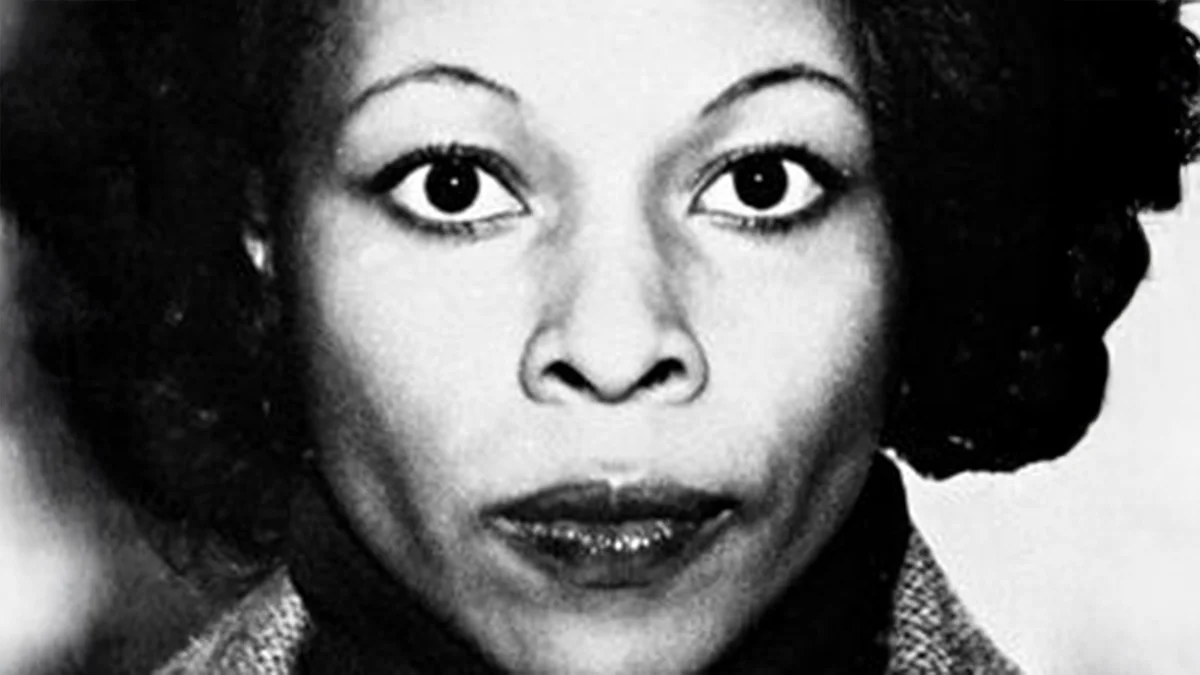
Her arrest in 1973 following a confrontation on the New Jersey Turnpike, in which a state trooper was killed, marked a turning point in her life and in the history of Black radical struggle. The trial and subsequent conviction did not simply represent a legal proceeding; it became a symbolic contest over the legitimacy of dissent, the boundaries of citizenship, and the capacity of the state to define truth. For many, Assata’s conviction was less a matter of evidence than of political expediency, a demonstration of the state’s determination to silence a voice that had become intolerable to established power.
What followed—her incarceration, her writings from prison, her escape, and eventual asylum in Cuba—are chapters that reveal not only her resilience but also the lengths to which systems of power will go to extinguish dissent. In exile, Assata Shakur did not retreat into obscurity. She continued to write, to reflect, and to serve as a symbol of both contested justice and enduring resistance. Her presence in Cuba remains a living reminder of the unfinished struggles of the twentieth century, a testament to the ways in which the battles of that era continue to reverberate into the present.
The life of Assata Shakur is not reducible to a narrative of crime and punishment, as official accounts often insist. It is, rather, a meditation on freedom itself, on the costs of defiance, and on the enduring necessity of vision in the face of overwhelming force. To study her life is to confront the uncomfortable truths of American democracy: that its promises have always been circumscribed by race, that its institutions have often served as instruments of repression rather than liberation, and that those who dare to insist upon full humanity are frequently those most ruthlessly targeted.
Her story, therefore, is not simply the biography of a single woman. It is the embodiment of a collective history, the manifestation of centuries of struggle, and a profound reminder that the pursuit of justice is neither linear nor guaranteed. In Assata Shakur’s life, one witnesses the convergence of personal courage, political commitment, and historical necessity. It is this convergence that ensures her place not only in the annals of Black liberation but in the broader narrative of human freedom.
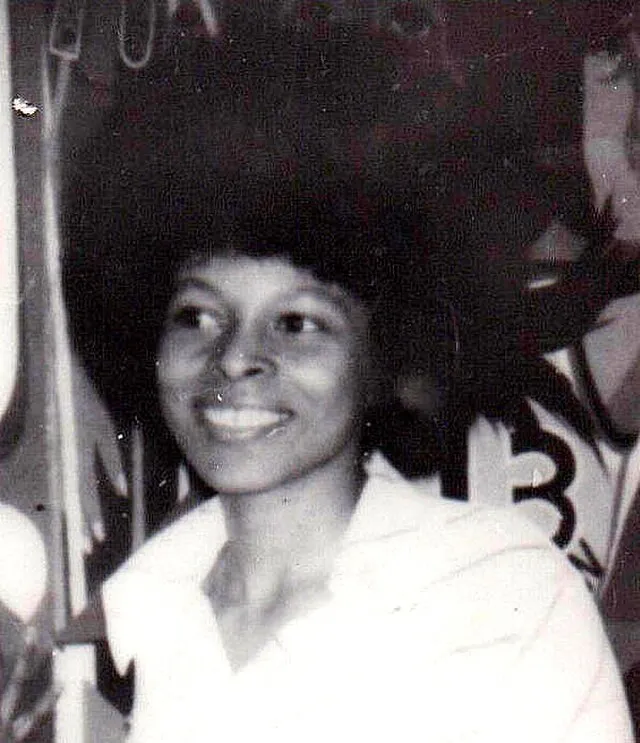
To extend the exploration of Assata Shakur’s trajectory, one must recognize that her life cannot be confined to the particulars of biography alone, for biography, when abstracted from history, becomes a distortion rather than illumination. The task, therefore, is to interpret her life not only in terms of what she did or endured, but also in terms of the forces that acted upon her, the structures that sought to define her existence, and the historical continuities she both inherited and challenged. In this sense, Assata Shakur does not merely exist as a singular personality; she is instead a node in a vast web of struggle, one that stretches backward to the centuries of enslavement and forward into the still-unfolding conflicts of the present.
The emergence of her political identity in the 1960s and 1970s reflected the collision between the long arc of Black resistance and the increasingly sophisticated apparatus of state control. This period was not accidental in producing figures such as Shakur; it was a moment when contradictions within American society reached an intensity that rendered neutrality impossible. The expansion of the Civil Rights Movement into more radical currents reflected the growing disillusionment with the promises of liberal democracy. For those who had marched, protested, and risked their lives in the pursuit of desegregation, the persistence of poverty, police violence, and systemic exclusion made clear that symbolic reforms could not by themselves dismantle deeply entrenched hierarchies.
Assata’s embrace of radical politics, then, was not an aberration but an organic response to the reality of her time. In the United States, the mythology of progress often obscures the endurance of oppression. Yet for those most directly subjected to exploitation, the limits of reform are palpable. For a young Black woman whose formative years were spent in a system that demanded obedience while offering little dignity, the allure of organizations that spoke unapologetically of power, sovereignty, and self-defense was undeniable. Her engagement with the Black Panther Party and the Black Liberation Army reflected not only a search for belonging but also a recognition that survival required organization, strategy, and courage.
Her intellectual contributions to these movements reveal the depth of her political sophistication. She was not content with rhetorical gestures; rather, she sought to analyze the structures that perpetuated injustice and to articulate alternatives grounded in both theory and lived experience. In this sense, her writings are as central to her legacy as her activism. They reveal a mind attuned to the complexities of race, gender, class, and empire, and a refusal to be confined by narrow categories. She consistently emphasized that liberation could not be partial, that to free oneself from one form of oppression while ignoring others was to replicate the very logic of domination one claimed to oppose.
It is important to situate Assata Shakur’s life within the continuum of African American women’s resistance. Too often, narratives of struggle center male leaders, reducing women to auxiliary roles. Yet women such as Sojourner Truth, Harriet Tubman, Ida B. Wells, Ella Baker, and Fannie Lou Hamer had long carried the weight of organizing, strategizing, and leading movements, often in the face of both racial and gendered subjugation. Assata inherited this tradition and extended it into the late twentieth century, insisting upon the necessity of women’s voices in revolutionary struggle and embodying a defiance that refused erasure. Her presence complicates any attempt to narrate Black liberation as a male-dominated endeavor, for she stood not behind but alongside, and at times ahead, of her male counterparts in articulating visions of freedom.
The New Jersey Turnpike incident and the subsequent trial illustrate the profound entanglement of law and politics in her life. To understand this episode merely as a criminal case is to miss the larger significance of the spectacle. The state’s pursuit of Assata was not motivated solely by the specifics of the incident but by the symbolic threat she represented. Her very existence—articulate, unafraid, radical, and Black—challenged the legitimacy of a system predicated on subjugation. The trial became an arena in which competing narratives of justice collided: the state seeking to affirm its authority by labeling her a criminal, and her supporters interpreting the proceedings as evidence of systemic persecution. The trial’s outcome, her conviction, did not resolve the question of truth but instead further polarized public perception, cementing her status as both fugitive and icon.
Her imprisonment was a continuation of this logic of suppression. Yet rather than silence her, incarceration became another site of resistance. She used her confinement to write, to reflect, and to bear witness. The act of writing under such conditions must be understood as an act of defiance, for it affirmed her humanity in a system designed to reduce her to a number. Through her words, she reached beyond the prison walls, connecting with readers across generations, offering not only testimony but also analysis, and inviting others to see in her struggle the contours of their own.
Her escape from prison in 1979 represented not only a personal act of liberation but a profound symbolic rupture. It was a refusal to accept the legitimacy of a system she believed had condemned her unjustly, and it was an affirmation that the pursuit of freedom sometimes demands extraordinary measures. The state interpreted her escape as an affront, intensifying its pursuit and designating her as one of its most wanted figures. Yet for many within the Black community and broader circles of resistance, her escape symbolized the possibility of triumph against overwhelming odds, a reminder that even the most repressive systems can be defied.

Her subsequent asylum in Cuba added another dimension to her story, situating her within the broader geopolitics of the Cold War. That a nation long vilified by the United States would offer her refuge highlighted the contradictions of American democracy on the global stage. While the United States proclaimed itself a beacon of freedom, it actively sought to silence a Black woman whose only crime, in the eyes of her supporters, was to demand freedom too fervently. Her life in Cuba, though lived in exile, became a continuation of her struggle. There, she has remained a thinker, a teacher, and a symbol, embodying the unfinished business of liberation.
Assata Shakur’s life raises profound questions about justice, power, and the meaning of freedom. Is justice simply the enforcement of law, or must it be measured against higher principles of equity and dignity? Can freedom exist within structures designed to perpetuate inequality, or must it always emerge in opposition to such structures? Her existence, contested and unresolved, forces us to confront these questions without the comfort of easy answers.
Her influence continues to reverberate. Generations of activists have drawn inspiration from her words, her defiance, and her example. Her insistence that liberation requires not only courage but imagination resonates powerfully in movements that continue to confront systemic racism, gendered oppression, and economic inequality. In a world where oppression persists in both old and new forms, her life remains a reminder that freedom is not a gift to be granted but a right to be seized.
Exile, in both its material and symbolic dimensions, constitutes one of the most profound conditions of human displacement. To live in exile is to exist in a perpetual state of dislocation, severed from the immediate soil of one’s origin, yet forever defined by the very absence of that origin. For Assata Shakur, exile in Cuba was not merely a pragmatic solution to evade the relentless grasp of a state determined to claim her body; it was also an ontological repositioning. In exile, she became at once a fugitive and a citizen of a broader global struggle, embodying the duality of being dispossessed of homeland yet enriched by the possibility of solidarity that transcends borders. Exile is not simply a negation of belonging but a reconfiguration of it, and in this reconfiguration, Assata found both continuity and expansion of her mission.
The philosophical implications of her exile are manifold. On one level, exile exposes the arbitrariness of the nation-state as the ultimate arbiter of identity and legality. By crossing into Cuba and receiving protection there, Assata’s very existence questioned the presumption that legitimacy must be tethered to American jurisdiction. She embodied the reality that sovereignty is contested, that freedom cannot be monopolized by one state’s definition, and that refuge, when extended across ideological boundaries, constitutes a radical act of recognition. To live in Cuba as an exile of the United States was to stand as a living contradiction to the narrative of American exceptionalism, for here was a woman who found protection and dignity not under the flag that claimed to guarantee liberty, but under the emblem of a nation branded by the United States as its enemy.
Her role in Cuba extended beyond the avoidance of capture. She became a living archive, a repository of memory, and an active participant in shaping global liberation thought. Through her writings and her dialogues with activists and intellectuals, she reframed the struggle of African Americans not as an isolated domestic issue but as part of the worldwide battle against imperialism, colonialism, and capitalism. She emphasized the interconnectedness of struggles, drawing lines between the plight of Black Americans and that of oppressed peoples across Latin America, Africa, and the Middle East. By doing so, she redefined what solidarity could mean: no longer limited to alliances within a single geography, but an expansive recognition that oppression is global and that resistance, to be effective, must also transcend borders.
This philosophical broadening of liberation thought is perhaps one of her most enduring contributions. Whereas some strands of American radicalism risked becoming insular, focusing narrowly on domestic grievances, Assata insisted on a dialectical perspective, one that recognized the mutual constitution of local and global oppressions. For her, the police violence inflicted on Black communities in the United States was of the same nature as the violence unleashed by American imperialism abroad. The militarization of domestic policing, the criminalization of dissent, and the economic exploitation of marginalized communities were not anomalies but reflections of a global system of domination. To resist one dimension of this system while ignoring another was, in her view, to misunderstand the nature of the enemy itself.
Her exile also raises profound questions about the meaning of belonging. What does it mean to belong to a nation that has declared you its enemy? What does it mean to find safety in a land that is not your ancestral home, yet offers recognition of your humanity? In Assata’s life, belonging becomes a paradox: denied by the country of her birth, she is embraced by a nation that recognizes in her struggle the resonance of its own anti-colonial history. Cuba’s willingness to provide her asylum was not merely an act of defiance against the United States; it was also a declaration that the fight for freedom recognizes no single geography. In this sense, exile becomes not a diminishment but an expansion, enabling one to see oneself as part of humanity’s collective struggle rather than confined within the artificial borders of a single state.
The enduring symbolic presence of Assata Shakur in present-day struggles testifies to the power of her example. Though physically removed from the United States, her words, image, and defiance have circulated across generations, inspiring activists in movements that emerged long after her exile. In the resurgence of Black radical consciousness in the twenty-first century, particularly during the rise of movements against police violence, her name has been invoked as both ancestor and contemporary. Young activists, many of whom were born decades after her escape, continue to cite her writings, wear her likeness, and chant her name as a reminder that the struggle against systemic racism has not concluded.
This symbolic endurance reveals the distinction between the defeat of a person and the defeat of an idea. The state may succeed in incarcerating a body, but it cannot imprison a vision once it has been articulated and embraced by a community. By attempting to render her invisible through demonization and pursuit, the state inadvertently magnified her symbolic power, transforming her into a living legend whose defiance could not be erased. In this way, Assata’s exile paradoxically ensured her immortality within the collective imagination of liberation movements. Her absence became presence, her silence became voice, her distance became closeness to those who continue the struggle.
Her symbolism also challenges the mainstream narratives of justice and democracy. The persistence of her relevance undermines the notion that the state’s verdicts are final or universally accepted. Instead, her life stands as a perpetual reminder that justice cannot be equated with legality, that morality may diverge sharply from the decrees of courts, and that legitimacy must ultimately be grounded in the recognition of human dignity rather than the coercive force of law. For activists confronting present-day injustices, Assata Shakur exemplifies the courage to reject the legitimacy of unjust systems and to live in accordance with a higher principle of freedom.
Her influence on global liberation thought also continues through the lens of intersectionality, even if she did not explicitly use that term. Her reflections on the condition of Black women in particular provided an early articulation of how race, gender, and class intersect to produce unique forms of oppression. She insisted that the liberation of women was not secondary to the liberation of Black people, nor could women’s freedom be postponed until after racial justice was achieved. To her, these struggles were inseparable, and any movement that ignored the full humanity of women undermined its own claims to justice. This insistence foreshadowed later feminist critiques and positioned her as a precursor to the theoretical frameworks that now dominate critical scholarship on oppression.
The resonance of her life today also speaks to the cyclical nature of oppression and resistance. The same conditions that propelled her into activism—the brutality of policing, the exploitation of labor, the marginalization of communities, and the suppression of dissent—remain alive in different forms. Her words thus serve not as relics of a bygone era but as urgent interventions into the present. When she warned of the dangers of systemic surveillance, militarized policing, and the dehumanization of Black lives, she was not speaking only to her time but to the future. The persistence of these conditions testifies to the prescience of her analysis and to the unfinished nature of the struggle.
In philosophical terms, her life embodies the principle that freedom is never static but always in motion, never a possession but a process. To live as Assata Shakur has lived is to remind the world that liberation is not the endpoint of a linear progression but the perpetual practice of defiance, creativity, and solidarity. Exile, far from silencing her, amplified her voice, situating her in the global imagination as both witness and prophet. Her continued presence in movements across the globe ensures that her life remains not only relevant but indispensable to the ongoing quest for justice.
The intellectual legacy of Assata Shakur emerges most vividly in her writings, which stand not merely as personal recollections but as philosophical interventions into the discourse of freedom, oppression, and human survival. To read her words is to encounter not only the testimony of a revolutionary but also the reflections of a thinker who grappled with the deepest questions of existence under conditions of extreme duress. Her autobiography, composed during exile, functions as more than a recounting of life events; it assumes the form of a text in which history, philosophy, and poetry converge. The text is not only narrative but also analysis, not only memory but also prophecy, offering insights that resonate across contexts and generations.
The very act of writing under the conditions of surveillance, imprisonment, and exile assumes a philosophical dimension. To narrate one’s life in defiance of erasure is to assert the irreducible reality of the self against systems that would render it invisible. In this sense, her writing participates in the tradition of existential affirmation, echoing the insights of those who have argued that freedom is not given but enacted in the face of negation. Her words resist the reduction of her life to the categories imposed by the state—criminal, fugitive, terrorist—and instead reassert her identity as a human being, a thinker, and a freedom fighter. This resistance through language reflects the existential conviction that meaning must be forged in defiance of absurdity, that dignity must be claimed in the very spaces designed to strip it away.
Her writings also reveal a profound meditation on survival. Survival, for Assata, is never merely biological persistence; it is survival with dignity, survival that refuses capitulation, survival that insists upon the continuity of struggle. To survive under oppression is not to accept its terms but to redefine the conditions of existence, to transform life itself into an act of resistance. This conception of survival carries existential weight, for it insists that life cannot be reduced to endurance alone but must also contain meaning, vision, and struggle. Survival, in her articulation, becomes indistinguishable from freedom, for to live without dignity, without resistance, is not to live at all.
In philosophical terms, Assata’s reflections invite comparison with broader traditions of liberation thought. Her insistence upon the unity of personal and political freedom resonates with Frantz Fanon’s meditations on decolonization, in which the oppressed must reclaim not only land but also selfhood. Her analysis of systemic violence parallels the critiques of structural injustice advanced by theorists who exposed the hidden continuities between colonial power abroad and racial domination at home. Yet what distinguishes her voice is its fusion of theoretical insight with visceral lived experience. She does not write as an academic detached from the arena of struggle; she writes as one whose body has borne the marks of repression, whose flesh has felt the violence of the state, and whose mind has had to craft meaning out of the conditions of dispossession. This fusion grants her work a philosophical authenticity that cannot be simulated in abstract theorization.
Her reflections on freedom constitute perhaps the most profound element of her intellectual legacy. For Assata, freedom is never static, never a completed state of being. It is dynamic, contested, and perpetually in the process of becoming. Freedom is not bestowed by law nor guaranteed by constitutional promise; it is seized, defended, and redefined in the struggle itself. This conception undermines liberal notions of freedom as the possession of rights granted by the state. Instead, it affirms a revolutionary understanding in which freedom arises from the refusal to accept domination and the insistence on constructing alternative forms of life. In this sense, her philosophy of freedom aligns with traditions of radical humanism that situate liberation not in institutional recognition but in the lived praxis of defiance.

The existential themes that course through her writings also reveal an acute awareness of mortality. Confronted with the possibility of death at the hands of police, with the prospect of endless imprisonment, and with the uncertainties of exile, she reflects on the value of life not in its duration but in its intensity of meaning. To live without resisting oppression, she suggests, is to live as though one were already dead. To resist, even in the face of overwhelming odds, is to affirm life at its most profound. This confrontation with mortality situates her writing within the tradition of existentialist thought, where the proximity of death compels an authentic engagement with the question of how one ought to live. In her case, the answer is unambiguous: to live authentically is to live in resistance, to refuse complicity with systems of dehumanization, and to claim one’s place in the continuum of struggle.
Her intellectual positioning as both revolutionary and thinker complicates attempts to categorize her. Too often, revolutionaries are dismissed as mere actors, devoid of reflective capacity, while thinkers are regarded as observers removed from action. Assata Shakur collapses this false dichotomy. She is both actor and thinker, revolutionary and philosopher, embodying the synthesis of praxis and theory. Her life demonstrates that reflection need not be divorced from struggle, that the battlefield and the written page can be extensions of the same pursuit. In this synthesis lies the depth of her intellectual legacy: she reminds us that ideas are most powerful when they are lived, and that action is most enduring when it is informed by thought.
The poetic dimensions of her writing also deserve attention. Assata’s words often transcend the boundaries of prose, entering the realm of lyrical expression. This poetic quality is not ornamental but essential, for it conveys the emotional intensity of her experience and the imaginative horizons of her vision. Poetry, for her, becomes a medium of survival, a way of speaking truths that cannot be captured in analytic exposition alone. Through metaphor, rhythm, and imagery, she renders visible the inner life of resistance, the emotional landscape of struggle, and the spiritual dimensions of liberation. In this way, her work participates in the long tradition of African American literature, where poetry has served as a weapon against erasure, a vessel for memory, and a beacon for freedom.
The intellectual significance of Assata Shakur, therefore, lies not only in the content of her thought but in the form of her life as thought-in-action. Her writings do not merely describe freedom; they enact it, defying the attempts of systems to silence her voice. Her life does not merely exemplify resistance; it theorizes resistance through lived embodiment. To engage with her legacy is to confront the inseparability of philosophy and struggle, the recognition that the deepest questions of existence are not confined to seminar rooms but are wrestled with in prisons, on battlefields, and in exile.
Her positioning as both revolutionary and thinker ensures that her legacy transcends the specifics of her time. She stands as a reminder that philosophy need not be confined to academic disciplines, that the oppressed themselves generate theory of the highest order, and that the task of scholarship is to recognize, honor, and learn from such contributions. In her life and writings, Assata Shakur demonstrates that thought is most vital when it emerges from the crucible of struggle, and that the pursuit of freedom is at once an intellectual and existential endeavor.
The trajectory of Assata Shakur’s intellectual and political legacy finds perhaps its most potent expression in the way her thought, life, and example have reverberated across movements that emerged long after her exile. While her immediate influence in the late twentieth century was evident among Pan-Africanist circles, solidarity campaigns, and revolutionary cells, her significance in the twenty-first century has crystallized most prominently through the resonance of her ideas with newer generations of activists confronting structural racism, state-sanctioned violence, and the ongoing colonial logic embedded within contemporary governance. Nowhere is this more visible than in the genealogy of thought and praxis that links Shakur to the movement for Black Lives and its international counterparts, a genealogy that underscores her dual role as revolutionary and philosopher, fugitive and teacher, symbol and living presence.
When the Movement for Black Lives and Black Lives Matter emerged in the aftermath of the killings of Trayvon Martin, Michael Brown, Sandra Bland, and countless others, they did so in a political climate profoundly shaped by the same dynamics that Shakur had diagnosed decades earlier. The militarization of policing, the criminalization of Black dissent, the disproportionate incarceration of Black bodies, and the persistence of anti-Black ideologies within state institutions were not novel realities for Shakur; they were the very conditions against which she waged her struggle. Yet the articulation of these realities in the twenty-first century drew upon a lexicon and a lineage that bore her imprint. The phraseology of resistance, the emphasis on collective survival, the refusal to separate lived experience from systemic critique—all of these were rehearsed in her writings, which function less as memoir in the conventional sense and more as philosophical interventions into the existential condition of Blackness under siege.
Her autobiography, written in exile, occupies a paradoxical space between the individual and the collective. It is a text that narrates the journey of one woman yet constantly collapses her singularity into a shared historical and political narrative. This tension is precisely what renders the book a philosophical text: it engages the perennial question of how freedom is conceived and enacted under conditions of unfreedom. In the Black Lives Matter movement, this dialectic finds new expression. Leaders and participants in the struggle often cite her words, elevate her story, and replicate her conceptual frameworks without necessarily framing them as formal philosophy, yet their praxis bears unmistakable affinity to her existential interrogations of power and liberation. In this sense, Shakur’s work functions as an unacknowledged philosophical canon that informs the grammar of present-day revolt.
Global struggles for decolonization likewise find resonance in Shakur’s life and work. Her exile in Cuba situates her squarely within the transnational networks of resistance that connect Black radicalism in the United States to broader anti-imperialist movements. That she was offered asylum by a state defined by its defiance of U.S. hegemony reinforces the global dimension of her significance. For activists and intellectuals in Africa, the Caribbean, Latin America, and even within settler-colonial contexts such as Palestine, her story exemplifies both the costs and the necessity of standing against empire. She emerges as a paradigmatic figure not only because she resisted but because she survived, and survival itself becomes a radical act when placed against the backdrop of systemic erasure. Her influence thus expands beyond the American context into a planetary discourse of liberation, linking her existential reflections on Black survival to the broader question of humanity’s struggle against domination.
Indeed, her writings can be read as philosophical texts that extend the existential tradition pioneered by figures such as Frantz Fanon, Jean-Paul Sartre, and Simone de Beauvoir, but with a specificity that situates them within the lived realities of Black women resisting state violence. If Fanon articulated the psychological violence of colonialism and Sartre theorized freedom as the defining condition of human existence, Shakur placed these abstractions into the lived theater of police stops, prison cells, and exile. In so doing, she offered not only a continuation but a reorientation of existential thought: freedom is not merely a philosophical category but an urgent necessity, and its denial is not theoretical but brutally material.

Her intellectual legacy thus becomes interwoven with her symbolic presence. She is not merely cited but invoked, not only remembered but reanimated in the slogans, murals, and manifestos of contemporary movements. The chant “Assata taught me” is less an affirmation of historical study than an acknowledgment of living pedagogy transmitted across generations. The symbolic presence she commands reveals the endurance of revolutionary memory as an active force, not a passive inheritance. The persistence of her name in protest sites across the globe indicates that her life cannot be quarantined within the past but continues to shape the future.
This persistence underscores the enduring philosophical implications of her exile. Exile, in her case, is not only geographic dislocation but ontological displacement—a condition of existing between worlds, simultaneously present and absent, visible and hidden. Yet this condition itself becomes a metaphor for the diasporic condition of Black life under global systems of domination. In Shakur’s exile, we perceive the broader exile of Black peoples from the promised universality of freedom. Her ability to transform this exile into a site of intellectual and political productivity reflects the radical reappropriation of marginality as a position of strength. It is precisely because she has been forced beyond the borders of her birth nation that her thought transcends its parochial boundaries and enters into global circulation.
Movements today that call for abolition, whether of prisons, police, or borders themselves, often resonate with Shakur’s insistence that true liberation requires the dismantling of oppressive structures rather than their reform. The abolitionist strand within the Movement for Black Lives owes a direct debt to the intellectual frameworks she advanced, frameworks that were forged in her own confrontation with incarceration and exile. To abolish is not simply to negate but to affirm the possibility of new modes of being, and in this sense, Shakur emerges as a philosopher of possibility, envisioning futures that are not yet realized but urgently needed.
Her enduring influence, therefore, cannot be measured solely by citation or textual study. It resides in the affective and symbolic economy of struggle, in the way her name circulates as a rallying cry, in the manner her story instills courage in those who might otherwise despair. The continuity between her generation and the current one is not linear but rhizomatic, branching across time and space, weaving together disparate struggles under the shared recognition of structural oppression. In this way, Assata Shakur occupies the role of both ancestor and contemporary, both figure of the past and companion in the present struggle.
The figure of Assata Shakur cannot be disentangled from the contradictions at the very heart of American democracy. Her fugitive status, constructed through the machinery of the state and perpetuated by legal decrees that cast her as an enemy of the nation, is not merely a personal condition but a philosophical indictment of the American project itself. The paradox that the self-proclaimed beacon of liberty, equality, and justice must simultaneously pursue, vilify, and exile a Black woman whose political vision was rooted in the dismantling of systemic oppression reveals a fissure that cannot be sutured. Shakur’s existence as a fugitive crystallizes the contradiction between the ideals enshrined in American democratic rhetoric and the realities of racialized state violence that continue to define its practice.
Her presence—marked by absence, her image invoked in murals and chants while her body remains physically beyond the reach of U.S. jurisdiction—exposes the hypocrisy of a nation that celebrates freedom as its founding principle while relentlessly criminalizing those who demand its universal application. In this way, Shakur functions as both a historical actor and a philosophical proposition. She represents the unsolvable paradox of a democracy that promises liberty but polices dissent, that proclaims equality but institutionalizes racial hierarchy, that venerates the rule of law but selectively applies it to fortify structures of domination. Her continued exile is not simply evidence of a past political struggle but an active mirror reflecting the failures of American democracy in the present.
Exile, in Shakur’s case, becomes a site of profound critique. To be banished from the territorial borders of the United States is simultaneously to be expelled from the myth of its inclusive citizenship. Yet in that expulsion lies the unveiling of truth: American citizenship has never been equally accessible, never fully extended to those whose Blackness marks them as perpetual outsiders. The exclusion of Shakur, who challenged the legitimacy of state violence and demanded accountability for the historical crimes of slavery, segregation, and imperialism, illustrates the degree to which dissent is pathologized as criminality. Her forced displacement is thus not an exception to the democratic project but an extension of its foundational logic—a democracy that defines itself through the exclusion of the very subjects it proclaims to protect.
This contradiction becomes all the more visible when Shakur’s experience is situated within the global struggles for decolonization. Her refuge in Cuba, a nation that has positioned itself as an enduring counterpoint to U.S. imperialism, highlights the international dimensions of her case. She is not merely a domestic dissident but a global symbol, a node where the currents of American racial oppression intersect with the broader struggle against colonial domination. Her asylum is not only a legal condition but a symbolic act: it affirms that the United States is not the arbiter of freedom it claims to be, for if it were, those who fought for liberation would not need to seek safety beyond its borders.
Indeed, Shakur’s exile reorients the geography of liberation. It dislodges the United States from its self-appointed position as the locus of democratic ideals and instead situates it within the broader history of empires that proclaim benevolence while enforcing subjugation. By residing in Cuba, Shakur inhabits a liminal zone between the empire and its resistance, a living reminder that freedom cannot be contained within national boundaries but must be understood as a global imperative. In her body, in her narrative, the struggle for Black liberation within the United States is shown to be inseparable from the wider fight against imperialism, capitalism, and neocolonial control across the globe.
Her symbolic and intellectual presence thus provides a lexicon through which global movements articulate their own conditions of unfreedom. In Palestine, where activists invoke her name, her story resonates with the daily reality of surveillance, checkpoints, imprisonment, and exile. In South Africa, her narrative recalls the apartheid state’s relentless effort to criminalize dissent. In Latin America, she represents a sister in the struggle against the reach of neoliberal imperialism. Each invocation of Shakur affirms the shared recognition that systems of domination, though geographically distinct, are bound by a common logic of dispossession and control. Her life and writings supply a philosophical grammar for linking these struggles under the universal demand for decolonization.
Yet perhaps most striking is the way Shakur’s fugitive condition destabilizes the legitimacy of the U.S. state itself. The relentless pursuit of her capture by federal agencies, the imposition of the highest bounties ever placed on a woman, and the maintenance of her position on terrorist lists decades after her exile all reveal the fragility of American authority. For if democracy were secure, if it were confident in its moral claims, it would have no need to expend such resources in the pursuit of a single figure whose so-called threat consists primarily of words, ideas, and the enduring power of memory. The intensity of the state’s desire to control and silence her instead underscores its recognition that her very existence constitutes a critique it cannot withstand.
In this sense, Assata Shakur is more than a fugitive; she is an exposé of state legitimacy. The label “terrorist” affixed to her by the United States functions less as an objective descriptor than as an act of desperation—a way to delegitimize her critique by rendering it unintelligible within the language of political discourse. But this strategy collapses under its own contradictions. For the state that enslaved millions, segregated generations, and sanctioned the routine murder of its Black citizens has little ground to stand upon in its proclamations of who represents terror. Shakur’s continued existence outside the grasp of U.S. jurisdiction thus marks not her illegitimacy but the illegitimacy of the state that seeks to erase her.
Her legacy within global decolonial movements expands this critique. By aligning her struggle with that of peoples across the world resisting domination, Shakur demonstrates that the crisis of legitimacy facing the United States is not confined to its domestic failures but extends into its role as an imperial power. The same state that criminalized her has waged wars in Vietnam, Iraq, and Afghanistan under the guise of spreading democracy, while simultaneously denying democracy to its own citizens of African descent. Her exile in Cuba, therefore, is not an anomaly but a synecdoche of the global condition: the empire casts its enemies as criminals, yet in doing so reveals its own crimes.
The enduring symbolic power of Shakur lies precisely in this duality. She is both an individual and a mirror, reflecting the structural contradictions that underpin modern democracy. Her fugitive status is less an escape from justice than an escape from injustice, a living testimony to the impossibility of achieving true freedom within a system that defines itself by exclusion and domination. By surviving outside its reach, she reminds the world that the legitimacy of U.S. democracy is not self-evident but profoundly contested, and that the true measure of democracy lies not in its proclamations but in its treatment of those who challenge its authority.
The obsessive effort of the United States government to define Assata Shakur as a terrorist represents more than a legal or security categorization. It is, at its core, an epistemic act of violence—a calculated attempt to distort the meaning of her life, to silence her critique, and to foreclose the possibility that her struggle might be understood as legitimate. To call her a terrorist is to engage in a profound inversion of reality, whereby the structures that have historically inflicted terror upon Black bodies seek to redefine resistance to that terror as its very embodiment. This inversion is not merely semantic; it functions as an ideological weapon that sustains the self-image of American democracy as a just and benevolent order. By criminalizing Shakur at the highest level of symbolic denunciation, the state protects itself from confronting the possibility that its own practices constitute the true apparatus of terror.
This strategy exemplifies what philosophers of power describe as epistemic violence: the deliberate misrepresentation of reality in ways that delegitimize resistance while naturalizing domination. In Shakur’s case, the act of designating her as a terrorist is an attempt to strip her of philosophical subjectivity. It is an effort to deny her the status of thinker, of revolutionary intellectual, and to reduce her instead to an object of fear. By placing her name alongside those associated with indiscriminate acts of violence, the U.S. state endeavors to render her political critique unintelligible, inaccessible to the realm of legitimate discourse. In this sense, the label does not simply describe her; it constructs her as an enemy of democracy, thereby foreclosing the possibility of engaging with her ideas on their own terms.
Yet this very act of distortion reveals the fragility of democracy’s self-image. A confident democracy would not need to expend its moral capital on discrediting a single individual whose primary threat lies in her words and her example. That the United States continues to pursue Shakur decades after her exile—long after her direct participation in militant activity—demonstrates the enduring anxiety she provokes. Her survival, her refusal to be erased, destabilizes the narrative of American democracy as inclusive and legitimate. The intensity of the state’s obsession with her therefore betrays its awareness that her existence exposes its contradictions.
Indeed, one must ask: what does it mean for the most powerful nation in the world to place a Black woman on its most-wanted terrorist list? The disproportionate response suggests that she embodies something far more dangerous than the state can publicly admit. She represents an unassimilable critique, one that cannot be neutralized through co-optation or domestication. Unlike figures who have been absorbed into the pantheon of American progress—often stripped of their radicalism to render them safe—Shakur resists such domestication. Her exile protects her from the processes of appropriation that often convert radical dissenters into benign symbols of democratic tolerance. By remaining beyond the reach of U.S. power, she retains the capacity to indict it.
This ongoing attempt to fix her identity as a terrorist, however, cannot contain the global counter-discourse that has emerged around her. Across the world, Shakur is not remembered as a figure of indiscriminate violence but as a philosopher of liberation, a revolutionary thinker who articulated the existential stakes of freedom for oppressed peoples. Her writings, speeches, and example function as philosophical texts that interrogate the very foundations of political legitimacy. By narrating her life in her autobiography, she produced more than a personal account; she produced a treatise on the human condition under domination, a text that insists upon the universality of the struggle for survival and dignity.
This universality positions Shakur as a touchstone for decolonial thought. Within the framework of decolonization, her life embodies the demand to unsettle the epistemic structures of empire. The United States, like all imperial powers, has sought to monopolize the definition of freedom, justice, and democracy. By branding Shakur a terrorist, it asserts its authority to define who is a legitimate subject of freedom and who is not. Yet Shakur’s survival and the global circulation of her story challenge this monopoly. They reveal that freedom cannot be defined solely within the parameters of the U.S. state, but must instead be reimagined from the perspective of those excluded from its promises.
In this sense, Shakur’s intellectual presence is transformative. She compels us to rethink freedom not as a gift bestowed by democratic institutions but as a practice wrested from structures of domination. She invites us to consider legitimacy not as an inherent property of states but as a relational condition, dependent on their treatment of the most vulnerable. By situating her thought alongside global decolonial movements, we see how her story disrupts the epistemic foundations of empire. She reminds us that legitimacy cannot be claimed through rhetoric while simultaneously denied in practice; that democracy cannot coexist with systemic racialized violence; and that freedom, if it is to have meaning, must extend to those who resist the very state that claims to guarantee it.
Her global influence underscores the degree to which her narrative transcends the particularities of U.S. politics. In South Africa, her example resonates with the intellectual legacies of Steve Biko and the praxis of the African National Congress. In Palestine, her words echo in the cries against occupation and displacement. In the Caribbean and Latin America, her story affirms the interconnectedness of struggles against imperial domination. In each case, she is not merely referenced as an American figure but invoked as a universal emblem of the decolonial condition. She becomes a philosophical interlocutor across contexts, a thinker whose experience provides a grammar for articulating what it means to resist, survive, and create under conditions of unfreedom.
Thus, the U.S. state’s obsession with defining Shakur as a terrorist must be read against the global counter-imagination that defines her as a revolutionary philosopher. Where the state seeks to criminalize, the oppressed reframe; where the state attempts to erase, the movements inscribe her name into murals, songs, manifestos, and chants. This dialectic reveals the epistemic contest at the heart of the twenty-first century: the struggle over who gets to define freedom, who is entitled to legitimacy, and whose narratives constitute history. Shakur’s life sits at the nexus of this struggle, exposing the contradictions of American democracy while simultaneously illuminating the pathways toward global decolonial futures.
The designation of Assata Shakur as a “terrorist” by the United States government is not an isolated bureaucratic act; it is emblematic of the broader coloniality of power that permeates U.S. democracy. To interrogate this designation is to reveal the ways in which state apparatuses continue to operate through inherited logics of racialized domination, policing, and epistemic control. Coloniality of power, a term developed in critical social theory, describes the enduring structures of hierarchy, exploitation, and knowledge production that persist long after formal colonial administrations have ended. In Shakur’s case, the label of “terrorist” functions as a mechanism through which the state reasserts control over knowledge, history, and moral legitimacy, while simultaneously concealing the historical and ongoing violence it enacts against Black bodies.
By branding Shakur as a terrorist, the state exercises epistemic authority: it defines what constitutes legitimate resistance and, conversely, what constitutes criminality. This is a profoundly colonial gesture, one that mirrors the strategies used in historical contexts to suppress indigenous uprisings, anti-colonial movements, and enslaved populations. The state, through legal and symbolic frameworks, establishes the boundaries of permissible dissent while rendering subversive voices unintelligible within official discourse. Shakur’s lived experience, her writings, and her advocacy are thus reframed as threats to national security rather than as interventions in a morally urgent debate about justice. The designation functions as a form of narrative containment, attempting to enclose the radical possibilities she embodies within a discursive prison even as her physical body remains beyond U.S. reach.
This designation is inseparable from the racialized dimensions of American state power. Historically, U.S. democracy has constructed Black resistance as inherently dangerous, while simultaneously valorizing white insurgency or dissent as legitimate political action. The criminalization of Shakur exemplifies this double standard: her militancy, emerging from the context of systemic oppression, is labeled terrorism, while systemic violence inflicted by state agents—whether through policing, military interventions abroad, or economic exploitation—is framed as the maintenance of law, order, and democracy. This asymmetry underscores the coloniality embedded within democratic frameworks: power is not distributed through principles of universal justice, but through hierarchies inherited from slavery, segregation, and imperialism, wherein Black bodies are perpetually cast as expendable and dangerous.
The epistemic violence embedded in the terrorist designation further reveals the ways U.S. democracy asserts moral authority through narrative control. By categorizing Shakur as a threat to civilization itself, the state attempts to sever the link between her intellectual contributions and her lived experience. Her reflections on freedom, survival, and community—concepts deeply informed by the histories of slavery, Jim Crow, and global anti-imperial struggle—are rendered illegible within the dominant discourse. In this act of erasure, the state reproduces a colonial epistemology: it assumes the right to determine whose knowledge counts, whose experience is valid, and whose resistance is permissible. Yet the very intensity of this effort signals an awareness of the subversive power Shakur embodies. Her designation as a terrorist is both a containment strategy and an admission of the threat posed by her thought, her survival, and her enduring influence.
Shakur’s intellectual contributions, in turn, offer a radical counter-ontology of freedom that challenges the premises underlying such state violence. Where the state frames freedom as a condition granted by law, Shakur conceives freedom as a lived, relational practice—an ongoing project rooted in survival, community, and what might be described as radical love. Her reflections reveal that to be free is not merely to evade capture or oppression but to cultivate the conditions of dignity, solidarity, and agency within the contexts of structural constraint. Freedom, in this framework, is inseparable from collective life: it is realized through the sustenance of community networks, mutual aid, and the affirmation of shared humanity.
This counter-ontology positions survival as a primary ethical and political principle. To survive is not merely to exist biologically but to retain the capacity for thought, creativity, and moral agency under conditions designed to erase or crush these capacities. For Shakur, survival entails both resistance and reflection: it requires evading literal capture, confronting the psychic violence of oppression, and asserting the integrity of one’s intellect and vision. Survival is therefore both existential and political, a condition upon which freedom, dignity, and collective struggle depend.
Community functions as an extension of this ontology, serving as the scaffold upon which freedom is enacted. Shakur consistently emphasizes the relational nature of resistance: the pursuit of liberation is inseparable from the cultivation of trust, reciprocity, and shared purpose. Her writings reveal a consciousness attuned to the interdependence of lives and struggles, highlighting that individual emancipation is incomplete without the liberation of those around one. This emphasis on communal survival challenges the atomizing logic of the state, which seeks to isolate dissenters, fragment solidarity, and impose hierarchical control. In contrast, Shakur’s thought affirms that freedom is realized through collective practices that nurture resilience, knowledge, and agency.
Perhaps most radical of all is her insistence on what might be termed radical love—a principle that encompasses both care for one’s community and the ethical obligation to recognize the humanity of others, including those who perpetuate systemic oppression. This is not sentimentalism but a philosophical commitment to the transformative power of relational ethics: the recognition that liberation is not fully realized if it is founded on the destruction of others, but rather through the creation of spaces in which dignity, respect, and agency are extended to all who inhabit them. In this way, Shakur’s vision articulates a freedom that is simultaneously defensive and generative, protective of life yet oriented toward the expansion of possibility.
Her counter-ontology of freedom thus operates as a direct critique of the epistemic and structural violence embedded within U.S. democracy. By insisting that freedom is a practice rooted in survival, community, and radical love, she destabilizes the state’s claim to moral authority and exposes the colonial underpinnings of its definitions of legality and legitimacy. Her thought demonstrates that the most enduring forms of power are not those enforced through coercion or designation but those cultivated through collective resilience, ethical commitment, and intellectual engagement. In her life, her exile, and her writings, we encounter a sustained argument: true freedom cannot be granted from above; it must be claimed from below, through acts of survival, solidarity, and ethical imagination.
Assata Shakur’s counter-ontology of freedom—rooted in survival, community, and radical love—finds profound resonance in contemporary movements for abolition and global decolonial praxis. Her philosophy does not remain confined to abstract reflection; it manifests as a framework for concrete strategies of resistance, a guide for praxis that integrates ethical vision with political action. In the contemporary context, where movements against policing, mass incarceration, and global forms of structural violence have gained renewed momentum, her thought provides both theoretical scaffolding and strategic orientation. Abolitionist initiatives, for instance, embody her insistence that freedom is not granted by the state but cultivated through the persistent dismantling of systems that perpetuate oppression.
The Movement for Black Lives and the broader abolitionist current exemplify the ways in which Shakur’s intellectual contributions inform praxis. To call for the abolition of police departments, prisons, or militarized security apparatuses is not merely to advocate institutional reform; it is to assert the necessity of survival as the precondition for freedom. Shakur’s insistence that survival is inseparable from dignity and agency resonates directly with these demands. The abolitionist ethos recognizes that the state, in its present configuration, functions as a machinery of racialized and class-based oppression, and that genuine liberation requires not incremental adjustments but systemic transformation. In this, her writings anticipate the contours of abolitionist theory: freedom is enacted not through permission but through the strategic dismantling of structures that undermine life and community.
Her counter-ontology also illuminates the importance of community-centered strategies in resistance work. Shakur’s life demonstrates that survival under conditions of oppression is not an individualist project but a collective endeavor. Contemporary movements, whether they are mutual aid networks, community-led safety initiatives, or grassroots educational programs, enact precisely this principle. By situating community as the locus of freedom, these initiatives operationalize the relational ethics she espouses. The cultivation of solidarity networks mirrors Shakur’s insistence that liberation is inseparable from the well-being of others, and that resistance must be organized in ways that protect and sustain the lives of those most marginalized.
Globally, Shakur’s philosophical vision resonates within decolonial praxis. Her experience of exile, her survival beyond the borders of the United States, and her critiques of state legitimacy provide a model for resisting imperial and neo-colonial violence in diverse contexts. Activists in Latin America, Africa, and Asia draw upon the symbolic and intellectual authority of her life to articulate the inseparability of local struggles from global ones. In regions where settler-colonial logic, resource extraction, and militarized governance converge to oppress indigenous and Black communities, her counter-ontology serves as both analytical tool and ethical guide. Her insistence on survival as the foundation of freedom allows movements to anchor strategies of resistance not solely in ideological aspiration but in the material and relational imperatives of lived existence.
Her philosophy also reframes the concept of liberation itself. Shakur’s counter-ontology challenges the notion that freedom can be measured merely by the absence of overt oppression or the presence of formal rights. Instead, liberation is conceived as an ongoing process, one that entails the continual cultivation of environments in which agency, dignity, and relational care are possible. Contemporary abolitionist praxis reflects this understanding: programs that prioritize restorative justice, transformative rehabilitation, and community reintegration exemplify her insistence that liberation is both protective and generative. In dismantling oppressive institutions, activists are not merely removing instruments of harm; they are actively constructing spaces in which life, thought, and collective agency can flourish.
Radical love, as a central tenet of her counter-ontology, further informs strategies for global resistance. In contexts where violence is endemic and coercive power dominates, the cultivation of relational ethics becomes a subversive act. To organize movements that foreground care, empathy, and mutual responsibility is to enact resistance in the very mode of being that Shakur theorizes: an ethics in which survival is inseparable from the nurturance of human dignity. This principle finds practical expression in programs that prioritize community healing, in networks that provide material and emotional support to activists under threat, and in transnational collaborations that resist the atomizing forces of empire. In every case, her vision operationalizes radical love as a strategic, ethical, and philosophical foundation for liberation.
Shakur’s counter-ontology also informs the epistemological strategies of contemporary resistance. Her critique of the U.S. state’s “terrorist” designation reveals the importance of controlling narrative and knowledge production in the pursuit of justice. Contemporary movements, in turn, adopt methods that reclaim epistemic authority from hegemonic structures: they document police violence, circulate testimonies of oppressed communities, and employ media to render visible the otherwise silenced dimensions of structural oppression. In doing so, activists operationalize her insight that knowledge and survival are intimately intertwined, and that the act of narrating one’s own struggle is itself a practice of freedom.
The convergence of these elements—survival, community, radical love, and epistemic reclamation—demonstrates the enduring practicality of Shakur’s intellectual legacy. She models a holistic approach to liberation that integrates philosophical rigor with ethical commitment and strategic action. In contemporary abolitionist and decolonial praxis, her counter-ontology is visible not only in the strategies deployed but in the ethical framework that undergirds them: an insistence that freedom is inseparable from collective life, that resistance is inseparable from survival, and that liberation is inseparable from the cultivation of relational care and human dignity.
Through this lens, Assata Shakur is both philosopher and strategist, thinker and practitioner. Her life and writings provide a roadmap for movements seeking to dismantle systems of oppression while simultaneously cultivating the conditions for life-affirming social relations. In a world shaped by racialized violence, imperial domination, and structural inequality, her counter-ontology offers a coherent framework for action: survival as resistance, community as site of freedom, and radical love as the ethical core of liberation. Her example demonstrates that theory is most potent when inseparable from praxis, and that the deepest insights into freedom emerge not only from reflection but from the sustained, strategic, and ethical engagement with the realities of oppression.
Assata Shakur’s enduring symbolic presence transcends not only temporal but also geographic and ideological boundaries, establishing her as a figure whose life, thought, and example continue to shape the contours of liberation struggles across the globe. Her counter-ontology of freedom—rooted in survival, community, and radical love—is not confined to her own narrative or immediate historical context; it circulates across generations, informing the consciousness of activists, scholars, and everyday resistors who confront oppression in its myriad forms. The longevity of her symbolic power is inseparable from her ability to inhabit multiple registers simultaneously: she is at once a historical actor, a philosophical interlocutor, and a living emblem of resistance that defies containment.
Across generations, Shakur functions as a pedagogical anchor. Her story, her writings, and her survival provide a point of reference for emerging activists who encounter the persistent structures of racialized and systemic violence. For younger generations, the resonance of her life is not only historical but immediate: her embodiment of intellectual rigor, ethical integrity, and strategic resistance offers a template for navigating the complex terrain of twenty-first-century activism. The continuity of her influence is visible in movements that span decades, from the post-civil rights era’s radical collectives to contemporary abolitionist and Black Lives Matter initiatives. She provides an intergenerational bridge, linking the tactical knowledge and moral frameworks of past struggles with the strategic imperatives of current and future liberation projects.
Geographically, her symbolic presence extends far beyond the borders of the United States, reflecting the transnational character of anti-colonial and anti-imperial struggle. Exile situated her physically outside the jurisdiction of U.S. power, yet her narrative, philosophical reflections, and lived example have circulated globally. Activists in Latin America, Africa, the Caribbean, and the Middle East invoke her life as a model for resistance against both domestic oppression and the broader machinery of imperial domination. In each of these contexts, Shakur functions as a prism through which local struggles are connected to the universal imperative of freedom. Her counter-ontology provides a conceptual toolkit for understanding oppression, framing strategies of collective resistance, and envisioning liberated social formations across divergent cultural and political landscapes.
Ideologically, Shakur occupies a position of profound versatility. She resonates with anarchist critiques of state power, with Marxist analyses of structural inequality, with feminist and womanist frameworks attentive to gendered oppression, and with anti-imperialist and decolonial thought that interrogates the global hierarchies of power. Her life and work are not reducible to a single ideological framework precisely because her counter-ontology addresses the existential and ethical foundations of liberation itself: it concerns the conditions necessary for life, dignity, and agency to flourish. By foregrounding survival, relational ethics, and radical love, she transcends narrowly doctrinaire approaches, offering a philosophical orientation that can inform multiple struggles simultaneously. This polyvalence ensures that her influence remains relevant across ideological divides, offering coherence without imposing rigidity.
Her symbolic power is inseparable from her embodiment of resistance under duress. The narrative of survival that runs through her life—from the criminalization and imprisonment she endured to her strategic exile—provides a living counterpoint to state narratives of illegitimacy. By existing, thinking, and writing outside the reach of state control, Shakur demonstrates that resistance is not merely rhetorical but ontologically manifest: the preservation of life, intellect, and ethical agency in the face of systemic erasure constitutes a radical act. Her very survival embodies the philosophical principles she espouses, transforming her life into a locus of pedagogical and strategic insight for movements committed to liberation.
In connecting her counter-ontology directly to the shaping of future liberation movements, one observes several dimensions of influence. First, her insistence that freedom is inseparable from survival informs contemporary approaches to movement strategy, emphasizing the cultivation of resilience, self-care, and protective infrastructures within activist communities. Second, her foregrounding of community as the locus of liberation shapes collective practices, from mutual aid networks to cooperative organizing, ensuring that the pursuit of justice is inseparable from the sustenance of human relationships. Third, her articulation of radical love as a guiding principle for ethical resistance instills a moral dimension to praxis, affirming that liberation is not merely the negation of oppression but the creation of life-affirming social relations capable of sustaining future generations.
Shakur’s enduring presence ensures that liberation movements are philosophically and ethically anchored, even in moments of tactical improvisation. Her example provides a constant point of reference, a conceptual compass that can guide decision-making, prioritize ethical reflection, and maintain a long-term orientation toward justice. Movements informed by her counter-ontology are thus not solely reactive; they cultivate vision, coherence, and anticipatory strategy, recognizing that freedom must be constructed as much through foresight and planning as through immediate acts of resistance.
The symbolic and intellectual force of Assata Shakur demonstrates the inseparability of philosophy and praxis in the pursuit of liberation. Her life embodies the principles she theorized: survival as resistance, community as site of freedom, and radical love as the ethical core of engagement. Across temporal, geographic, and ideological boundaries, her presence continues to shape the imagination, strategies, and ethical frameworks of those who struggle against oppression. In doing so, she provides both a historical anchor and a forward-looking orientation, ensuring that future liberation movements are grounded not merely in immediate tactical gains but in the enduring cultivation of life-affirming, justice-oriented social orders.
Assata Shakur’s counter-ontology—anchored in survival, community, and radical love—finds its most concrete expression in contemporary abolitionist campaigns, transnational solidarity networks, and grassroots initiatives, where her philosophical and symbolic influence shapes both strategy and structure. In the domain of abolitionist activism, her life and writings provide both ethical guidance and tactical insight, inspiring campaigns that seek not simply to reform institutions of policing and incarceration but to dismantle them entirely, replacing coercive structures with relational, life-affirming frameworks.
Organizations such as Critical Resistance and local prison abolition collectives operationalize the principles she espoused, embedding survival as a strategic priority while cultivating community-centered alternatives to punitive systems. Shakur’s insistence that freedom cannot exist without the protection and nurturing of collective life manifests in these campaigns as a dual focus: the immediate provision of support for those targeted by carceral systems, and the long-term construction of resilient networks that render incarceration and state violence increasingly obsolete.
Transnational solidarity networks further illustrate the reach of her influence. Movements in Latin America, the Caribbean, and Africa have drawn upon her narrative and philosophy to articulate frameworks of resistance that integrate local struggles into global anti-imperialist praxis. In Colombia and Brazil, where racialized policing and militarized state responses disproportionately target Black communities, activists invoke Shakur’s example to underscore the ethical imperatives of self-defense, collective survival, and the cultivation of community-based alternatives to state violence. Similarly, networks of solidarity in Europe and Canada engage with her story as a means of fostering transnational awareness of systemic oppression, linking domestic campaigns for racial justice to the broader decolonial struggle. Her counter-ontology thus functions as a conceptual bridge, enabling movements separated by geography to share strategies, moral frameworks, and ethical commitments.
At the grassroots level, Shakur’s influence is visible in a multitude of initiatives that embody the relational and ethical dimensions of her thought. Mutual aid networks, community gardens, youth mentorship programs, and restorative justice initiatives operationalize her principles by placing survival and collective well-being at the center of political praxis. In communities impacted by systemic inequality, these projects illustrate that abolition is not only a demand to dismantle institutions but a proactive construction of alternative social structures. By foregrounding the relational, ethical, and practical dimensions of freedom, Shakur’s thought informs both the vision and implementation of these initiatives, ensuring that they are rooted in the lived realities of those they serve while guided by a coherent philosophical and ethical orientation.
Her counter-ontology also informs organizational and governance strategies within activist movements. Leaders and collectives inspired by Shakur’s example prioritize horizontal decision-making, participatory processes, and shared accountability, reflecting her insistence that freedom must be collectively realized rather than imposed from above. The ethical imperatives she articulates—particularly the integration of radical love and relational responsibility into praxis—translate into concrete governance structures: rotating leadership roles, community oversight of decision-making, and accountability mechanisms designed to prevent the replication of hierarchical oppression. These practices operationalize her insight that liberation is inseparable from the cultivation of community integrity and that strategies of resistance must mirror the values of the society they aim to create.
Moreover, her philosophical legacy shapes strategies for narrative reclamation and epistemic justice, crucial components of both abolitionist and transnational movements. Campaigns to document police violence, support incarcerated activists, and educate broader publics about systemic oppression draw upon her example of intellectual and narrative resistance. Shakur’s writings, which intertwine lived experience with ethical and political reflection, provide a model for producing knowledge that challenges hegemonic narratives while affirming the agency and dignity of marginalized communities. In doing so, she enables contemporary movements to ground their praxis not merely in reaction to oppression but in proactive epistemic and ethical work that reshapes public understanding, policy frameworks, and social consciousness.
Her symbolic presence also functions strategically within mobilization efforts. Invoking Shakur’s life in protests, educational programs, and community organizing serves as both a rallying point and a pedagogical instrument. Her story communicates the stakes of struggle, exemplifies the fusion of intellectual rigor with practical action, and reinforces the moral imperative to resist systemic violence. In this sense, Shakur’s influence is both inspirational and operational: it animates the ethos of resistance while shaping concrete strategies for sustaining movements, ensuring their coherence, resilience, and ethical integrity.
Across these domains—abolitionist campaigns, transnational solidarity networks, and grassroots initiatives—Shakur’s counter-ontology is translated into tangible structures of resistance and governance. Her insistence that freedom must be grounded in survival informs strategies for protecting vulnerable communities. Her emphasis on community shapes the organization and relational dynamics of activist networks. Her advocacy of radical love underpins ethical frameworks for decision-making, conflict resolution, and long-term movement sustainability. Her example demonstrates that philosophy is inseparable from practice and that the enduring struggle for liberation requires the simultaneous cultivation of moral vision, strategic insight, and material resilience.
In synthesizing these dimensions, Shakur emerges not only as a symbol or philosophical figure but as a living blueprint for contemporary liberation praxis. Her life and thought provide a coherent framework through which activists can conceptualize, organize, and enact transformative social change, linking ethical imperatives to practical strategies. The structures she inspires—whether mutual aid networks, abolitionist collectives, or transnational alliances—represent the materialization of her counter-ontology: a world in which freedom is inseparable from survival, community, and the cultivation of ethical, relational, and generative forms of collective life.
Assata Shakur’s life and thought operate as a continuous challenge to conventional structures of power, offering liberation movements a framework in which philosophy, ethics, and strategy are inseparable. Her counter-ontology insists that survival, community, and radical love are not peripheral considerations but foundational principles through which freedom is conceptualized and operationalized. In practical terms, this translates into a model of movement building that is attentive to both the vulnerabilities and capacities of participants, emphasizing resilience and relational accountability as essential components of sustained activism. Movements that internalize this model approach organization, leadership, and governance not merely as logistical or procedural concerns but as ethical and philosophical practices: decisions are evaluated in terms of how they sustain life, reinforce solidarity, and cultivate agency.
The ethical architecture that Shakur’s counter-ontology promotes also reshapes the relationship between individual and collective action within liberation struggles. By centering survival as the precondition for freedom, she provides a rationale for protective strategies—ranging from community-based safety networks to decentralized organizing—that ensure the longevity and effectiveness of movements. Radical love, in this context, functions as both ethical principle and strategic imperative: by cultivating mutual care and accountability, activists create structures that resist co-optation, fragmentation, and burnout, thereby sustaining collective momentum. These principles have concrete implications for the design of transnational solidarity networks, grassroots initiatives, and decentralized governance models, ensuring that liberation praxis remains both principled and operationally viable over extended temporal horizons.
At the epistemic level, Shakur’s counter-ontology functions as a critique of the ways in which dominant institutions control knowledge, legitimacy, and historical narrative. By insisting that freedom is inseparable from survival and ethical relationality, she challenges movements to prioritize epistemic sovereignty: the documentation, circulation, and validation of marginalized perspectives becomes a core component of liberation work. This has strategic implications for contemporary activism, as it foregrounds the necessity of creating independent media, archives, and pedagogical initiatives that resist state and corporate co-optation of narrative. Her life demonstrates that intellectual labor is inseparable from political praxis, and that the act of narrating struggle is itself an assertion of freedom.
Her influence also extends into the philosophical modeling of leadership and intergenerational knowledge transfer. Shakur exemplifies a form of authority that is grounded not in positional hierarchy but in ethical integrity, strategic foresight, and sustained commitment to communal well-being. Movements informed by her example structure mentorship, participatory decision-making, and knowledge-sharing processes to preserve institutional memory, cultivate emergent leaders, and maintain ethical consistency in the face of external pressures. Her example demonstrates that leadership within liberation movements must be relational, accountable, and oriented toward the long-term cultivation of collective capacities, rather than toward the consolidation of personal power.
Shakur’s symbolic and practical legacy provides liberation movements with a critical lens for interrogating state legitimacy and the moral assumptions underlying existing political structures. Her criminalization, exile, and ongoing designation as a “terrorist” reveal the epistemic violence inherent in the state’s claim to moral and legal authority. For contemporary activists, this serves as both a cautionary and generative insight: any strategy for systemic transformation must anticipate the mechanisms through which dominant powers will delegitimize dissent and must develop parallel frameworks of ethical, epistemic, and material resilience to counteract these pressures. Shakur’s counter-ontology thus informs not only the goals of liberation but also the architecture of movement strategy, providing a coherent philosophy for both ends and means.
Finally, her enduring influence ensures that global liberation movements remain attentive to the relational, ethical, and material dimensions of struggle. By framing freedom as inseparable from survival and community, and by emphasizing radical love as an operational ethical principle, her thought reinforces the necessity of integrating philosophical clarity, ethical responsibility, and strategic sophistication. Whether through abolitionist initiatives, transnational solidarity networks, grassroots organizing, or pedagogical innovation, Shakur’s legacy provides a comprehensive blueprint for envisioning, structuring, and sustaining liberation movements capable of resisting both immediate forms of oppression and the broader structural logics of domination that reproduce inequality across generations and geographies.
Assata Shakur’s life, thought, and enduring presence offer a profound testament to the inseparability of philosophy, ethics, and political praxis in the pursuit of liberation. Across temporal, geographic, and ideological boundaries, her counter-ontology—rooted in survival, community, and radical love—continues to inform, inspire, and structure movements committed to dismantling systems of oppression while cultivating life-affirming social relations. Her experience of state criminalization and exile exposes the epistemic violence embedded within U.S. democracy and imperial structures, highlighting the fragility and contradictions of institutions that claim moral and legal authority while perpetuating systemic injustice.
By refusing to be contained—physically, symbolically, or intellectually—Shakur embodies a model of resistance that is at once strategic, ethical, and visionary. She demonstrates that survival under conditions of oppression is itself an act of philosophical reflection and political assertion, that the nurturing of community is inseparable from the realization of freedom, and that radical love functions as both ethical compass and generative principle for collective life. Her writings, speeches, and example provide liberation movements with frameworks for governance, organizational ethics, epistemic sovereignty, and intergenerational knowledge transfer, ensuring that struggles for justice are sustained not merely as reactive campaigns but as ongoing projects of relational and ethical cultivation.
Her influence is palpable across contemporary abolitionist initiatives, grassroots networks, and transnational solidarity campaigns, shaping strategies that center survival, accountability, and ethical integrity while fostering collective resilience. Transnational feminist and womanist movements draw upon her life and thought to articulate intersectional approaches to liberation, foregrounding the inseparability of racial, gendered, and class-based oppressions while operationalizing survival and community as foundational principles. Across these domains, her legacy exemplifies the fusion of intellectual rigor and practical strategy, demonstrating that philosophy need not remain abstract but can inform the very architecture of ethical, relational, and resilient movements.
Ultimately, Assata Shakur endures as both symbol and interlocutor, a figure whose life challenges dominant narratives of legitimacy and whose thought provides a blueprint for the ongoing cultivation of freedom. Her counter-ontology continues to shape the imagination, strategies, and ethical frameworks of global liberation movements, affirming that the pursuit of justice is inseparable from the protection and nurturance of life, the ethical cultivation of community, and the unwavering commitment to radical love. In her example, future generations of activists, thinkers, and communities encounter a coherent, ethically grounded, and strategically viable vision of liberation—one in which survival, collective care, and moral courage constitute the very foundations of freedom itself.
Assata Shakur’s life is a testament not only to what has been endured but to what can be imagined and enacted: a world in which the imperatives of survival, the integrity of community, and the power of ethical relationality form the core of transformative, enduring liberation. Her presence reminds us that freedom is neither granted nor abstract, but realized through the continuous, principled, and collective work of those who dare to resist, create, and care. In this enduring synthesis of life, thought, and praxis, she remains an indelible force shaping the contours of justice, liberation, and human possibility for generations to come.
If you like what you have read here and want to support our efforts click to send Cash.app donation or donate here.
Copyright Infringement Policy for BlackWallStreet.org
The content published on BlackWallStreet.org, including but not limited to articles, op-eds, commentary, reports, graphics, and multimedia, is protected under United States Copyright Law (Title 17 of the U.S. Code) and international copyright treaties. Unauthorized use, reproduction, distribution, or modification of this content without explicit permission from the copyright owner is a violation of intellectual property rights and will result in legal and financial consequences. This policy outlines the ownership of content, steps to gain permission for use, consequences of infringement, and the procedures for reporting violations. 1. Ownership of Content All intellectual property published on BlackWallStreet.org, unless otherwise noted, is the exclusive property of the site or its contributors. Contributors grant BlackWallStreet.org a license to publish, promote, and distribute their works while retaining their individual copyright unless otherwise agreed upon. Any third-party content included on the site is used with proper licensing or attribution as required by law. 2. Prohibited Activities Without prior written consent from BlackWallStreet.org or the respective copyright holder, the following activities are prohibited: Republishing full articles, excerpts, or commentary in any medium (print, digital, or otherwise). Modifying or creating derivative works from content published on the site. Using content for commercial purposes, including in advertising, fundraising, or promotional materials. Copying or scraping content for redistribution on websites, blogs, or social media platforms. 3. Gaining Permission for Usage BlackWallStreet.org supports appropriate use of its content under specific guidelines. To obtain permission: Contact: Submit a formal request via the designated Content Usage Request Form or email permissions@blackwallstreet.org. Details: Include the specific content, intended purpose, distribution method, and audience. Licensing Agreement: Depending on the intended use, a licensing fee or written agreement may apply. Acknowledgment: All approved uses must provide proper attribution to BlackWallStreet.org and any identified author(s). Fair Use Exceptions: Limited use of content may qualify as “fair use” under copyright law, such as for educational, nonprofit, or critical commentary purposes. Determinations will be made on a case-by-case basis. 4. Legal and Financial Consequences BlackWallStreet.org takes copyright infringement seriously and will enforce its rights under the law. Consequences include: Legal Consequences: Cease and Desist Orders: Infringers will be formally notified to remove unauthorized content immediately. Civil Lawsuits: BlackWallStreet.org may pursue legal action for statutory damages, actual damages, or lost profits caused by infringement. Court-Ordered Injunctions: Preventing further use or distribution of the copyrighted material. Legal Fees: Infringers may be held responsible for covering court and attorney fees. Financial Penalties: Statutory Damages: Up to $150,000 per instance for willful infringement under U.S. Copyright Law. Licensing Fees: Retroactive fees may be charged for unauthorized use, at rates significantly higher than those for pre-approved permissions. 5. Reporting Copyright Infringement If you believe your intellectual property has been unlawfully used on BlackWallStreet.org, or if you suspect content from this site is being infringed upon elsewhere, follow these steps: Submit a Complaint: Email copyright@blackwallstreet.org with the following details: Your contact information. Description of the copyrighted material. The location (URL) of the unauthorized content. Verification: Provide evidence of ownership, such as original drafts, registration certificates, or publication timestamps. Resolution: BlackWallStreet.org will investigate and, if necessary, remove infringing material or pursue enforcement actions against the violator. 6. Protection and Monitoring BlackWallStreet.org employs Ai and many other tracking tools to monitor and enforce copyright protection: Digital Watermarking: Certain content may be embedded with unique identifiers to track unauthorized use. Copyright Monitoring Services: Regular scans ensure that intellectual property rights are upheld across online platforms. 7. Policy Updates This copyright infringement policy is subject to periodic updates. Users are encouraged to review it regularly to remain compliant with any changes. Respecting intellectual property rights fosters a fair and vibrant environment for creators and consumers alike. BlackWallStreet.org reserves all rights to enforce this policy and appreciates your cooperation in upholding ethical content usage. For further inquiries, please contact legalcounsel@blackwallstreet.org. This detailed policy ensures transparency, protects intellectual property rights, and provides a clear framework for legal recourse in case of violations.