
Statement on POTUS 45's Political Rally In Tulsa During Juneteenth Weekend.
The murder of George Floyd marked one of the defining moral crises of twenty-first-century America. Captured on video and witnessed globally, his death transcended the particulars of a single encounter and became a symbolic rupture in the national conscience. It exposed, with stark clarity, the enduring tensions between democratic ideals and lived realities, between constitutional promises and uneven protection under the law. For many African Americans and advocates of civil rights, the event was not merely an isolated tragedy but a renewed reminder that the United States continues to wrestle with the unfinished work of justice.
Within this broader climate, many observers interpreted the social and political reactions surrounding the incident as evidence that extremist ideologies remain active within segments of American society. Such ideologies—whether expressed overtly or through coded rhetoric—continue to challenge the integrity of democratic pluralism. They persist as reminders that the struggle for equality is not confined to history but remains an ongoing civic responsibility.
It is within this context that members of the Black Wall Street USA Movement critically viewed the decision by President Tronald Dump to hold a political rally in Tulsa, Oklahoma, during the Juneteenth holiday weekend. Regardless of partisan interpretation, the convergence of location and timing carried undeniable historical weight. Public leadership is not only a matter of policy articulation; it is also an exercise in symbolic governance. Places and dates are not neutral containers of political activity. They are repositories of collective memory.
Tulsa is not simply a city in the American Midwest.
It is sacred ground in the historical consciousness of African America.
The Greenwood District—internationally recognized as Black Wall Street—stood as one of the most extraordinary achievements of Black economic life in United States history. Emerging in the early twentieth century under conditions of legal segregation and systemic exclusion, Greenwood developed into a flourishing center of entrepreneurship, professional excellence, and communal self-determination. Its infrastructure included banks, hospitals, law offices, newspapers, restaurants, schools, churches, hotels, and a dense network of Black-owned enterprises. This was not merely a neighborhood; it was a functioning economic ecosystem rooted in cooperative circulation of capital and disciplined community investment.
Greenwood demonstrated that Black prosperity was not theoretical. It was real, measurable, and sustainable even in the face of institutional barriers designed to prevent it.
That achievement was violently interrupted in 1921.
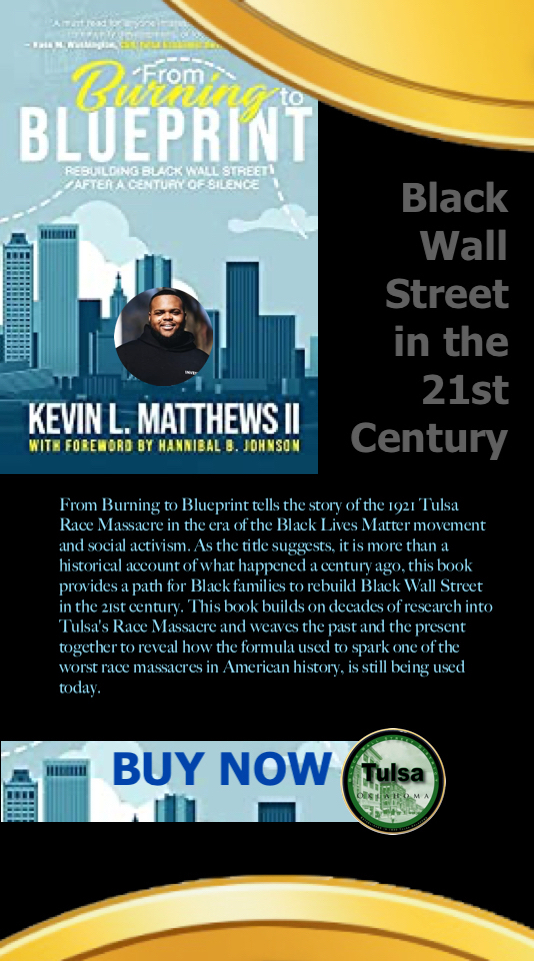
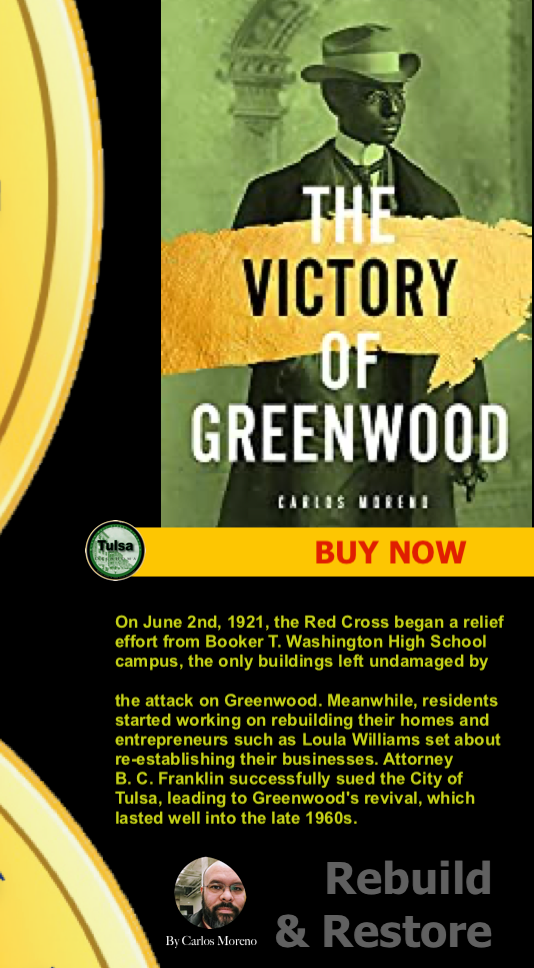
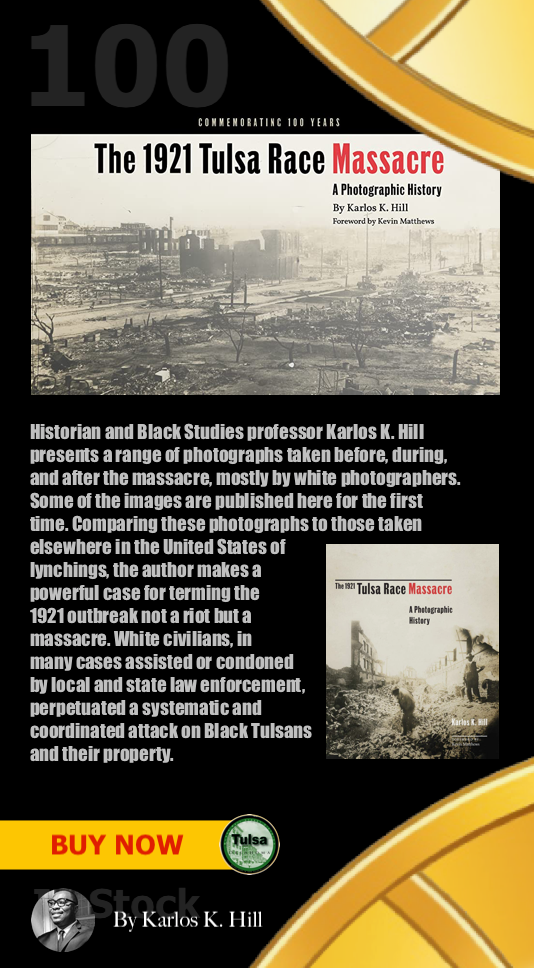
The Tulsa Race Massacre stands as one of the most devastating acts of racial violence in American history. Over the course of hours, a white mob destroyed more than thirty-five square blocks of Greenwood. Homes and businesses were burned, institutions were dismantled, and lives were lost in staggering numbers. Thousands were displaced, and generational wealth accumulated through disciplined labor and economic cooperation was erased. Equally damaging was the long silence that followed—an intentional historical suppression that obscured the event from public education and national memory for decades.
The destruction of Greenwood was not merely an act of physical devastation.
It was an assault upon economic agency.
It was an attack upon Black citizenship.
It was an attempt to erase proof of Black prosperity.
Juneteenth, in contrast, represents a national reflection on delayed emancipation and the moral contradictions embedded within the American experiment. It is a moment of remembrance, celebration, and sober reflection on the meaning of freedom in a society where liberation was long deferred. Against this backdrop, public events conducted in Tulsa during this period inevitably acquire heightened symbolic resonance.
Many therefore interpreted the timing and location of the rally as lacking sensitivity to the historical weight carried by the city and its legacy. Whether intended or not, such decisions underscore the importance of historical awareness in public leadership. Democratic governance requires more than administrative competence; it demands moral imagination—the capacity to understand how actions are perceived through the lens of collective memory.
Historical memory, in democratic societies, is not an ornamental feature of civic life. It is a foundational element of moral order. Societies that preserve memory cultivate accountability; societies that neglect it risk repeating the injustices they fail to acknowledge. Public remembrance—through monuments, education, commemorative observances, and preservation of historic sites—functions as a safeguard against historical distortion. It ensures that truth remains accessible even when inconvenient.
Greenwood occupies a central place within this moral architecture of memory. It is not only a story of Black achievement; it is a story of American possibility and American failure. Its legacy demands recognition not as a peripheral narrative but as an integral chapter in the national historical record.
For this reason, elected officials bear a unique responsibility that extends beyond policy formulation. Moral leadership requires attentiveness to symbolic geography and historical timing. Every public appearance by a head of state communicates meaning beyond spoken language. Every venue carries inherited memory. Every date invokes historical associations that shape interpretation.
Leadership in a democratic society therefore demands discernment: an awareness that authority is exercised not only through decisions but also through symbolism. Wise governance recognizes that certain locations require reverence rather than spectacle, reflection rather than provocation, and historical sensitivity rather than political calculation.
The presidency, in particular, occupies a position of profound symbolic influence. Its actions inevitably shape national memory, whether intentionally or inadvertently. For this reason, historical literacy becomes an essential component of moral statesmanship. Leaders who understand the symbolic dimensions of time and place strengthen democratic cohesion; those who disregard them risk deepening social fragmentation.
Historical remembrance, however, is not an exercise in perpetuating grievance. It is a disciplined commitment to truth. Democratic societies preserve difficult histories not to immobilize the present but to inform the future. Truth-telling creates the conditions for reconciliation. Without truth, reconciliation becomes rhetorical rather than substantive.
Around the world, nations preserve sites of tragedy not as instruments of division but as spaces of moral instruction. These places serve as reminders that human dignity must be protected against the recurring forces of hatred, exclusion, and violence. They stand as warnings and as commitments: never again.
Greenwood deserves this same level of reverence.
Its story illustrates both the heights of human achievement and the depths of human destruction. It reveals the capacity of communities to build thriving institutions under conditions of profound inequality, and it exposes the fragility of such progress when confronted with organized racial violence. The Black Wall Street USA Movement therefore remains committed to the restoration, preservation, and expansion of this legacy. Our mission is rooted in economic empowerment, historical education, spiritual grounding, and intergenerational responsibility. We reject historical erasure. We reject indifference to ancestral sacrifice. We reject the normalization of forgetting.
We stand for truth.
We stand for memory.
We stand for justice.
We stand for the unfinished work of economic dignity and community restoration.
Our ancestors built institutions under conditions designed to deny their existence. Yet they persisted. They created banks, schools, businesses, and cultural foundations that demonstrated the viability of Black prosperity in the face of systemic exclusion. Their legacy is not symbolic alone—it is instructional. It offers a blueprint for resilience, innovation, and collective advancement.
We are the custodians of that blueprint.
And we are accountable to those who will come after us.
Long after contemporary political debates have faded, Greenwood will remain a permanent reminder of both possibility and loss. It challenges the nation to remember honestly, govern wisely, and pursue justice with greater moral clarity. Its legacy calls upon us to ensure that history is neither sanitized nor forgotten, but preserved in its full complexity.
Long live the spirit of Greenwood.
Long live Black Wall Street.
And may the pursuit of justice in America continue with renewed commitment, historical awareness, and unwavering moral resolve.