
After 250 Years: Black Wealth by Metro Area
Live

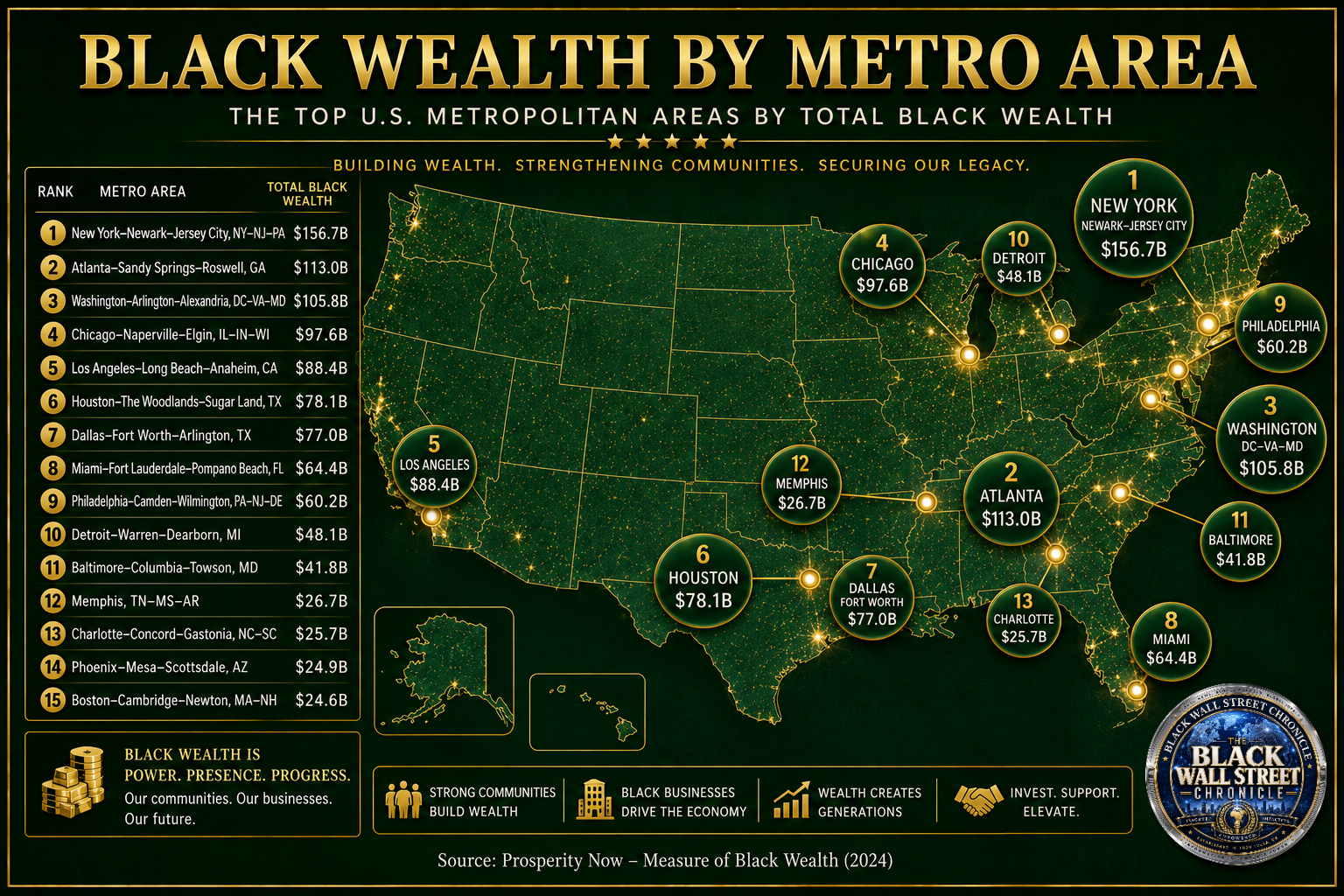
Black Wealth by Metro Area

Black Wealth in America's Metropolitan Centers, 2026
The Geography of Prosperity, Power, and Economic Transformation in Black America
Understanding the Rise of Black Metropolitan Wealth
The story of Black wealth in America has traditionally been told through the lens of struggle. Histories of slavery, segregation, exclusion from financial institutions, discriminatory housing policies, labor market inequities, and systemic barriers to capital formation have understandably dominated scholarly and public discussions concerning African American economic life. Yet while these realities remain essential to understanding contemporary disparities, they represent only one dimension of a far more complex narrative. Equally important is the story of Black wealth creation itself: the institutions, businesses, families, communities, and metropolitan regions that have generated unprecedented levels of economic achievement despite centuries of structural obstacles.
In 2026, the geography of Black wealth reveals a remarkable transformation underway across the United States. Concentrated within major metropolitan regions, Black wealth has become an increasingly powerful force shaping local economies, influencing national markets, and redefining traditional assumptions about African American economic mobility. From New York to Atlanta, Washington to Los Angeles, and Chicago to Houston, metropolitan centers have emerged as the primary engines of Black wealth accumulation in modern America.
According to the wealth estimates reflected in the accompanying analysis, the New York-Newark-Jersey City metropolitan area leads the nation with approximately $156.7 billion in total Black wealth. Atlanta follows with $113 billion, while the Washington-Arlington-Alexandria metropolitan region ranks third with $105.8 billion. Chicago, Los Angeles, Houston, Dallas-Fort Worth, Miami, Philadelphia, Detroit, Baltimore, Memphis, Charlotte, Phoenix, and Boston complete the list of America's leading metropolitan centers of Black wealth.
These numbers are not simply indicators of income. Wealth differs fundamentally from income because it reflects accumulated assets rather than annual earnings. Wealth includes homeownership, business equity, retirement investments, financial portfolios, inherited assets, commercial property holdings, intellectual property ownership, and other forms of capital that can be transferred across generations. Wealth represents economic security, opportunity, influence, and resilience. It is wealth—not merely income—that determines a family's ability to withstand economic shocks, finance education, launch businesses, purchase homes, and create opportunities for future generations.
Researchers affiliated with the Hutchins Center for African and African American Research at Harvard University, the W. E. B. Du Bois Research Institute, the Institute for Research in African-American Studies at Columbia University, the Kirwan Institute for the Study of Race and Ethnicity, the Center for Race, Ethnicity and Equity at Washington University in St. Louis, and numerous other institutions have increasingly emphasized the importance of studying wealth rather than income alone. Their work demonstrates that wealth provides a more comprehensive understanding of long-term economic wellbeing because it captures the cumulative effects of opportunity, investment, ownership, and inheritance.
The emergence of these metropolitan wealth centers reflects decades of demographic shifts, educational advancement, entrepreneurship, professional achievement, and community institution-building. Black wealth in America is no longer concentrated exclusively within traditional centers of historical significance. Instead, it is increasingly distributed across dynamic metropolitan ecosystems where education, business development, technology, real estate appreciation, and professional employment intersect to create pathways toward prosperity.
Understanding these metropolitan wealth centers requires examining the historical forces that produced them, the economic sectors driving growth, and the broader implications for the future of Black America.
Wealth Versus Income: Why Metropolitan Wealth Matters
One of the most common misunderstandings in public discussions about economics is the tendency to confuse wealth with income. Although the two concepts are related, they represent fundamentally different dimensions of economic life.
Income refers to money earned through employment, business activities, investments, or other sources during a given period. Wealth, by contrast, refers to accumulated assets minus liabilities. A family may earn a substantial income yet possess relatively little wealth if it lacks savings, investments, property, or business ownership. Conversely, a family with moderate income may possess significant wealth through real estate holdings, investment portfolios, or inherited assets.
The distinction is particularly important within African American communities because wealth serves as the primary mechanism through which economic advantages are transmitted across generations. Wealth finances college educations, provides down payments for homes, capitalizes businesses, supports retirement security, and creates opportunities for future family members.
Scholars at the Legacies of Slavery Initiative at Brown University, the Slavery and Justice Center, the Centre for Reparations Research at the University of the West Indies, the UCL Centre for Legacies of Slavery, and the Centre for the Study of Legacies of British Slavery have demonstrated how historical barriers to wealth accumulation continue to shape contemporary outcomes. Their research suggests that wealth disparities are often more persistent than income disparities because wealth reflects the cumulative effects of generations rather than the experiences of individuals alone.
The rise of metropolitan Black wealth therefore represents a significant development within American economic history. It signals not merely higher earnings but the gradual expansion of asset ownership, investment participation, and long-term financial stability.
New York: The Capital of Black Wealth
With approximately $156.7 billion in total Black wealth, the New York metropolitan area stands as the undisputed capital of Black wealth in America.
New York's position reflects a unique combination of factors. The region contains one of the largest concentrations of African Americans in the nation, a highly diversified economy, extensive financial infrastructure, and some of the world's most influential educational, cultural, and professional institutions. Black wealth in New York spans multiple sectors, including finance, law, medicine, technology, media, entertainment, real estate, entrepreneurship, and public service.
The historical foundations of this wealth extend back more than a century. Institutions such as the Schomburg Center for Research in Black Culture, the Lapidus Center for the Historical Analysis of Transatlantic Slavery, and the Africana Research Center at Brooklyn College have documented the evolution of Black economic life within New York City and surrounding regions. During the twentieth century, Harlem emerged as a global center of Black intellectual, artistic, and entrepreneurial activity. The Harlem Renaissance not only transformed American culture but also established networks of professional and economic advancement that continue influencing contemporary development.
In 2026, Black wealth in New York reflects the maturation of multiple generations of educational and professional achievement. African Americans occupy leadership positions throughout finance, academia, government, healthcare, media, and corporate America. Increasing participation in investment markets, commercial real estate ownership, and entrepreneurship has further contributed to wealth accumulation.
New York's status as a global city also creates opportunities unavailable in many other regions. International commerce, financial services, and multinational corporate activity generate pathways through which Black professionals and entrepreneurs can access global markets and capital flows. Consequently, New York's Black wealth is not merely local or national in scope; it is increasingly integrated into global economic networks.
Atlanta: The Modern Capital of Black Economic Power
If New York represents the largest concentration of Black wealth, Atlanta represents perhaps the most influential symbol of contemporary Black economic power. With approximately $113 billion in Black wealth, the Atlanta metropolitan region has become one of the most significant centers of African American prosperity in the world.
Atlanta's rise reflects a convergence of historical, political, educational, and economic factors. The city has long served as a hub for Black leadership, civil rights activism, higher education, and entrepreneurship. Institutions such as Morehouse College, Spelman College, Clark Atlanta University, and other historically Black educational organizations have produced generations of professionals, executives, entrepreneurs, and public servants.
Researchers at the African Diaspora Research Institute at Georgia State University and the Institute for Global African Diaspora at Howard University have emphasized Atlanta's unique role within broader networks of Black advancement. The city functions as both a regional economic center and an international cultural capital, attracting talent from throughout the United States, Africa, the Caribbean, and the wider diaspora.
Unlike many metropolitan regions where Black prosperity exists alongside significant economic marginalization, Atlanta has developed a substantial Black middle class and upper-middle class population. Black-owned businesses thrive across industries ranging from technology and logistics to healthcare, entertainment, and real estate. Corporate headquarters, transportation infrastructure, and a growing technology sector have further expanded economic opportunities.
Atlanta's significance extends beyond economics. The city represents a model of institutional development in which education, entrepreneurship, political influence, and community investment reinforce one another. This interconnected ecosystem has enabled wealth creation on a scale rarely seen elsewhere in Black America.
The result is a metropolitan area that continues to shape national conversations about economic mobility, business development, and the future of African American prosperity.
Black Wealth in America's Metropolitan Centers, 2026
The Geography of Prosperity, Power, and Economic Transformation in Black America
Understanding the Rise of Black Metropolitan Wealth
The story of Black wealth in America has traditionally been told through the lens of struggle. Histories of slavery, segregation, exclusion from financial institutions, discriminatory housing policies, labor market inequities, and systemic barriers to capital formation have understandably dominated scholarly and public discussions concerning African American economic life. Yet while these realities remain essential to understanding contemporary disparities, they represent only one dimension of a far more complex narrative. Equally important is the story of Black wealth creation itself: the institutions, businesses, families, communities, and metropolitan regions that have generated unprecedented levels of economic achievement despite centuries of structural obstacles.
In 2026, the geography of Black wealth reveals a remarkable transformation underway across the United States. Concentrated within major metropolitan regions, Black wealth has become an increasingly powerful force shaping local economies, influencing national markets, and redefining traditional assumptions about African American economic mobility. From New York to Atlanta, Washington to Los Angeles, and Chicago to Houston, metropolitan centers have emerged as the primary engines of Black wealth accumulation in modern America.
According to the wealth estimates reflected in the accompanying analysis, the New York-Newark-Jersey City metropolitan area leads the nation with approximately $156.7 billion in total Black wealth. Atlanta follows with $113 billion, while the Washington-Arlington-Alexandria metropolitan region ranks third with $105.8 billion. Chicago, Los Angeles, Houston, Dallas-Fort Worth, Miami, Philadelphia, Detroit, Baltimore, Memphis, Charlotte, Phoenix, and Boston complete the list of America's leading metropolitan centers of Black wealth.
These numbers are not simply indicators of income. Wealth differs fundamentally from income because it reflects accumulated assets rather than annual earnings. Wealth includes homeownership, business equity, retirement investments, financial portfolios, inherited assets, commercial property holdings, intellectual property ownership, and other forms of capital that can be transferred across generations. Wealth represents economic security, opportunity, influence, and resilience. It is wealth—not merely income—that determines a family's ability to withstand economic shocks, finance education, launch businesses, purchase homes, and create opportunities for future generations.
Researchers affiliated with the Hutchins Center for African and African American Research at Harvard University, the W. E. B. Du Bois Research Institute, the Institute for Research in African-American Studies at Columbia University, the Kirwan Institute for the Study of Race and Ethnicity, the Center for Race, Ethnicity and Equity at Washington University in St. Louis, and numerous other institutions have increasingly emphasized the importance of studying wealth rather than income alone. Their work demonstrates that wealth provides a more comprehensive understanding of long-term economic wellbeing because it captures the cumulative effects of opportunity, investment, ownership, and inheritance.
The emergence of these metropolitan wealth centers reflects decades of demographic shifts, educational advancement, entrepreneurship, professional achievement, and community institution-building. Black wealth in America is no longer concentrated exclusively within traditional centers of historical significance. Instead, it is increasingly distributed across dynamic metropolitan ecosystems where education, business development, technology, real estate appreciation, and professional employment intersect to create pathways toward prosperity.
Understanding these metropolitan wealth centers requires examining the historical forces that produced them, the economic sectors driving growth, and the broader implications for the future of Black America.
Wealth Versus Income: Why Metropolitan Wealth Matters
One of the most common misunderstandings in public discussions about economics is the tendency to confuse wealth with income. Although the two concepts are related, they represent fundamentally different dimensions of economic life.
Income refers to money earned through employment, business activities, investments, or other sources during a given period. Wealth, by contrast, refers to accumulated assets minus liabilities. A family may earn a substantial income yet possess relatively little wealth if it lacks savings, investments, property, or business ownership. Conversely, a family with moderate income may possess significant wealth through real estate holdings, investment portfolios, or inherited assets.
The distinction is particularly important within African American communities because wealth serves as the primary mechanism through which economic advantages are transmitted across generations. Wealth finances college educations, provides down payments for homes, capitalizes businesses, supports retirement security, and creates opportunities for future family members.
Scholars at the Legacies of Slavery Initiative at Brown University, the Slavery and Justice Center, the Centre for Reparations Research at the University of the West Indies, the UCL Centre for Legacies of Slavery, and the Centre for the Study of Legacies of British Slavery have demonstrated how historical barriers to wealth accumulation continue to shape contemporary outcomes. Their research suggests that wealth disparities are often more persistent than income disparities because wealth reflects the cumulative effects of generations rather than the experiences of individuals alone.
The rise of metropolitan Black wealth therefore represents a significant development within American economic history. It signals not merely higher earnings but the gradual expansion of asset ownership, investment participation, and long-term financial stability.
New York: The Capital of Black Wealth
With approximately $156.7 billion in total Black wealth, the New York metropolitan area stands as the undisputed capital of Black wealth in America.
New York's position reflects a unique combination of factors. The region contains one of the largest concentrations of African Americans in the nation, a highly diversified economy, extensive financial infrastructure, and some of the world's most influential educational, cultural, and professional institutions. Black wealth in New York spans multiple sectors, including finance, law, medicine, technology, media, entertainment, real estate, entrepreneurship, and public service.
The historical foundations of this wealth extend back more than a century. Institutions such as the Schomburg Center for Research in Black Culture, the Lapidus Center for the Historical Analysis of Transatlantic Slavery, and the Africana Research Center at Brooklyn College have documented the evolution of Black economic life within New York City and surrounding regions. During the twentieth century, Harlem emerged as a global center of Black intellectual, artistic, and entrepreneurial activity. The Harlem Renaissance not only transformed American culture but also established networks of professional and economic advancement that continue influencing contemporary development.
Today, Black wealth in New York reflects the maturation of multiple generations of educational and professional achievement. African Americans occupy leadership positions throughout finance, academia, government, healthcare, media, and corporate America. Increasing participation in investment markets, commercial real estate ownership, and entrepreneurship has further contributed to wealth accumulation.
New York's status as a global city also creates opportunities unavailable in many other regions. International commerce, financial services, and multinational corporate activity generate pathways through which Black professionals and entrepreneurs can access global markets and capital flows. Consequently, New York's Black wealth is not merely local or national in scope; it is increasingly integrated into global economic networks.
Atlanta: The Modern Capital of Black Economic Power
If New York represents the largest concentration of Black wealth, Atlanta represents perhaps the most influential symbol of contemporary Black economic power. With approximately $113 billion in Black wealth, the Atlanta metropolitan region has become one of the most significant centers of African American prosperity in the world.
Atlanta's rise reflects a convergence of historical, political, educational, and economic factors. The city has long served as a hub for Black leadership, civil rights activism, higher education, and entrepreneurship. Institutions such as Morehouse College, Spelman College, Clark Atlanta University, and other historically Black educational organizations have produced generations of professionals, executives, entrepreneurs, and public servants.
Researchers at the African Diaspora Research Institute at Georgia State University and the Institute for Global African Diaspora at Howard University have emphasized Atlanta's unique role within broader networks of Black advancement. The city functions as both a regional economic center and an international cultural capital, attracting talent from throughout the United States, Africa, the Caribbean, and the wider diaspora.
Unlike many metropolitan regions where Black prosperity exists alongside significant economic marginalization, Atlanta has developed a substantial Black middle class and upper-middle class population. Black-owned businesses thrive across industries ranging from technology and logistics to healthcare, entertainment, and real estate. Corporate headquarters, transportation infrastructure, and a growing technology sector have further expanded economic opportunities.
Atlanta's significance extends beyond economics. The city represents a model of institutional development in which education, entrepreneurship, political influence, and community investment reinforce one another. This interconnected ecosystem has enabled wealth creation on a scale rarely seen elsewhere in Black America.
The result is a metropolitan area that continues to shape national conversations about economic mobility, business development, and the future of African American prosperity.

The Metropolitan Engines of Black Wealth Formation
While New York and Atlanta occupy the first and second positions among America's metropolitan centers of Black wealth, the broader landscape of Black prosperity reveals a network of interconnected regions that collectively shape the economic future of African America. The emergence of these metropolitan wealth centers did not occur by accident. Rather, they are the products of historical migration patterns, educational attainment, professional advancement, business formation, real estate ownership, institutional development, and strategic adaptation to changing economic conditions.
Researchers from the Institute for Research in African-American Studies at Columbia University, the Africana Studies and Research Center at Cornell University, the African American Research Collaborative at Arizona State University, the Hutchins Center at Harvard University, and the Kirwan Institute for the Study of Race and Ethnicity have increasingly emphasized that geography matters profoundly in wealth accumulation. Metropolitan areas serve as ecosystems where opportunities, institutions, infrastructure, and social networks converge. Individuals rarely accumulate wealth in isolation. Rather, wealth develops within environments that provide access to education, employment, capital, markets, and professional relationships.
The metropolitan regions that rank among the nation's leaders in Black wealth provide important insights into the mechanisms through which African Americans are building economic security and influence in the twenty-first century.
Washington, D.C.: Black Wealth and Political Capital
Ranking third nationally with approximately $105.8 billion in Black wealth, the Washington-Arlington-Alexandria metropolitan region occupies a unique position within the economic geography of Black America. Unlike many metropolitan centers whose prosperity is primarily driven by manufacturing, trade, or technology, Washington's wealth ecosystem is deeply connected to government, public policy, higher education, consulting, defense contracting, law, and professional services.
The Washington metropolitan area contains one of the most highly educated African American populations in the United States. Generations of Black professionals have been drawn to the region by opportunities within federal agencies, nonprofit organizations, international institutions, universities, and private-sector firms that interact with government. This concentration of educational attainment has contributed significantly to wealth formation.
Howard University has played a particularly important role in shaping the region's economic landscape. Through institutions such as the Howard University Center for African Studies and the Institute for Global African Diaspora, scholars have documented the city's significance as both a national and international center of Black intellectual and professional development. Washington has long served as a gathering place for Black policymakers, academics, diplomats, entrepreneurs, and community leaders.
The region's housing market has also contributed substantially to wealth accumulation. Rising property values throughout Washington, Northern Virginia, and suburban Maryland have enabled many African American homeowners to build significant equity over time. Homeownership remains one of the most important mechanisms of wealth creation in the United States, and the appreciation of residential real estate throughout the metropolitan area has generated billions of dollars in wealth for Black families.
Washington's role as the nation's capital further amplifies its influence. Political power often translates into economic opportunity, and the city's concentration of decision-making institutions has created pathways through which African Americans participate in some of the most influential sectors of the national economy.
Chicago: The Legacy of Industrial and Professional Wealth
With approximately $97.6 billion in Black wealth, the Chicago metropolitan region ranks fourth nationally. Chicago's position reflects more than a century of Black migration, institution-building, entrepreneurship, and professional advancement.
The Great Migration transformed Chicago into one of the most important centers of Black life in America. Hundreds of thousands of African Americans relocated from the South during the twentieth century, seeking economic opportunity and greater personal freedom. Their arrival contributed to the development of robust communities, businesses, churches, civic organizations, and cultural institutions that became foundational elements of Black Chicago.
Research conducted by the Center for Black Diaspora at DePaul University, the Institute for African American Research within the UNC System, and the National Museum of African American History and Culture has highlighted Chicago's historical significance as a center of Black economic and political influence. The city's Black population established enduring institutions that supported educational advancement, business ownership, and community development.
Today, Chicago's Black wealth is distributed across numerous sectors, including healthcare, finance, education, logistics, manufacturing, law, technology, and entrepreneurship. The city's strategic location as a transportation and commercial hub continues to generate opportunities for wealth creation. Black-owned businesses participate in regional supply chains, professional services markets, and emerging technology sectors that contribute to the broader metropolitan economy.
Chicago also illustrates the complexity of modern Black wealth. While the metropolitan area contains substantial concentrations of prosperity, it also includes neighborhoods that continue to experience economic challenges. This coexistence of wealth and inequality underscores an important reality: Black wealth is not distributed evenly, even within metropolitan regions that rank among the nation's most prosperous.
Los Angeles: Entertainment, Entrepreneurship, and Global Markets
The Los Angeles metropolitan area ranks fifth nationally with approximately $88.4 billion in Black wealth. As one of the world's most influential cultural and economic centers, Los Angeles occupies a distinctive position within the broader landscape of Black prosperity.
The city's economy is exceptionally diverse, encompassing entertainment, technology, aerospace, international trade, healthcare, education, logistics, and finance. African Americans have participated significantly in many of these industries, creating pathways toward wealth accumulation that differ from those found in other metropolitan regions.
Institutions such as the Ralph J. Bunche Center at UCLA, the Black Studies Research Center at UC Santa Barbara, Pan-African Studies at California State University Los Angeles, and the African and African Diaspora Studies Department at UC Berkeley have documented the unique evolution of Black economic life in California. Their research demonstrates that Black wealth in Los Angeles has been shaped not only by traditional employment opportunities but also by entrepreneurship, intellectual property ownership, and participation in global entertainment markets.
The entertainment industry has been particularly influential. Black actors, producers, directors, musicians, writers, executives, and entrepreneurs have generated substantial wealth through creative industries. Unlike income derived solely from employment, intellectual property ownership creates opportunities for ongoing wealth generation through royalties, licensing agreements, and business ventures.
Los Angeles also benefits from its position as a gateway to global commerce. International trade connections, technological innovation, and multicultural business networks contribute to an economic environment that rewards creativity and entrepreneurship. African American business owners increasingly operate within global markets, leveraging the city's international orientation to expand their reach and influence.
Houston and Dallas-Fort Worth: The Texas Economic Transformation
Houston and Dallas-Fort Worth rank sixth and seventh nationally with approximately $78.1 billion and $77 billion in Black wealth respectively. Together, these metropolitan regions represent one of the most significant economic developments in contemporary Black America.
Texas has emerged as a major destination for entrepreneurs, professionals, and families seeking economic opportunity. Rapid population growth, business expansion, and relatively affordable housing have contributed to increasing wealth accumulation throughout the state.
Houston's economy benefits from its leadership in energy, healthcare, international trade, logistics, and engineering. The city's diverse economic base has created opportunities across numerous sectors, allowing African Americans to participate in both traditional and emerging industries. Houston's role as a global energy center has been particularly significant, generating high-income employment opportunities and supporting entrepreneurial activity.
Dallas-Fort Worth has experienced similar growth. The region's expanding technology sector, financial services industry, transportation infrastructure, and corporate presence have attracted highly skilled professionals from across the nation. Black entrepreneurs have established businesses in fields ranging from consulting and construction to information technology and real estate development.
Researchers at the John L. Warfield Center at the University of Texas at Austin and the Institute of African Studies at Emory University have noted that metropolitan regions such as Houston and Dallas increasingly reflect a broader trend toward geographic diversification in Black wealth creation. Economic opportunity is no longer concentrated exclusively in traditional coastal centers. Instead, emerging metropolitan economies throughout the South and Southwest are becoming important engines of prosperity.
Miami: The Diaspora Gateway
Miami's approximately $64.4 billion in Black wealth reflects its unique position at the intersection of African American, Caribbean, Afro-Latin American, and global economic networks. Few metropolitan areas illustrate the international dimensions of Black wealth more clearly than Miami.
Research from the Afro-Latin American Research Institute at Harvard University, the Institute of Caribbean Studies at the University of the West Indies, the African Diaspora Research Institute, and the Diaspora Studies Institute at American University highlights Miami's role as a crossroads of diaspora communities. The city's Black population includes African Americans, Haitians, Jamaicans, Bahamians, Trinidadians, Afro-Cubans, and numerous other groups whose experiences contribute to a rich and dynamic economic landscape.
Miami's economy is driven by tourism, international trade, finance, real estate, logistics, and technology. The city's global orientation creates opportunities for entrepreneurs engaged in transnational commerce and investment. Increasingly, Black-owned businesses in Miami operate not only within domestic markets but also across the Caribbean, Latin America, and Africa.
The growth of Black wealth in Miami demonstrates the importance of international connectivity in modern economic development. As globalization continues reshaping commerce, metropolitan areas that facilitate cross-border relationships may become increasingly important centers of wealth creation.
Philadelphia, Detroit, and Baltimore: Historic Foundations, Modern Growth
Philadelphia, Detroit, and Baltimore rank among the nation's most significant centers of Black wealth, with approximately $60.2 billion, $48.1 billion, and $41.8 billion respectively.
These metropolitan regions possess deep historical roots within African American history. Each played important roles in the development of Black institutions, political movements, educational organizations, and entrepreneurial networks.
Scholars associated with the Frederick Douglass Institute, the Gilder Lehrman Center at Yale University, the Moorland-Spingarn Research Center, and the Schomburg Center have documented the contributions of these cities to the broader history of Black advancement. Their research reveals how generations of institution-building created foundations upon which contemporary wealth continues to develop.
Although these cities have faced economic transitions associated with deindustrialization and demographic change, they remain important centers of Black professional achievement, business ownership, healthcare employment, education, government service, and cultural influence. Their continued presence among the nation's leading metropolitan wealth centers demonstrates the enduring value of historical institutions and community networks.
The experiences of Philadelphia, Detroit, and Baltimore also underscore an important lesson. Wealth creation is rarely the result of short-term trends. Instead, it often reflects decades or even generations of investment in education, property ownership, entrepreneurship, and institutional development. The prosperity visible in these metropolitan regions today is the product of efforts undertaken by previous generations whose sacrifices and achievements continue shaping economic outcomes.
Emerging Wealth Centers, Homeownership, Business Ownership, and the Expansion of the Black Professional Class
While metropolitan giants such as New York, Atlanta, Washington, Chicago, Los Angeles, Houston, and Dallas-Fort Worth dominate discussions of Black wealth in America, the broader landscape of African American prosperity extends beyond these highly visible centers. Several emerging metropolitan regions demonstrate that Black wealth creation is becoming increasingly diversified across geographic, economic, and demographic lines. Cities such as Memphis, Charlotte, Phoenix, and Boston reveal important trends regarding homeownership, professional advancement, entrepreneurship, educational attainment, and generational asset accumulation.
These metropolitan areas may possess smaller absolute concentrations of Black wealth than the nation's largest urban centers, yet they provide valuable insight into the mechanisms through which wealth is being created, preserved, and expanded throughout Black America in 2026. Researchers affiliated with the African American Research Collaborative at Arizona State University, the Institute for African American Research, the Center for Race, Ethnicity and Equity, the Kirwan Institute for the Study of Race and Ethnicity, and the Institute for Black Intellectual and Cultural Life have increasingly emphasized the importance of studying regional variations in Black economic development. Their scholarship demonstrates that no single model explains wealth formation across all metropolitan regions. Instead, local conditions, educational institutions, housing markets, business ecosystems, and demographic trends interact to produce distinctive pathways toward prosperity.
The growing wealth of these metropolitan areas reflects a broader reality: Black wealth in America is becoming more geographically dispersed and economically sophisticated than at any previous point in the nation's history.
Memphis: Legacy, Ownership, and Community Wealth
Memphis ranks twelfth nationally with approximately $26.7 billion in Black wealth. While this figure is smaller than those associated with America's largest metropolitan economies, Memphis occupies a uniquely important place within the historical and cultural landscape of Black America.
Few cities are as deeply connected to African American history as Memphis. The city served as a critical center of commerce, culture, civil rights activism, music, education, and entrepreneurship throughout the twentieth century. The legacy of Dr. Martin Luther King Jr.'s final campaign in Memphis remains embedded within the city's identity, symbolizing the longstanding relationship between economic justice and civil rights.
Research conducted through the National Museum of African American History and Culture, the King Institute at Stanford University, the Gilder Lehrman Center at Yale University, and the Moorland-Spingarn Research Center at Howard University has documented Memphis's historical role in advancing Black economic and social progress. These historical foundations continue influencing contemporary patterns of wealth accumulation.
Unlike some metropolitan regions where wealth is concentrated primarily within corporate or technological sectors, Memphis demonstrates the enduring importance of homeownership and small business ownership as wealth-building mechanisms. Residential property ownership remains one of the most significant contributors to Black household wealth throughout the region. Generations of families have accumulated equity through homeownership, creating assets that can be transferred to future generations.
Entrepreneurship also remains deeply embedded within the city's economic culture. Black-owned businesses contribute significantly to local economic activity, generating employment opportunities and supporting community development. These enterprises often serve as anchors within neighborhoods, providing both economic and social benefits.
Memphis illustrates an important principle regarding wealth creation: prosperity does not require the presence of Wall Street financial institutions or Silicon Valley technology firms. Wealth can emerge through sustained investment in homes, businesses, education, and community institutions. The city's experience demonstrates that economic development is often rooted in local relationships and long-term commitments rather than rapid speculative growth.
Charlotte: Banking, Growth, and the New Southern Economy
Charlotte ranks thirteenth nationally with approximately $25.7 billion in Black wealth. Its presence among America's leading metropolitan wealth centers reflects the broader transformation of the modern South into one of the nation's most dynamic economic regions.
Over the past several decades, Charlotte has evolved into a major financial center. The city hosts significant banking operations and has attracted substantial investment in finance, technology, healthcare, logistics, and professional services. This diversification has created opportunities for African Americans to participate in high-income industries while simultaneously supporting entrepreneurial activity.
Researchers affiliated with the African Diaspora Research Institute at Georgia State University, the Howard University Center for African Studies, and the Institute for Global African Diaspora have noted that Charlotte exemplifies the rise of what some scholars describe as the "New Southern Economy." Unlike earlier periods when economic opportunity was concentrated primarily in Northern industrial centers, many Southern metropolitan regions now offer competitive wages, expanding professional sectors, and growing entrepreneurial ecosystems.
The growth of Black wealth in Charlotte is closely linked to educational attainment. Increasing numbers of African Americans have entered professions requiring advanced degrees and specialized skills. Careers in finance, law, healthcare, information technology, engineering, and management have contributed significantly to household wealth accumulation.
Charlotte's housing market has also played a central role. Although rising housing costs present challenges for some residents, homeowners have benefited from property appreciation that has increased household net worth. Homeownership remains a foundational component of wealth creation, and the city's economic growth has enhanced the value of residential assets throughout many communities.
Perhaps most importantly, Charlotte reflects a broader demographic trend. African American professionals are increasingly relocating to metropolitan regions that combine economic opportunity with relatively affordable living costs. These migration patterns are reshaping the geography of Black wealth and creating new centers of prosperity throughout the South.
Phoenix: The Expansion of Black Wealth in the American Southwest
Phoenix ranks fourteenth nationally with approximately $24.9 billion in Black wealth. Its inclusion among the nation's leading metropolitan wealth centers highlights the growing importance of the American Southwest within discussions of Black economic development.
Historically, Phoenix did not occupy the same central position within African American migration patterns as cities such as Chicago, Detroit, Atlanta, or New York. Yet demographic and economic changes have transformed the region into an increasingly attractive destination for families, professionals, and entrepreneurs seeking opportunity.
The African American Research Collaborative at Arizona State University has documented numerous demographic trends affecting Black communities throughout the Southwest. Population growth, expanding employment opportunities, and business development have contributed to increasing levels of wealth accumulation among African Americans residing in the region.
Phoenix's economy benefits from strengths in healthcare, technology, construction, manufacturing, logistics, and renewable energy. These sectors provide opportunities for both wage earners and entrepreneurs. Black-owned businesses have increasingly participated in these industries, contributing to broader patterns of economic growth.
The city's real estate market has been particularly influential. Property appreciation has generated significant wealth for homeowners, while commercial real estate development has created opportunities for investors and business owners. As in many metropolitan areas, housing equity represents one of the largest components of household wealth.
Phoenix also illustrates the growing mobility of Black America. Contemporary wealth creation is not confined to historically established centers of African American population. Instead, African Americans are increasingly pursuing opportunities in regions characterized by economic growth, technological innovation, and demographic expansion. This geographic flexibility represents a significant departure from earlier eras when opportunities were often constrained by rigid regional boundaries.
Boston: Education, Innovation, and Intellectual Capital
Boston ranks fifteenth nationally with approximately $24.6 billion in Black wealth. Although smaller in population than many metropolitan areas appearing on the list, Boston's wealth profile reflects the extraordinary importance of education, innovation, and intellectual capital in contemporary economic development.
The metropolitan area is home to some of the world's most influential universities, research institutions, hospitals, and technology companies. Institutions such as Harvard University and numerous affiliated research centers—including the Hutchins Center, the W. E. B. Du Bois Research Institute, the Afro-Latin American Research Institute, and Project Implicit—have contributed significantly to scholarship concerning race, wealth, inequality, and economic mobility.
Boston's Black wealth is closely connected to educational attainment and professional achievement. The region contains substantial concentrations of African Americans working in healthcare, biotechnology, higher education, finance, law, public policy, and scientific research. These sectors typically generate higher incomes and provide greater opportunities for long-term wealth accumulation.
The city's innovation economy has also created pathways toward entrepreneurship. Technology startups, consulting firms, healthcare ventures, and research-based enterprises increasingly contribute to wealth generation among highly educated professionals. Unlike traditional industrial economies, innovation-driven economies often reward intellectual property ownership and specialized expertise, creating opportunities for substantial wealth creation.
Boston demonstrates that education remains one of the most powerful predictors of economic success. Research from institutions including the Institute for Black Intellectual and Cultural Life, the Equity Research and Innovation Center at Yale University, and the Yale Center for Race, Indigeneity, and Transnational Migration consistently highlights the relationship between educational attainment and wealth accumulation. While education alone cannot eliminate structural disparities, it remains one of the most effective tools for increasing economic opportunity.
Homeownership: The Foundation of Black Wealth
Across all fifteen metropolitan regions, one theme emerges with remarkable consistency: homeownership remains the single most important contributor to Black wealth accumulation. While entrepreneurship, investment portfolios, retirement accounts, and business ownership all play significant roles, residential property continues to represent the largest asset held by many Black households.
Researchers associated with the Kirwan Institute, the Center for Race, Ethnicity and Equity, the Legacies of Slavery Initiative, and the Slavery and Justice Center have repeatedly emphasized the importance of homeownership within discussions of wealth inequality. Home equity provides financial stability, serves as collateral for business loans, supports educational investments, and facilitates intergenerational wealth transfer.
The appreciation of housing values throughout many metropolitan regions has contributed substantially to the growth of Black wealth during recent decades. Families who purchased homes years earlier have often experienced significant increases in property values, resulting in enhanced net worth and greater financial security.
However, scholars also note that disparities in homeownership rates continue influencing wealth outcomes. Expanding access to affordable homeownership remains one of the most important priorities for policymakers, community leaders, and economic development organizations seeking to strengthen Black wealth nationwide.
The Growth of the Black Professional Class
Another defining characteristic of metropolitan Black wealth in 2026 is the expansion of the Black professional class. Throughout the leading wealth centers, increasing numbers of African Americans occupy positions within medicine, law, finance, technology, academia, engineering, government, and corporate leadership.
This trend reflects decades of educational advancement and institutional progress. Research conducted by the Africana Studies and Research Center at Cornell University, the Institute for Research in African-American Studies at Columbia University, the Hutchins Center at Harvard University, and numerous other institutions demonstrates that educational attainment has become one of the strongest predictors of wealth accumulation.
The growth of the Black professional class has broader implications for communities as well. Professionals often serve as investors, mentors, business owners, philanthropists, and civic leaders. Their influence extends beyond individual households, contributing to the development of stronger economic ecosystems and more resilient institutions.
Black Business Ownership, Investment Networks, Generational Wealth Transfer, and the Future of Black Wealth in America Through 2040
The story of Black wealth in America cannot be fully understood through real estate holdings, professional achievement, or metropolitan growth alone. While these factors are essential components of economic advancement, the future trajectory of Black wealth will ultimately depend upon the institutions, businesses, investments, and intergenerational systems that transform individual prosperity into enduring community wealth. As the leading metropolitan regions examined throughout this study continue generating unprecedented concentrations of Black assets, a larger question emerges: How will this wealth be preserved, expanded, and transferred to future generations?
The answer lies in the continued growth of Black business ownership, increasing participation in investment markets, stronger intergenerational wealth transfer strategies, deeper engagement with global African diaspora economies, and the expansion of organizations committed to economic empowerment. The metropolitan wealth centers of New York, Atlanta, Washington, Chicago, Los Angeles, Houston, Dallas-Fort Worth, Miami, Philadelphia, Detroit, Baltimore, Memphis, Charlotte, Phoenix, and Boston are not merely endpoints of economic achievement. They are foundations upon which future generations may build even greater prosperity.
Researchers affiliated with the Hutchins Center at Harvard University, the Institute for Research in African-American Studies at Columbia University, the African Diaspora Research Institute at Georgia State University, the Institute for Global African Diaspora at Howard University, the Kirwan Institute for the Study of Race and Ethnicity, the Center for African and African American Research at Duke University, and numerous other institutions have increasingly emphasized that wealth is most transformative when it becomes institutionalized. Wealth that remains confined to individual households may improve personal circumstances. Wealth that becomes embedded within businesses, investment networks, educational systems, and community organizations can transform entire populations.
Black Business Ownership as the Engine of Wealth Creation
Historically, Black-owned businesses have served as some of the most powerful mechanisms of economic advancement within African American communities. From the entrepreneurial districts of the early twentieth century to the technology startups and professional service firms of today, Black businesses have generated employment, circulated capital, created ownership opportunities, and strengthened local economies.
The significance of business ownership extends beyond income generation. Unlike employment income, which typically ceases when work ends, successful businesses often produce appreciating assets that can be sold, expanded, franchised, inherited, or leveraged for additional investments. Business ownership therefore represents one of the most effective pathways toward long-term wealth creation.
Research conducted by the Africana Studies and Research Center at Cornell University, the Black Think Tank at Duke University, the Institute for Black Intellectual and Cultural Life at Dartmouth College, and the African American Research Collaborative at Arizona State University suggests that Black entrepreneurship is entering a period of significant expansion. Technology has reduced barriers to market entry, digital commerce has expanded access to consumers, and emerging financial platforms have created new opportunities for capital formation.
The metropolitan regions highlighted throughout this study have become fertile environments for entrepreneurial activity. In New York, Black entrepreneurs increasingly operate within finance, media, healthcare, technology, and consulting industries. In Atlanta, a robust ecosystem of Black-owned enterprises spans logistics, entertainment, professional services, and real estate development. Washington's entrepreneurs benefit from government contracting opportunities, while Houston and Dallas entrepreneurs leverage rapidly expanding regional economies.
Black-owned businesses are increasingly participating in sectors traditionally associated with high-growth potential. Technology firms, investment companies, healthcare enterprises, renewable energy ventures, cybersecurity firms, educational technology platforms, and digital media companies are becoming more common within Black entrepreneurial networks. This diversification represents an important shift away from historical patterns in which Black businesses were often concentrated within limited sectors due to structural constraints.
The future of Black wealth will depend substantially upon the ability of these businesses not only to survive but to scale. Large enterprises create more jobs, generate greater revenues, attract investment capital, and contribute more significantly to wealth accumulation than small firms operating at subsistence levels. Consequently, the challenge facing Black entrepreneurship in 2026 is not simply increasing the number of businesses but increasing the number of businesses capable of achieving sustained growth and long-term success.
Investment Trends and the Democratization of Capital
Another defining feature of contemporary Black wealth creation is the growing participation of African Americans in investment markets. Historically, stock ownership, private equity participation, venture capital investment, and other forms of asset-based wealth generation were often inaccessible to large segments of the Black population. Limited financial education, restricted access to investment opportunities, lower levels of inherited wealth, and historical exclusion from financial institutions contributed to these disparities.
Today, howeveIn 2026, important changes are occurring. Digital investment platforms, expanded financial literacy initiatives, retirement planning programs, and growing awareness of long-term investing have increased participation among African Americans. Scholars affiliated with the Equity Research and Innovation Center at Yale University, Project Implicit at Harvard University, the Race Center for Comparative Studies in Race and Ethnicity at Stanford University, and the Yale Center for Race, Indigeneity, and Transnational Migration have noted the significance of these developments.
Investment participation represents a critical evolution in wealth-building strategies because it allows households to benefit from economic growth beyond earned income. Stocks, bonds, mutual funds, exchange-traded funds, real estate investment trusts, and other financial instruments provide opportunities for asset appreciation over time. While market participation carries risk, long-term investing has historically been one of the most effective mechanisms for wealth accumulation.
The expansion of financial literacy programs has also contributed to changing attitudes toward investing. Increasing numbers of African Americans are viewing investments not as speculative activities but as essential components of comprehensive wealth-building strategies. This cultural shift may prove transformative in the coming decades as investment participation becomes more deeply embedded within household financial planning.
Moreover, Black investors are increasingly establishing investment firms, venture capital funds, and angel investor networks dedicated to supporting emerging entrepreneurs. These developments help address longstanding capital gaps while simultaneously creating opportunities for wealth generation through equity ownership. As these networks mature, they may become increasingly influential within broader investment ecosystems.
Generational Wealth Transfer and Family Legacy
Perhaps no issue is more important to the future of Black wealth than intergenerational wealth transfer. Throughout American history, wealth disparities have often persisted because assets accumulated by one generation were not effectively transferred to the next. Families that successfully preserve and expand wealth across generations gain significant advantages in education, housing, entrepreneurship, and financial security.
Researchers at the National African American Family Reunion Association, the Frederick Douglass Institute, the John L. Warfield Center at the University of Texas at Austin, and the Moorland-Spingarn Research Center have emphasized the importance of understanding wealth as a multigenerational phenomenon. The most transformative wealth is not wealth that benefits a single individual but wealth that creates opportunities for children, grandchildren, and future descendants.
Generational wealth transfer involves more than inheritance alone. It includes financial literacy, educational support, mentorship, professional networking, business succession planning, and the transmission of cultural knowledge regarding asset management. Families that teach younger generations how to preserve and expand wealth are often more successful in maintaining economic stability over time.
Business succession planning represents a particularly important component of this process. Many Black-owned businesses have historically struggled to survive beyond their founding generation. Ensuring continuity requires intentional preparation, leadership development, legal planning, and institutional governance structures. Businesses capable of surviving multiple generations become powerful vehicles for wealth preservation and community development.
Real estate ownership also plays a central role in intergenerational wealth transfer. Homes, commercial properties, and land holdings often represent some of the most valuable assets within family portfolios. Protecting these assets and transferring them effectively can significantly influence long-term economic outcomes.
The future strength of Black wealth in America will depend largely upon how successfully current generations prepare future generations to manage and expand the assets being accumulated today.
Diaspora Wealth Networks and Global Economic Connections
The future of Black wealth extends far beyond the borders of the United States. Increasingly, African Americans participate in economic networks that connect communities across Africa, the Caribbean, Latin America, Europe, and other regions of the African diaspora.
Institutions such as the Afro-Latin American Research Institute at Harvard University, the African Studies Centre at Leiden University, the African Diaspora Research Institute at Georgia State University, the Institute of Caribbean Studies at the University of the West Indies, the Du Bois Center for Pan-African Culture at the University of Ghana, the Black Europe Research Centre at the University of Mainz, and the Oxford Centre for African Studies have documented the growing importance of diaspora economic relationships.
These connections facilitate trade, investment, entrepreneurship, education, tourism, cultural exchange, and technological collaboration. They also create opportunities for Black-owned businesses to access new markets and diversify revenue streams. As globalization continues reshaping economic activity, diaspora networks may become increasingly important sources of opportunity and resilience.
The African continent itself represents one of the most significant economic frontiers of the twenty-first century. Rapid population growth, expanding urbanization, technological innovation, and increasing consumer demand are creating new opportunities for investment and business development. African American entrepreneurs and investors are increasingly exploring partnerships throughout Africa, contributing to the emergence of transnational economic relationships that strengthen wealth creation on both sides of the Atlantic.
Black Wall Street USA, BlackWallStreet.org, and the Continuing Movement for Economic Empowerment
Throughout modern discussions of Black economic development, the concept of Black Wall Street remains a powerful symbol of entrepreneurship, ownership, and community wealth. The original Greenwood District demonstrated the extraordinary potential of Black economic cooperation and institution-building. Although Greenwood was destroyed in 1921, its legacy continues inspiring contemporary efforts to strengthen Black economic power.
Organizations such as Black Wall Street USA and BlackWallStreet.org have sought to advance this legacy by promoting entrepreneurship, business networking, economic education, investment awareness, and community development. Their efforts reflect a broader recognition that wealth creation requires intentional strategies aimed at expanding ownership and strengthening economic institutions.
The modern Black Wall Street movement differs from its historical predecessor in important ways. Contemporary technology enables entrepreneurs to connect across geographic boundaries, participate in digital marketplaces, access online education, and collaborate through virtual networks. As a result, modern Black economic ecosystems are no longer confined to specific neighborhoods or cities. They increasingly operate on national and global scales.
Yet the underlying principles remain remarkably consistent. Ownership, investment, education, entrepreneurship, and economic cooperation continue serving as foundational pillars of community development. The enduring appeal of Black Wall Street lies in its vision of collective advancement through economic empowerment.
Looking Toward 2040: Future Projections for Black Wealth
Projecting future economic outcomes always involves uncertainty. Nevertheless, several trends suggest that Black wealth in America may continue expanding substantially through 2040.
Educational attainment among African Americans continues rising. Professional representation within high-income industries continues increasing. Entrepreneurship is growing rapidly. Technology is creating new opportunities for innovation and market participation. Investment literacy is expanding. Diaspora networks are strengthening. Metropolitan wealth centers continue attracting talent and capital.
If these trends persist, Black wealth could experience significant growth during the coming decades. Metropolitan regions such as Atlanta, Dallas-Fort Worth, Houston, Charlotte, Phoenix, and Miami may continue expanding as centers of economic opportunity. Established wealth centers such as New York, Washington, Chicago, Los Angeles, and Boston are likely to remain influential due to their institutional infrastructure and concentrations of professional talent.
The growth of artificial intelligence, biotechnology, renewable energy, cybersecurity, financial technology, and advanced manufacturing may also create new pathways toward wealth creation. African Americans who successfully position themselves within these emerging sectors could play important roles in shaping future economic landscapes.
However, realizing this potential will require sustained attention to issues such as educational equity, access to capital, affordable homeownership, business development, financial literacy, and wealth preservation. Economic progress is not inevitable. It depends upon deliberate investment in people, institutions, and opportunities.
The Next Great Chapter of Black Economic History
The metropolitan wealth centers examined throughout this study reveal a remarkable reality: Black wealth in America is growing, diversifying, and expanding across geographic, professional, and entrepreneurial boundaries. From New York's $156.7 billion in Black wealth to Atlanta's $113 billion and Washington's $105.8 billion, African Americans are building assets, creating businesses, purchasing homes, investing in markets, and establishing institutions that contribute significantly to the nation's economic future.
This progress does not erase historical inequities, nor does it eliminate contemporary challenges. Yet it demonstrates the extraordinary capacity of Black communities to create prosperity despite barriers that have persisted for generations. The wealth emerging within America's metropolitan centers reflects the cumulative efforts of entrepreneurs, educators, professionals, investors, homeowners, community leaders, and families who have worked tirelessly to expand opportunity.
The future of Black wealth will be shaped by ownership. Ownership of businesses. Ownership of homes. Ownership of investments. Ownership of intellectual property. Ownership of institutions. Ownership remains the foundation upon which economic freedom, security, and influence are built.
As America moves toward 2040, the growth of Black wealth represents more than an economic phenomenon. It represents a continuation of one of the most important stories in American history: the pursuit of self-determination through enterprise, education, investment, and community building. The metropolitan regions highlighted in this study are not merely locations on a map. They are centers of aspiration, innovation, resilience, and achievement.
The next great chapter of Black economic history is already being written. Its success will depend upon the ability of current and future generations to preserve what has been built, expand what is possible, and transform individual prosperity into lasting collective wealth. If the trends examined throughout this article continue, Black wealth in America may enter one of the most consequential periods of growth and influence in its history, creating opportunities not only for African Americans but for the nation as a whole.
Black US Population Index
Black Wall Street Chronicle Research Index