
Editorial
Live

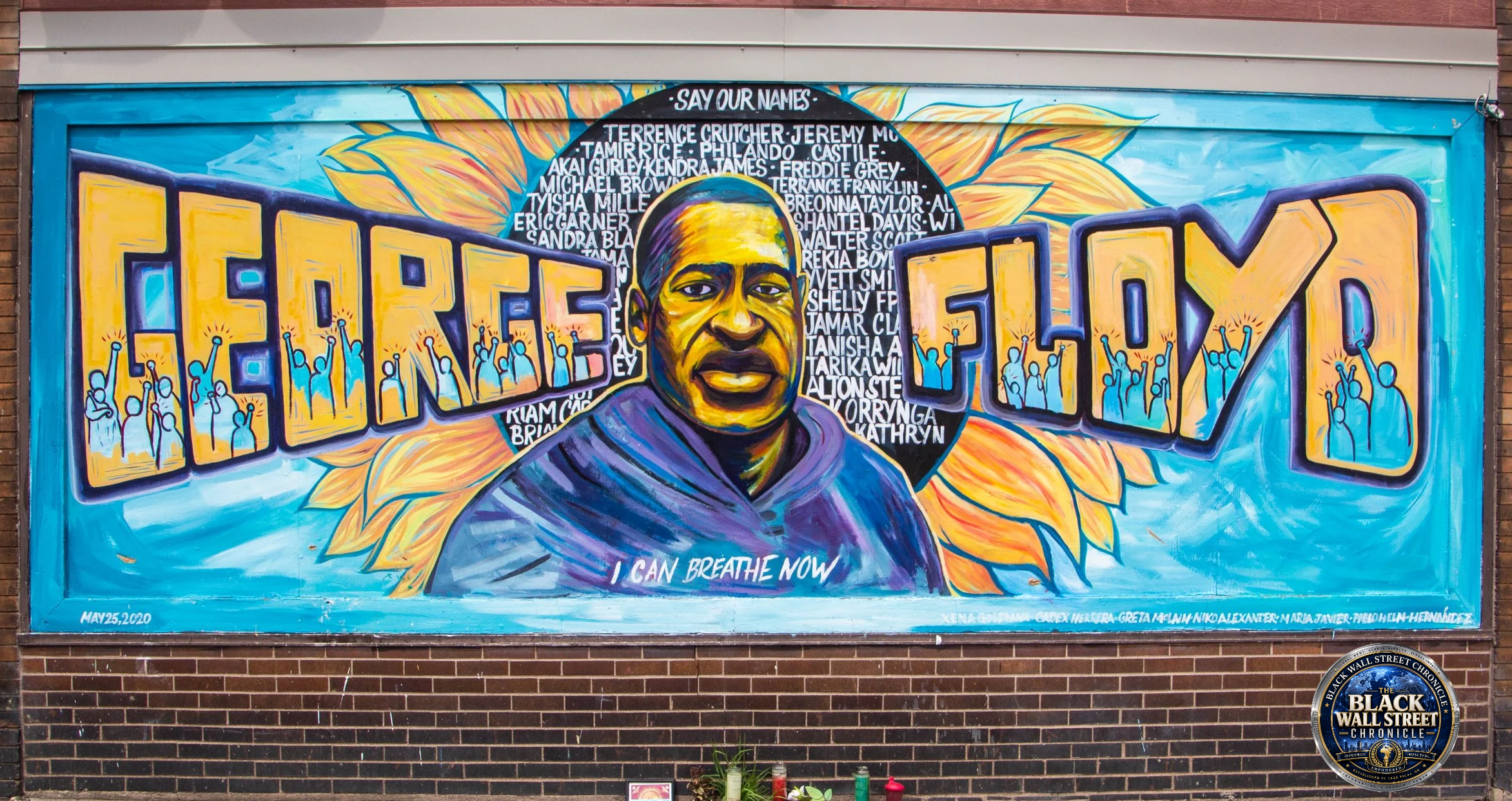
George Floyd Square and the Unfinished Fight for Economic Justice
The death of George Floyd on May 25, 2020, at the intersection of East 38th Street and Chicago Avenue in Minneapolis altered the course of American history. The cellphone video capturing the final moments of his life forced millions of people around the world to confront painful realities surrounding race, policing, and the unequal application of justice. Within days, demonstrations erupted in every state and in dozens of countries, making George Floyd's name synonymous with one of the largest civil rights movements of the twenty-first century. Today, visitors from around the world continue to travel to what has become known as George Floyd Square, standing quietly before murals, memorials, and tributes that remind all who gather there that history is not confined to books. It lives in places where human dignity has been tested and where society is challenged to decide whether it will merely remember tragedy or transform it into lasting progress.
That larger question forms the foundation of the accompanying Black Wall Street Chronicle editorial. While the world remembers the life that was taken at George Floyd Square, another story has quietly unfolded just beyond the memorial itself. It is the story of neighborhood business owners who remained after the cameras disappeared, continuing to unlock their doors each morning despite years of uncertainty surrounding the future of the intersection. It is the story of entrepreneurs whose livelihoods became intertwined with one of the most recognizable locations in modern American history, yet whose struggles rarely became part of the national conversation. The Chronicle believes these two narratives cannot be separated. The pursuit of justice must include not only accountability for past wrongs but also a commitment to building economic opportunity for those who continue to live, work, and invest in the surrounding community.
For many Americans, George Floyd Square represents a sacred place of remembrance, and rightfully so. The memorial has become a destination for people seeking to understand the events that transformed a nation and inspired global demands for racial justice. The artwork, flowers, community gatherings, and public demonstrations have preserved an important chapter in American history, ensuring that future generations will understand why millions of people filled the streets demanding equality under the law. Public remembrance is essential in every democratic society because memory serves as both a teacher and a safeguard against repeating past injustices. Yet history also teaches another lesson: communities cannot survive on symbolism alone. While memorials preserve memory, they do not create jobs, sustain small businesses, finance commercial development, or generate the wealth necessary for neighborhoods to flourish across generations.

This reality has become especially apparent for the businesses located near George Floyd Square. In the years following Floyd's death, portions of East 38th Street and Chicago Avenue remained subject to changing traffic restrictions, barriers, limited vehicle access, and ongoing debates regarding the future configuration of the intersection. Many residents and activists viewed these measures as necessary to preserve the integrity of a sacred memorial site and to provide space for continued public reflection. At the same time, numerous business owners argued that prolonged restrictions dramatically reduced customer traffic, complicated deliveries, discouraged investment, and created significant uncertainty about the long-term viability of the surrounding commercial district. These competing perspectives illustrate the complexity of governing a community attempting simultaneously to honor a historic tragedy while restoring the economic activity upon which neighborhood businesses depend.
Among those who has consistently voiced concern over the future of the commercial corridor is Minneapolis business owner **Ed Reed**, whose advocacy has focused on ensuring that economic revitalization remains part of every discussion concerning George Floyd Square. Reed has maintained that honoring George Floyd's legacy and supporting neighborhood businesses are not mutually exclusive goals. Instead, he has argued that meaningful justice requires communities to pursue both objectives simultaneously. His perspective reflects the concerns of many entrepreneurs who invested their savings, their labor, and their hopes into businesses serving the surrounding neighborhood long before George Floyd's death transformed the intersection into an internationally recognized landmark. Reed's message is straightforward: preserving history should never require sacrificing the economic future of the very community that history now represents.
The growing frustration among business owners eventually entered the legal system. Eight businesses located near George Floyd Square filed a lawsuit against the City of Minneapolis seeking approximately **$49 million** in damages, alleging that the city's management of the area following the events of 2020 caused severe and lasting economic harm. Represented by attorney **Michael Healey**, the plaintiffs contend that prolonged street closures, restricted public access, inadequate public safety measures, and related governmental decisions substantially reduced customer traffic, diminished property values, interrupted commercial operations, and deprived businesses of the opportunity to recover from the extraordinary circumstances that followed George Floyd's death. The City of Minneapolis has disputed those allegations, maintaining that its actions were taken in response to unprecedented public safety challenges and community concerns. As the litigation continues, the courts will ultimately determine the legal merits of the competing claims. Regardless of the outcome, however, the lawsuit raises profound public policy questions about how communities should balance memorialization, public safety, and economic sustainability during periods of historic crisis.

The legal dispute is significant not simply because of the amount of money involved but because it highlights an issue that extends well beyond Minneapolis. Throughout American history, Black communities have repeatedly experienced circumstances in which public policy decisions—whether intentional or unintended—have produced long-lasting economic consequences. From urban renewal projects that displaced thriving Black neighborhoods to discriminatory lending practices, unequal infrastructure investments, highway construction through established business districts, and barriers to commercial financing, the history of Black entrepreneurship has too often been shaped by forces outside the control of individual business owners. These experiences have reinforced a painful truth: economic injustice frequently survives long after the public attention surrounding social injustice begins to fade.
The history of America's original Black Wall Streets offers powerful examples of both extraordinary achievement and devastating loss. The Greenwood District of Tulsa demonstrated that Black entrepreneurship, ownership, and cooperation could create one of the most prosperous African American business communities in the nation before racist violence destroyed much of that success in 1921. Similar stories unfolded in communities across the United States where Black commercial districts generated wealth, employment, and civic leadership despite persistent discrimination. The modern Black Wall Street movement draws inspiration from these historical examples because they illustrate that economic independence has always been inseparable from the broader struggle for civil rights. Communities achieve lasting freedom not only through legal equality but also through ownership of businesses, commercial property, financial institutions, educational opportunities, and other assets capable of producing generational wealth.
It is within this broader historical framework that George Floyd Square assumes national significance. The conversation should never be reduced to a choice between preserving a memorial and restoring commerce, because such a choice presents a false dilemma. Communities possess the capacity to accomplish both objectives if they commit themselves to thoughtful planning and sustained investment. Around the world, cities have transformed locations marked by tragedy into places that simultaneously educate visitors, honor victims, and support thriving local economies. George Floyd Square possesses the same potential. The neighborhood can remain a place of reflection while also becoming a model for equitable economic development, demonstrating that remembrance and revitalization are complementary rather than competing goals.
The accompanying Black Wall Street Chronicle editorial argues precisely this point. Its central premise is that remembrance, while morally necessary, cannot become the final chapter of George Floyd's legacy. The editorial challenges readers to ask what kind of future is being created for the families, entrepreneurs, employees, churches, and neighborhood institutions that continue to define the surrounding community. Visitors from around the globe will undoubtedly continue to travel to George Floyd Square for years to come, but the residents who call the neighborhood home deserve more than symbolic recognition. They deserve safe streets, thriving businesses, expanding commercial ownership, workforce development opportunities, access to investment capital, and public policies that encourage long-term prosperity rather than prolonged uncertainty.
Economic justice has always represented an essential dimension of the broader civil rights movement. The right to vote, equal protection under the law, and police accountability remain fundamental pillars of democratic society, yet history consistently demonstrates that legal equality alone does not eliminate economic disparities. Strong communities are built through entrepreneurship, property ownership, stable employment, quality education, financial literacy, and institutions capable of serving multiple generations. When Black-owned businesses struggle because of circumstances beyond their control, the consequences extend beyond individual entrepreneurs to affect employees, families, neighborhood stability, and future investment. Every business that closes represents not only a financial loss but also the disappearance of opportunity, mentorship, and community leadership that cannot easily be replaced.
This understanding lies at the heart of the Black Wall Street movement's philosophy. The movement has long maintained that civil rights and economic rights are inseparable because political freedom without economic opportunity remains incomplete. Communities flourish when residents possess the resources to invest in their own neighborhoods, create employment for future generations, and build institutions capable of weathering economic and social challenges. That philosophy does not diminish the importance of protest, advocacy, or public remembrance. Rather, it insists that those efforts must ultimately produce measurable improvements in the economic conditions experienced by ordinary people. Justice achieves its fullest expression when remembrance inspires investment and when tragedy becomes the catalyst for rebuilding stronger communities.
George Floyd Square therefore presents America with an extraordinary opportunity to redefine what meaningful remembrance can accomplish. Rather than serving solely as the place where a terrible injustice occurred, the neighborhood can become an international example of how communities transform grief into renewal. Such a vision would include expanded support for Black-owned businesses, increased commercial property ownership, neighborhood investment funds, workforce development initiatives, entrepreneurial training programs, and public-private partnerships dedicated to ensuring that local residents participate fully in the area's future economic growth. These initiatives would not replace the memorial. Instead, they would strengthen it by demonstrating that George Floyd's legacy extends beyond memory into the creation of tangible opportunities for generations yet to come.
Ultimately, the accompanying editorial asks readers to consider a question that reaches far beyond Minneapolis. If America truly believes that Black lives matter, then does it also believe that Black businesses matter, that Black ownership matters, and that Black economic opportunity deserves equal attention? The answer will not be found solely in speeches, memorials, or commemorative ceremonies. It will be found in the investments communities choose to make after the headlines fade and public attention shifts elsewhere. George Floyd Square will forever remain a sacred place in American history. The challenge before the nation is determining whether it will also become a place where justice produced lasting economic transformation. History should indeed inspire us, but investment is what ultimately builds generational wealth, strengthens communities, and ensures that the promise of justice extends beyond memory into everyday life.